

Also: How bears have learned to live with humans
CBC News · Posted: Jul 10, 2020
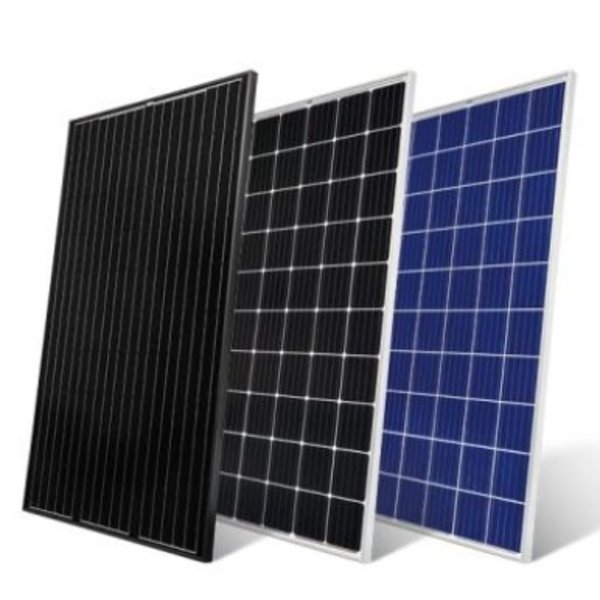
Taking solar panels to the next level

In the world of solar energy, the main measure of success has always been panel efficiency. Progress over the years means the best photovoltaic (PV) systems can now turn more than 20 per cent of the sunlight hitting them into electricity.
“Solar cell efficiency is the figure of merit in the PV community, and improving efficiency is the most common research effort,” Carlos Rodríguez Gallegos, a research fellow at the Solar Energy Research Institute of Singapore, told CBC via email.
“Yet the amount of energy produced by a panel – its energy yield – can also be increased by other techniques.”
With that in mind, Rodríguez Gallegos and his team recently analyzed the effectiveness of two well-known techniques: bifacial modules and axis tracking.
As the name suggests, bifacial modules have PV cells on both sides of the panel, with direct sunlight absorbed from the top and reflected light absorbed from the underside.
As a result, the performance of a bifacial module “can considerably increase depending on the surface it is installed on,” Rodríguez Gallegos said. For example, snow has great surface reflectivity (or albedo), resulting in more absorption. Sand? Not as good. Water? Not great.
The other technique, axis tracking, is essentially following the sun. Using motors (or even simpler, non-electronic methods), panels will tilt for maximum sun exposure.
“Single-axis trackers are commonly used to rotate the module from east to west,” said Rodríguez Gallegos, “Dual-axis trackers have two axes of rotation and therefore, in principle, have the potential to rotate to any desired angle.”
Dual-axis trackers come in handy during times of the year when the sun is in a different position. With that added complexity, they are more expensive than single-axis trackers. Rodríguez Gallegos’s analysis suggested one particular combo was the most cost-effective.
“We found that bifacial solar panels combined with [single] axis trackers produce, on average, close to 35 per cent more energy [than standard fixed panels] and reduce the cost of electricity, on average, by 16 per cent.”
This is a huge shift, considering these are tweaks to a system rather than a massive leap in material efficiency, which would undoubtedly raise the overall price.
“Solar continues to employ significant technological advancements that are improving efficiency and increasing power at reduced costs,” said Geoff Atkins, an executive advisor in business development at Mississauga, Ont.-based Silfab Solar via email.
Atkins said Silfab uses a range of technology, including reflective glass coatings and optics, that “fill dead spaces between solar cells” to try to draw more yield while keeping the panels affordable.
Some of these solutions may also help Canada in particular get more from the sun.
“For latitude locations very close to the equator, the benefit of using bifacial panels is not too strong. Yet, as the latitude increases, performance also increases,” said Rodríguez Gallegos.
“Canada, being a territory located at high-latitude locations, has a notorious advantage when adopting these technologies.”
It’s hard to throw shade at solutions that could improve Canada’s solar energy output by as much as 40 to 50 per cent. In turn, that could drive up solar energy’s worldwide power generation, which sits at three per cent.
— Anand Ram