On November 11, 1975, Angola became an independent nation, under Dr Agostinho Neto, after 500 years of Portuguese colonialism. But independence didn’t come on a platter of gold. Its arrowhead was the Movimento Popular de Libertação de Angola in Portuguese – People’s Movement for the Liberation of Angola (MPLA) through its armed wing, the People’s Armed Forces of Liberation of Angola (Portuguese: Forças Armadas Populares de Libertação de Angola) or FAPLA. FAPLA became Angola’s official armed forces when the MPLA took control of the government.

The MPLA, which has ruled Angola since independence, fought against the Portuguese Army in the Angolan War of Independence from 1961 to 1974, defeated the National Liberation Front of Angola (FNLA) and National Union for the Total Independence of Angola (UNITA) in the Angolan civil war (1975–2002), Africa’s longest war in modern history.
The civil war broke because after soon after independence, the tenuous three-way coalition government collapsed. The MPLA, with the support of Cuban troops and the equipment from the Soviet Union gained control of capital Luanda and the government while UNITA and FNLA were restricted to the country’s interior.
Expectedly, the Angolan economy remains heavily influenced by the effects of decades of war of independence from Portugal and the civil war. The country is blessed with extensive oil and gas resources, diamonds, hydro-electric potential and rich agricultural land. And since the 27-year civil war ended in 2002, government policy prioritized the repair and improvement of infrastructure and strengthening of political and social institutions.
With this, Angola, in first decade of the 21st Century, was one of the fastest-growing economies in the world. Approximately, 40% of its population have access to electricity (71% in urban areas, and 16% in rural areas) as of 2013. In 2016, 34% of adults were unemployed. And as of this year 2020, the average life expectancy is 61 years (59 years for men, 63 years for women).
In addition, approximately 66% of Angolans have improved drinking water access (82% in urban areas, and 37% in rural areas) as of 2017. And it has a top tax rate of 17.0% as of 2016. Also, 40.6% live below the poverty line as of 2020 while the literacy rate is now 72%.
Bilaterally, trade between Angola and Nigeria was worth US$2 million in 2016. Nigerian exports to Angola amounted to US$442,000 and Angolan exports to Nigeria amounted to US$1.56 million. Angola has a GDP per capita of $6,800 as of 2017. Globally, it has a GDP rank of 63rd with $105.8 billion.
Bilateral relations between Angola and Nigeria are robust and they also cooperate closely bilaterally and as members ofthe Peace and Security Council of African Union (PSC-AU), the Gulf of Guinea Commission (CGG) and the Organisation of the Petroleum Exporting Countries (OPEC). Angola and Nigeria are two of Africa´s main producers of crude oil.
But Angolan-Nigerian relations even predates its independence of 1975. The government of late Prime Minister, Alhaji Abubakar Tafawa Balewa, started the engagement with liberation movements in South Africa, including MPLA. It sent emissaries to make contact with them and offer discreet supports.
But under General Yakubu Gowon, support for liberation groups were upped up, with assistance channeled mostly through back-channels, with Nigeria’s secret service, then under the Nigeria Police. Because of this, the Special Branch, with former Inspector General of Police, Alhaji Muhammadu Dikko Yusufu, being the most prominent, hosted leaders of liberation movements who visited Nigeria. Former Inspector General of Police, Alhaji Ibrahim Coomassie, was also part of the Special Branch.
In came the government of General Murtala Mohammed on July 29, 1975. And Angola became a major strain in Nigeria’s relations with United States especially during the first year of General Mohammed and later General Olusegun Obasanjo.
Nigeria’s initial position under General Gowon was to encourage the three Angolan groups – MPLA, FNLA and UNITA – to agree on a government of national unity and to work together for the benefit of their people. It was even prepared to support some delay in the transfer of power in order to achieve the policy goals of securing independence through a government of national unity in Angola. But this ran counter to actions taken by the United States and apartheid South African regime as they openly favoured UNITA and FNLA.
While FNLA was led by Holden Álvaro Roberto was an agent of the Central Intelligence Agency (CIA), UNITA, led by Jonas Savimbi, was a collaborator with the Portuguese colonialists.
This completely changed under General Mohammed as there was an immediate review of Nigeria’s policy on Angola as Nigerian leaders believed that a truly independent Angola could neutralise the Caprivi Strip and deprive South Africa and the Ian Smith regime in Rhodesia of their military base there. They have used the military base to frustrate the support of Zambia and Botswana for liberation fighters in the area.
General Murtala Mohammed effected the policy change and aggressively pursued it. First, he dispatched senior officers, including Military Governors, to lobby other African leaders to recognize the MPLA. He then executed the following: Donated $20 million to the MPLA, supplied small arms and ammunition and “humiliated” former US Secretary of State, Dr Henry Kissinger by refusing to see him on his African tour or even to give his plane permission to land when it was already on its way.
General Mohammed publicly abused President Gerald Ford for sending a signed letter to African Heads of State instructing them how to vote at the emergency OAU summit in Addis Ababa on the Angolan situation. From there, Nigeria forced the Gulf Oil Company to pay $100 million to the Angolan government after Dr Kissinger had persuaded them to place all oil royal ties into an escrow account, pending the outcome of the civil war.
In addition, the Nigerian government threatened to seize Gulf’s assets in Nigeria which were worth considerably more than $100 million and refused a loan of $200 million to Zambia after it was learnt that the Zambian President was one of two African leaders that had invited South Africa to intervene in Angola (the other was Zairean leader, late Mobutu Seseseko).
The federal government also approved programmes for training Angolan students within Nigeria. It also instructed the Ministry of External Affairs to provide the Angolan government with a building to house their Embassy in Lagos.
To cap Nigeria’s efforts, General Mohammed electrified the emergency OAU summit at Addis Ababa on 11th January 1976 with his “Africa has come of Age” speech, which was so well received by delegates that it contributed significantly to the eventual recognition of the MPLA Angolan government by the continental body later in 1976.
On Friday 13th February, 1976 General Murtala Muhammed was assassinated in an attempted bloody coup d’état. The Angolan government, in appreciation, named the biggest and longest street in Angolan capital, Luanda, after him. The country still fondly remember both Murtala and Obasanjo.
The Obasanjo government, as an offshoot of the Mohammed regime, followed the dynamic Southern Africa policy of Muhammed which had nationwide public support. For its efforts towards the liberation struggles, Nigeria was granted the status of a Frontline State and the country’s Permanent Representative at the United Nations became the Chairman of the UN Anti-Apartheid Committee.
During President Shehu Shagari regime, the Representative was Alhaji Maitama Sule. As Chairman of the Anti-Apartheid Committee, he was respected by the representatives of the Front-line States and liberation movements, and was a popular speaker at anti-apartheid gatherings in Europe and the USA.
Together with Mr. Enuga Reddy, Assistant Secretary General of the UN, he honored several invitations from the YUSSA, and launched several branches on campuses throughout Nigeria, as they mobilized public opinion, pre-empting any possible changes in policies.
A Non-Governmental anti-apartheid movement, the National Committee against Apartheid (NACAP) led by veteran nationalist politician, late Malam Aminu Kano was established in 1976. Young lecturers and students of the Ahmadu Bello University also set up the Youth Solidarity on Southern Africa (YUSSA) in 1976 with similar objectives to NACAP. Some of their leaders former Principal Secretary to President Goodluck Jonathan, Hassan Tukur.
In President Muhammadu Buhari’s tenure as Head of State, the Foreign Minister was Professor Ibrahim Gambari, a former Nigeria Permanent Representative to the UN and currently Chief of Staff to President Buhari.
Gambari toured the South African region as Minister, making good impressions on most of the Frontline States and liberation movement leaders. And as the UN Under-Secretary-General and Special Adviser to the Secretary-General in Africa, on April 4, 2002, Professor Gambari was the UN Special Envoy that witnessed the signing of the final peace deal for Angola.
And under subsequent governments of Generals Ibrahim Babangida and Abdulsalami Abukakar; and Presidents Obasanjo, Umaru Musa Yar’Adua, Goodluck Jonathan and Muhammadu Buhari, bilateral cooperation and partnership has continued to expand.
Unknown to many, the Nigerian government supported the MPLA especially with equipment and other logistics supply. In the aftermath of January 1976 OAU summit, the Nigerian government sent to Angola a squadron of the Soviet-built MiG-17 jet fighters in support of its war against the FLNA/UNITA rebels.
In fact, a battalion strength of the Nigerian Army participated in the MPLA and Cuban push against the FLNA/UNITA rebels especially as far south as Mocamedes, Lobito and the Eastern diamond mining town of Saurimo.
During the civil war, the US Operation IAFEATURE in Angola, comprising of mercenaries from the US, Portugal, France, United Kingdom, Brazil, Philippines and South Africa, resulted in the death of three American soldiers and the capture of one who was sentenced to death in July 1976.
South Africa also organized Operation SAVANNAH but lost 20 soldiers in the hands of the FAPLA-MPLA troops. Two of the invading troops were captured and were taken to Lagos where Angola operated a prison/holding centre for its prisoners under the control of Nigeria’s Special Branch. The two captured American soldiers were taken to Addis Ababa, Ethiopia where they were paraded during the OAU summit of January 11-12 1976.
Nigerians also played prominent roles in the United NationsAngola Verification Mission II (UNAVEM II), which was established by the UN to oversee and maintain the multilateral ceasefire of 1990 and the subsequent Bicesse Accords in 1991. UNAVEM had two Nigerians, Major General Edward Unimna (1991) and Major General Chris Garba (1991-1995) Chief Military Observers.
As part of solidifying bilateral relations, on April 2019, both Angola and Nigeria expressed the need to deepen political, socio-economic and cultural cooperation with a view to strengthening existing ties. Both countries agreed that the 5th Nigeria-Angola Joint Commission session would hold at a future date.
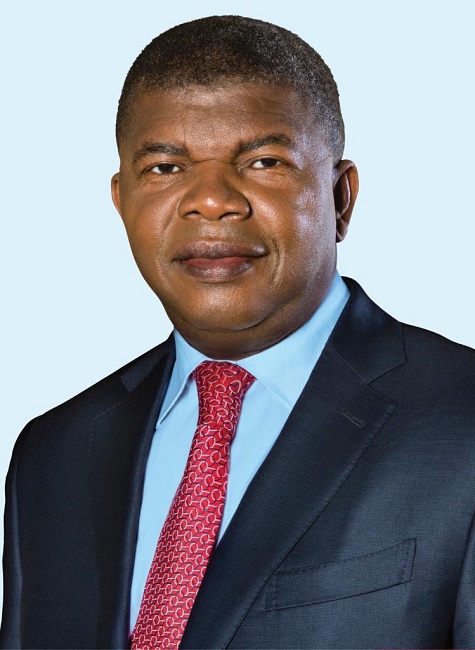
Earlier in November 2018, President of Angola, His Excellency Joao Lourenco pledged to deepen bilateral and multilateral relations with Nigeria. In a statement released in Abuja by Dr Eustaquio Quibato, the Ambassador of Angola to Nigeria, President Lourenco said “the integration of Angola in the world presupposes the deepening of bilateral and multilateral relations with all countries.”
And as part of this, Angola would continue to witness the strengthening of cooperation and development with Nigeria.