
Nigeria’s April inflation figure on Monday increased to 22.22 per cent from 22.04 per cent last month.

The National Bureau of Statistics Consumer Price Index report released Monday disclosed this.
The data represented a 0.18 per cent increase from April’s inflation figure.
On a month-on-month basis, the All-Items Index in April 2023 was 1.91%, 0.05% points higher than the rate recorded in March 2023 (1.86%). This means that in April 2023, on average, the general price level was 0.05% higher relative to March 2023.
Nigeria’s inflation rate continues its uptrend despite multiple interest rate hikes by the central bank to tame the rising rate. The CBN has increased the Monetary Policy Rate (MPR) from 11.5% to 18% between May last year and March 2023.
Food inflation
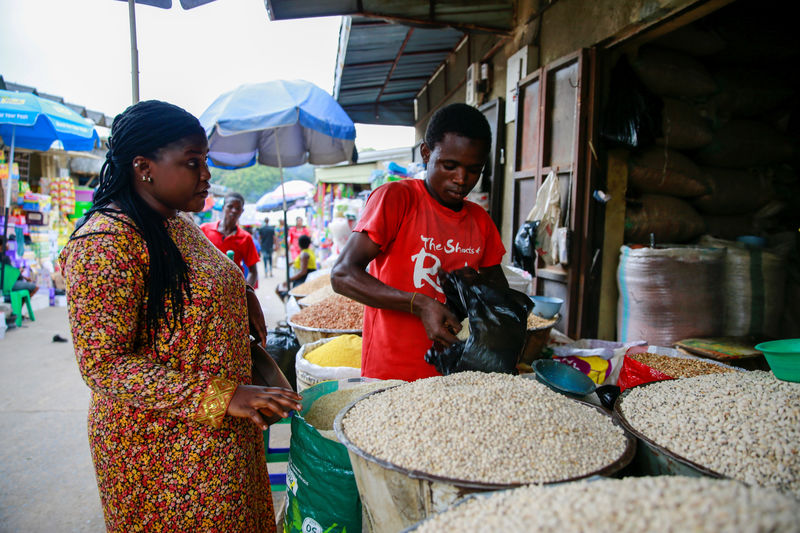
The food inflation rate in April 2023 was 24.61% on a year-on-year basis, which was 6.24% points higher compared to the rate recorded in April 2022 (18.37%) and 24.35% recorded in the previous month.
The rise in food inflation yearly was caused by increased prices of Oil and fat, Bread and cereals, Fish, Potatoes, Yam and other tubers, Fruits, Meat, Vegetable, and Spirits.
The “All items less farm produce” or Core inflation, which excludes the prices of volatile agricultural produce, stood at 20.14% in April 2023 on a year-on-year basis. It shows that it was up by 5.96% compared to the 14.18% recorded in April 2022. It is also higher than the 19.86% recorded in March 2023.
More drivers of inflation
The highest increases were recorded in prices of gas, air transport, liquid fuel, vehicle spare parts, fuels, and lubricants for personal transport equipment, medical services, and road transport.
The contributions of items on the divisional level to the increase in the headline index are; food and non-alcoholic beverages (11.51%), housing water, electricity, gas and other fuel (3.72%), clothing and footwear (1.7%), and transport (1.45%).
State inflation
During the month under review, all items’ inflation rate (on a year-on-year basis) was highest in Bayelsa (26.14%), Kogi (25.57%), and Rivers (24.95%). On the flip side, Borno (19.06%), Taraba (19.64%) and Sokoto (19.90%) recorded the slowest rise in headline inflation on a year-on-year basis.
On a month-on-month basis, however, April 2023 recorded the highest increases in Cross River (3.05%), Bayelsa (2.92%), Rivers (2.62%), while Katsina (0.52%), Jigawa (0.74%) and Osun (0.96%) recorded the slowest rise on.
In terms of food inflation on a year-on-year basis, it was highest in Kogi (29.50%), Kwara (29.48%), and Bayelsa (29.38%), while Sokoto (19.55%), Taraba (20.20%) and Jigawa (20.68%) recorded the slowest rise.
Implication
The continued surge in inflation means the measures by the Central Bank of Nigeria have yet to yield results.
It means that Nigeria would continue to pay more for the prices of goods, thereby leading to a drop in purchasing power by Nigerians.
@DAILY POST