
By Idris Muhammed Abdullahi

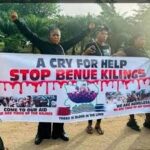
As Nigeria continues to grapple with worsening insecurity, inter-communal clashes, and recurring cycles of violence, it is becoming increasingly clear that conventional security responses—military interventions, tactical raids, and road checkpoints are failing to address the complex roots of our national unrest. The recent massacre in Yelwata community, Guma Local Government Area of Benue State, in which over 200 people were reportedly burnt alive, underscores the urgent need for a holistic, intelligence-driven, and justice-oriented approach.
While the military and security agencies strive to contain the flames of violence, we must now shift our gaze to the spark , the structural causes of conflict. These include injustice, impunity, politicized narratives, media mischaracterization, ethnic profiling, and socio-economic exclusion. The longer we ignore these dimensions, the more entrenched and dangerous our crisis becomes.
Unmasking Key Triggers of Nigeria’s Insecurity
1. Retaliation Killings on Highways: From Local to Interstate Conflict
In recent years, a worrying trend has emerged: reprisals against innocent travelers who have no connection to the local disputes in which they are targeted. For instance, a traveler from Kogi, simply passing through a volatile zone in Benue or Plateau, may fall victim to an angry mob retaliating for a previous attack in their community. In such a case, the conflict spreads far beyond its origin, drawing new groups , previously uninvolved into cycles of vengeance.
This phenomenon escalates local conflicts into regional grievances, poisoning inter-ethnic relations and weakening national unity.
REMEDY:
Deploy Highway Surveillance Intelligence Teams (HSITs) under a joint task force to monitor conflict-prone routes.
Establish Highway Peace Units with traditional rulers, youth leaders, and law enforcement to mediate and prevent retaliation.
Develop a Victim Compensation and Justice Program for innocent casualties of communal conflicts.
2. Injustice: The Fertile Ground for Violence
Across Nigeria, justice has become transactional. Cases involving poor or marginalized citizens often go unresolved, while the wealthy and connected manipulate outcomes. This perceived injustice drives many communities to abandon legal processes altogether, opting instead for vigilante justice or armed retaliation.
REMEDY:
Fast-track the establishment of Mobile Courts for Conflict-Affected Zones with a mandate to deliver timely, community-centered justice.
Empower the National Human Rights Commission with enforcement authority in cases of systemic rights violations.
Digitize and decentralize legal aid schemes to enable rural communities to access legal representation.
3. Jungle Justice: The Legal and Moral Collapse
Communities often resort to lynching and public executions of suspected criminals. These acts of jungle justice are not only inhumane , they fuel wider cycles of violence, erode public trust in formal institutions, and breed lawlessness.
REMEDY:
Enact a National Anti-Jungle Justice Law that criminalizes mob action and imposes liability on communities and local authorities who allow it to happen.
Integrate Conflict Prevention and Legal Education into Nigeria’s National Orientation Agency programs and NYSC schemes.
4. Media-Driven “Fulanisation” of Crime: Ethnic Profiling as a Weapon
One of the most dangerous elements in Nigeria’s insecurity crisis is the racialization of criminality. While criminals in the East are often referred to vaguely as “unknown gunmen,” and bandits in the South are framed as “cultists,” the Fulani ethnic group is disproportionately named and blamed in national headlines—even without concrete evidence.
This practice not only incites hatred and reprisals but alienates a significant part of the population, including innocent nomadic pastoralists and traders.
REMEDY:
Strengthen the Nigerian Press Council to enforce ethical standards against ethnic profiling in crime reporting.
Establish a National Media Monitoring & Accountability Framework in collaboration with CSOs and the Nigerian Union of Journalists.
Promote inter-ethnic town halls, youth peace exchanges, and media literacy campaigns to reduce communal suspicion.
A Word from the Chief of Defence Staff: Important, But Not Enough
The Chief of Defence Staff recently highlighted three key drivers of violence: indigene-settler land disputes, uncontrolled livestock movement, and cattle rustling. While these are credible, they represent just one layer of a deeply multi-dimensional crisis. Conflicts in Benue, Zamfara, Taraba, Kaduna, and the South-East are increasingly influenced by:
Terrorism financing and illicit financial flows
Arms smuggling and porous borders
Climate change–induced displacement
Rural economic decline and youth unemployment
Political manipulation and identity politics
As a (TF) specialist and member of multiple national and international task forces on AML CFT/ IFF , I can confirm that these hidden financial networks used to fund violence and illicit arms are rarely tracked or prosecuted even when discovered by the Team ( how many politically motivated TF sponsors have we successfully prosecuted ?
REMEDY:
Establish a National Conflict and Financial Intelligence Centre (NCFIC) under the National Security Advisers office or The chief of defence staff office to monitor the economic and financial enablers of violence.
Link the Economic and Financial Crimes Commission (EFCC), Nigerian Financial Intelligence Unit (NFIU), Federal Internal Revenue Service or now proposedly branded as the National Revenue Service and security services to trace and freeze assets funding conflict.
The Broader Strategy Nigeria Urgently Needs
To move from reaction to resolution, Nigeria must adopt a multi-layered, inter-agency, and intelligence-driven approach. This requires that we:
Reframe Security Beyond Military Force
Invest in justice, social cohesion, and economic opportunities as tools of national defence.
Correct Ethnic Misinformation
Train journalists in conflict-sensitive reporting and punish media houses that incite ethnic hatred.
Support Victim and Survivor Communities
Introduce nationwide Psychosocial Support Units to help victims of violence reintegrate into society.
Establish Conflict Mediation Councils at State Level
These should include youth groups, traditional leaders, religious figures, and civil society actors.
Launch a National Identity Reconciliation Dialogue
Let Nigeria confront and heal its ethnic wounds through dialogue, truth-telling, and constitutional reforms.
From Chaos to Cohesion Requires Political Will
Nigeria cannot shoot its way to peace. Guns can suppress symptoms but cannot eliminate root causes. We must build a justice system that works, dismantle the weaponization of ethnicity, and put an end to impunity. Conflict thrives where the state is absent or unjust.
Let the Yelwata tragedy awaken us to the truth: no group has a monopoly on pain or on violence, but together we can create a nation where every group has equal access to justice, safety, and dignity.
I remain available for further engagement and ready to contribute meaningfully to any national, regional, or inter-agency platform working towards sustainable peace and justice in Nigeria.
Idris Muhammed Abdullahi is a Specialist in Anti-Graft, Illicit Financial Flows (IFFs), and TF (TF); MSc Forensic Investigation , AML/CFT & , Conflict Resolution and Negotiation Expert (USIP ) and Policy Expert