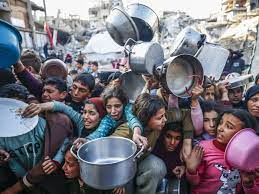

- Emmanuel Macron said he hopes to bring peace to Gaza by recognising a Palestine state. His decision has not been met favourably with Israel or the US
France is set to become the first G7 country to recognise Palestine as a state.

Emmanuel Macron announced the major change of policy in a letter to the president of the Palestinian Authority, Mahmoud Abbas, on Thursday evening, with the French leader expected to make a formal announcement at the United Nations General Assembly in September.
Mr Macron said he hopes the plan will bring peace to the region, but it drew angry rebukes from Israel and the United States.
There is also no guarantee other countries in the G7 – seven of the world’s largest advanced economies – will follow suit.
Here is what you need to know about the significance of recognising a Palestinian state, the timing of the decision, and whether other countries are likely to follow France.
What does recognising a Palestinian state mean?
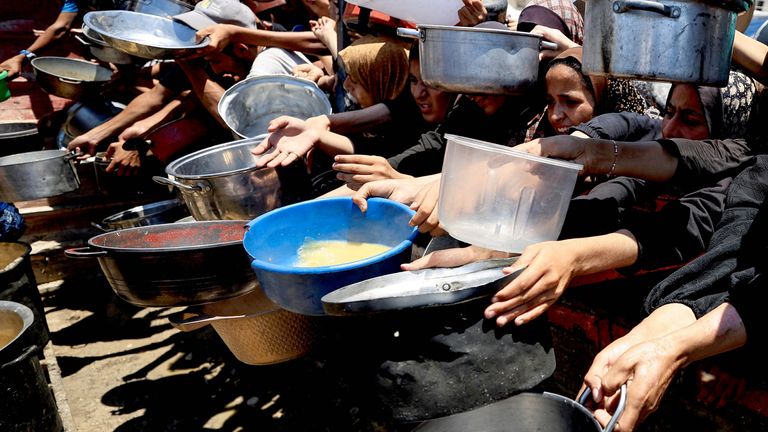
The decision to recognise Palestine as a state is mostly symbolic, but comes amid growing international pressure to end what the UN has described as a “humanitarian crisis” in Gaza.
Out of the 193 UN member states, 144 already recognise Palestine as a state.
That includes Russia, China and India, as well as more than a dozen in Europe, including Spain, Ireland and Norway. But until Thursday, no G7 country had committed to it.

‘Many more deaths unless Israelis allow food in’
Why did France make the decision now?
Mr Macron has been leaning towards recognising a Palestinian state for months as part of a bid to keep the idea of a two-state solution alive, despite pressure from other countries not to do so.
His announcement came days before France and Saudi Arabia co-host a conference at the UN, where 40 foreign ministers will discuss a two-state solution.
France and the UN now have a framework to work with other countries that are considering recognising a Palestinian state or have misgivings about doing so.
What is a two-state solution?
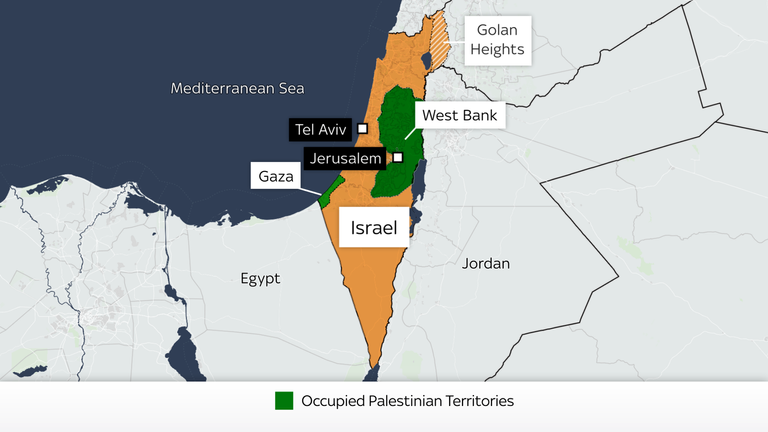
A two-state solution would see an independent Palestinian state established alongside the existing state of Israel – giving both peoples their own territory.
The Palestinians seek an independent state in the occupied West Bank, annexed east Jerusalem and Gaza, territories that have been occupied by Israel since the 1967 Six-Day War.
Israeli Prime Minister Benjamin Netanyahu and most of Israel’s political class have long been opposed to Palestinian statehood, and argue that it would reward militants after the 7 October attacks launched by Hamas in 2023.
One of the biggest obstacles to a two-state solution would be deciding what the borders of a potential Palestinian state would be.
Many believe they should be the same ones that existed before 1967, but since then, increasing numbers of Israeli settlements have been established inside the West Bank, with around 600,000 Israelis now living there and in Occupied East Jerusalem.
How have Israel and Palestine responded to France?
Israel’s Mr Netanyahu strongly condemned the decision, saying recognising a Palestinian state now would be a “launch pad to annihilate Israel – not to live in peace beside it”.
US Secretary of State Marco Rubio said America also “strongly rejects” Mr Macron’s plan, calling it a “slap in the face
to the victims of October 7th”.
Meanwhile, Palestinian President Mahmoud Abbas in Jerusalem expressed “thanks and appreciation” to the French leader.
What has the UK said?
Sir Keir Starmer has already resisted calls within the Labour Party to recognise a Palestinian state, as he believes this should happen after a ceasefire is agreed, as part of the peace process in Gaza.
More than 255 UK MPs have now signed a cross-party letter demanding Sir Keir follow France’s lead.
On Thursday night, he insisted he is “clear that statehood is the inalienable right of the Palestinian people”, adding that a ceasefire would put the region on the right path towards the recognition of a Palestinian state and a two-state solution.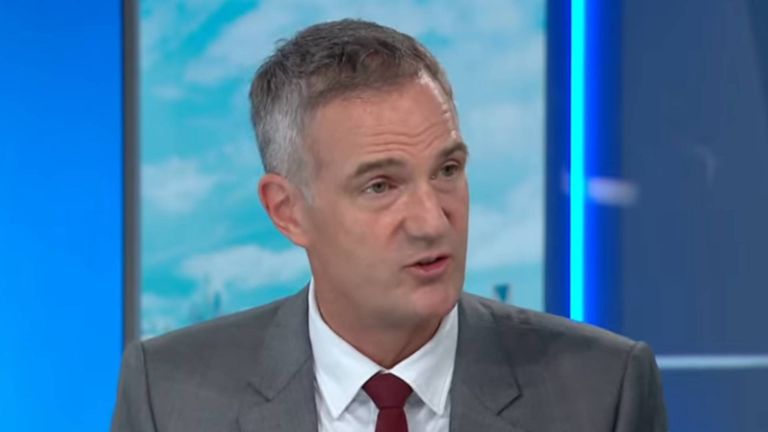 12:20
12:20

‘We want Palestinian statehood’, Technology Secretary Peter Kyle says
Speaking to Sky News Breakfast on Friday, Technology Secretary Peter Kyle reiterated that the government wants Palestinian statehood, but said the most pressing issue in Gaza is “a matter of people starving” rather than a diplomatic one.
Sir Keir will attend an emergency call with Germany and France later on Friday to discuss what he described as a “human catastrophe” that has “reached new depths”.
What about other countries?
In response to France’s decision, the German government said Berlin still backs a two-state solution but won’t recognise a Palestinian state for now, instead stressing the need for a Gaza ceasefire, hostage release, and urgent humanitarian aid.
Canada also pressed Israel to seek peace, with Prime Minister Mark Carney reiterating support for a two-state solution, but has so far stopped short of recognising Palestine as a state.
Australia‘s prime minister, Anthony Albanese, described the situation in Gaza as a “humanitarian catastrophe” and said his country is “committed to a future where both Israeli and Palestinian people can live in peace and safety within secure and internationally recognised borders”.
Italy‘s foreign minister said the recognition of a Palestinian state must also recognise Israel as a state.
“A Palestinian state that does not recognise Israel means that the problem will not be resolved,” Antonio Tajani told a meeting of his conservative Forza Italia party in Rome.
Spain, which already recognises Palestinian statehood, welcomed Mr Macron’s announcement. Prime Minister Pedro Sanchez wrote in a statement on X: “Together, we must protect what Netanyahu is trying to destroy. The two-state solution is the only solution.”
Saudi Arabia‘s foreign ministry also said it “commends this historic decision” and called on other countries to take “similar positive steps”.
@Sky News