

Daily Trust Editorial, Friday August 1, 2025

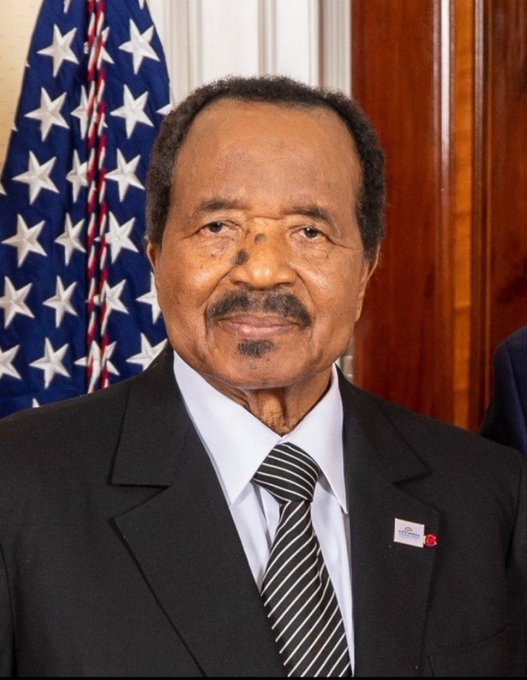
On Sunday, July 13, 2025, Cameroon’s 92-year-old President Paul Biya solidified his position among African sit-tight leaders when he officially declared his candidacy for the October 12 presidential election, for another seven-year term. Brushing aside calls from inside and outside Cameroon to step aside, Biya stated in a post on X: “Rest assured that my determination to serve you matches the urgency of the challenges we face,” anchoring his declaration on what he described as “numerous and insistent” calls from citizens across Cameroon and the diaspora.
Born Paul Barthélemy Biya’a bi Mvondo on February 13, 1933, he became President on November 6, 1982 after serving as the country’s fifth prime minister under President Ahmadou Ahidjo who surprisingly resigned on November 4, 1982. Biya succeeded him as president two days later. Biya consolidated power in a 1983–1984 power grab and attempted coup in which he eliminated all of his major rivals.
His longevity in power was consolidated on April 10, 2008 when Cameroon’s National Assembly dominated by his party changed the Constitution to remove term limits, effectively allowing President Biya to seek re-election indefinitely. If successful, this eighth term would keep him in power until nearly 100 years old.
Holding the unenviable title of the world’s oldest serving head of state, Biya is also the second-longest-ruling president in Africa, after Teodoro Obiang Nguema Mbasogo in Equatorial Guinea and the second longest consecutively serving current non-royal national leader in the world.
And he’s at home in a continent littered with sit-tight leaders including Theodore Obiang Nguema Mbasogo of Equatorial Guinea – ruling since 1979; Yoweri Kaguta Museveni of Uganda – President since 1986; Denis Sassou Nguesso of the Republic of the Congo – (1979 to 1992 and 1997 to date); Isaias Afwerki of Eritrea – in power since independence in 1993; King Mswati III of Eswatini – in power since April 25, 1986. Paul Kagame has been acting president (March 24 – April 22, 2000) before his election as the fourth president of Rwanda since April 22, 2000.
We at Daily Trust demand that Biya forget about running again for Cameroon’s presidency because it will be a public charade for him. It is time for him to go and rest and hand over power to a new generation of leaders. It is time for Cameroon to breathe some fresh air and experience renewal. Since gaining independence from France on January 1, 1960, the country has had only two presidents with Ahidjo as the first Prime Minister from independence and became president on May 5, 1960.
In any case, Biya is largely a no-show in Cameroon with prolonged absences from public view, including a 42-day disappearance last year that gave rise to speculation about his health and capacity to govern. His reaction was a new law banning public discussion of his health, with Interior Minister Paul Atanga Nji stating that these stories “disturb the tranquillity of Cameroonians” and “therefore strictly prohibited,” threatening that “offenders will face the rigour of the law.” Due to his absences from Cameroon, it is tabulated that he has spent at least five-and-a-half-years abroad on private travel, spending the bulk of these holidays in Geneva, France and the US. He appears five times a year in controlled appearances.
Largely, Biya has become symptomatic of the problem that has kept Africa underdeveloped. We, therefore, urge him to use the remaining months of his current term to open up the political landscape of the country, not stifle it, as he has ruled under a climate of fear where citizens don’t feel safe commenting openly on politics for fear of reprisals. His stranglehold on the country is self-evident. Moreover, at his age, it would be a disservice to Cameroon if he becomes incapacitated or pass away while in office.
Moreover, his stay in power has become bad advertisement for democracy as his governance model has tilted more to the authoritarian, totalitarian and dictatorial where rule of law is obeyed more in abeyance. Biya’s inability to bestow dynamic, accountable governance leadership is betrayal of Cameroon as rather than deliver stability and growth as expected, the country is plagued with economic stagnation, high unemployment and persistent insecurity. The Anglophone regions remain embroiled in a separatist conflict while the north face threats from Boko Haram insurgents. His presence has exacerbated, not resolved these challenges.
Daily Trust believes that President Biya’s decision to seek an eighth term will ultimately weaken his nation’s democratic institutions and hinder genuine progress. In this vein, we insist that he should put up a clear succession plan and jettison any travesty of his son Franck Biya being propped up as a potential successor. It is not late for him to give Cameroon a legacy of new democratic credentials.
His continued occupation of the office or contesting the coming election may either bring up the Senegalese scenario where young people upended the voting pattern or a post-election scenario repeat of events in Gabon, where the re-election of Ali Bongo in August 2023 triggered unrest and a coup. We believe that is not the legacy he wants to exit office with. We urge him to take the right decision in the interest of his country, which is to shelve the presidential run.