
By Usman Sarki

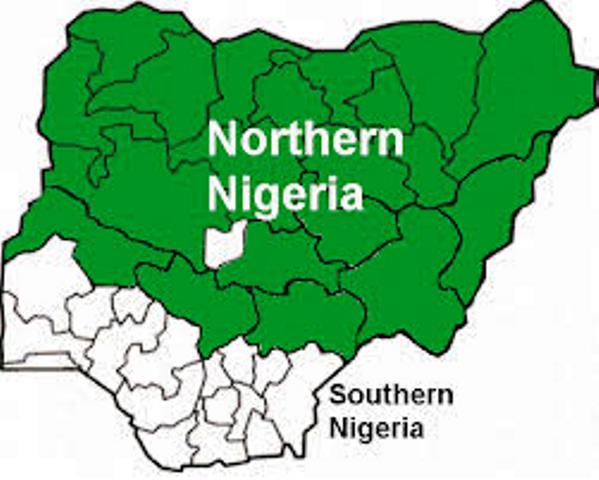
“Profound definitions do not refute superficial ones, but, supplementing them, include them in themselves”, Georgi Plekhanov efining Nigeria today or, for that matter, in 1909, must proceed from the perceptive recognition of the profound place that the North occupies in the formation of the country. It is a historical fact proven by contemporary realities, that without its Northern region, the entity known today as Nigeria would never have come into existence. The North was the political, cultural and administrative spine upon which the British colonial authorities built the larger edifice of Nigeria.
Taking an excursion through the book “Nigeria: Its People and Problems” (1911), by Edmund Dene Morel amply justifies this assertion. The book, based on Morel’s travels in 1909, provides evidence of historical, moral and institutional natures, of why Northern Nigeria mattered then and continues to matter now in the make-up of Nigeria.
When Morel, the celebrated journalist and humanitarian, journeyed through the newly conquered territories of Northern Nigeria, he found not chaos but civilisation and order; not barbarism but a moral order founded on tradition, law, learning and faith. His first-hand testimony remains one of the earliest recognitions by a European observer of the North’s depth of culture and sophistication of governance.
Before arriving in Nigeria, Morel had already achieved fame for exposing the atrocities committed in King Leopold’s Congo Free State. That crusade transformed him into one of Europe’s foremost moral voices alongside men like Sir Arthur Conan Doyle. He came to Nigeria determined to assess empire through the lens of justice, not pride and in the process, discovered a country of striking contrasts.
The southern territories, long open to missionary activity and European trade, were already being reshaped by the cash-crop economy and an imported religion. Liberally supplied with cheap liquor, the moral foundation of the societies were already in ferment. The Northern territories on the other hand, only recently subdued, remained rooted in their indigenous institutions and religious practices.
What impressed Morel most was the discipline and dignity of northern life represented by the administrative order of the emirates, the learning of the ulama or teachers, the transparency and integrity of its Sharia justice system, and the sense of civic duty that pervaded the land.
Travelling through Nupe, Zaria, Kano, Katsina and other emirates, Morel encountered a society that functioned with remarkable coherence. He was astonished by what he called “a land of law, not of whim.” The emirate administrations inherited from the Sokoto Caliphate were models of internal order where taxes were properly recorded, courts staffed by trained Alkalis or judges and authority resting upon moral rather than coercive foundations represented by the Emirs.
He described Emir Abbas of Kano for instance, as “a ruler of intelligence and integrity, exercising authority through law rather than caprice.” In Zaria, he observed a disciplined bureaucracy supervising an agriculturally prosperous countryside, and observed “fields tended with patience, irrigation channels managed with collective care, and
Dgranaries abundant with millet and guinea-corn.” In Nupe, he found comparable order and refinement, where the authority of the Etsu operated within a structured hierarchy under the Caliphate system. To Morel, the North’s system of government represented not despotism but a constitutional order grounded in moral legitimacy, something even many European societies could envy in that period.
His observations deeply influenced official thinking in London and lent credibility to Lord Lugard’s argument for governing through traditional structures. Yet Morel warned that Britain must uphold the spirit of those institutions, not merely use their facade to mask domination. “Administration,” he wrote, “cannot live upon borrowed virtue.”
Among the most vivid pages of Morel’s Nigerian chronicle are those describing the agricultural and industrial wealth of Zaria and Kano. He was astonished by the fertility of the Zaria plains, remarking that “nowhere in tropical Africa have I seen land more generously worked or communities more devoted to the soil.” He wrote of farmers who rotated crops with skill, tended irrigation ditches collectively, and marketed surplus grains across wide distances.
Kano, in his eyes, was the beating heart of an indigenous industrial economy. Its dye-pits, tanneries, metal-works, and textile looms, he noted, were “the evidence of an industrious race and a commerce of native genius.” He observed caravans from as far as Tripoli in Libya and Borno, laden with goods, entering the city gates. The Kurmi Market was, in his words, “an African emporium comparable to the medieval bazaars of Europe — orderly, colourful, alive with barter and discipline.”
For Morel, these scenes refuted the colonial narrative of African stagnation. Here, he said, was proof that industry and enterprise were indigenous traits, not imported virtues. His descriptions of Zaria’s agricultural abundance and Kano’s industrial vitality form some of the earliest documentary evidence of organised economic life in pre-colonial Northern Nigeria.
Yet Morel also discerned the darker side of imperial economics. He saw that the railway from Lagos to Kano was being built not to integrate Nigeria but to extract its wealth. Taxes multiplied, but little was reinvested in education or irrigation. Revenues from the North subsidised colonial administration and coastal infrastructure while the producing communities remained poor.
In words that resonate today, he warned that no nation can prosper on exaction without redemption. That early insight foreshadowed Nigeria’s later dilemma of abundant resources but uneven development, of taxation without development.
Morel’s appreciation of Islam was extraordinary for his era. Where others saw fanaticism, he saw learning, restraint and order. He recognised that Islam had provided the North with its own educational and judicial systems, producing a literate society centuries before colonial schools appeared. Mosques, Qur’anic academies and written records in Arabic and Ajami Hausa were signs of intellectual vitality.
He contrasted the sobriety and modesty of Muslim Northern communities with what he called “the disarray and imitation” emerging in the coastal south. To him, Northern Nigeria represented an African civilisation confident in its own moral compass, capable of engaging modernity without losing its soul.
Morel was no apologist for empire. He recognised in British rule the same contradictions he had denounced in the Congo: the rhetoric of civilisation masking the reality of exploitation. “We preach civilization,” he wrote, “but practice tribute.”
He believed Africans deserved partnership, not paternalism. The emirates, in his view, had the capacity to evolve organically into modern polities if treated with respect. His writings later inspired reformers and nationalists who sought independence founded on dignity rather than resentment.
Morel also grasped the structural differences between North and South. The North’s stability and unity of faith contrasted sharply with the South’s plurality and volatility under missionary influence and liberal supply of trade goods and alcohol. He predicted that fusing these two worlds into one political entity would prove challenging.
Indeed, the amalgamation of 1914, which occurred only a few years after his visit, joined regions with divergent histories and values. The tensions he anticipated still reverberate through Nigeria’s political and economic life. His analysis remains essential to understanding the historical roots of Nigeria’s contradictions.
To revisit Morel’s account today is to be reminded that Northern Nigeria was and remains the moral and structural pillar of the federation. The virtues he admired of discipline, scholarship, faith and communal order, once defined governance in the region. Their erosion over the decades has contributed greatly to Nigeria’s wider crisis of leadership and purpose.
Northern Nigeria matters because it embodies a civilisational continuity that predates colonialism and outlasts imperialism. It stands as proof that African societies were capable of statecraft, justice, learning and industry long before Europe’s arrival. The North’s enduring significance also lies in its geostrategic and demographic centrality. With its vast population, agricultural and industrial potentials and position at the crossroads of the Sahel, the region remains indispensable to Nigeria’s stability and Africa’s integration.
Morel did not idealise the past; he admired its principles and virtues. His central lesson was that governance, to endure, must rest on moral legitimacy. The North he described was not rich in material terms but wealthy in values of self-discipline, humility, justice and devotion to learning. These are the same virtues that Nigeria needs today.
If the emirates once governed through integrity and service, there is no reason why their descendants cannot do so again in a democratic framework. The challenge is to translate inherited moral capital into modern public ethics so as to build a future that honours the past without being captive to it.
When Morel left Nigeria, he carried not the image of a backward colony but of a proud people with a sense of order and destiny. He saw in Northern Nigeria a civilisation capable of contributing to the world on its own terms. He warned Britain that empire divorced from justice would destroy itself.
More than a century later, his words still resonate: economic strength without moral direction breeds decay; political power without justice breeds rebellion. If Nigeria is to survive and flourish, it must reclaim the virtues that once made the North its stabilising force by virtue of its discipline, learning and faith.
Northern Nigeria matters because, without it, Nigeria would not exist. It matters because it holds the key to understanding both the country’s past and its possibilities for renewal. And it matters, finally, because it reminds us that civilisation is not a gift of empire, but an achievement of moral order. Northern Nigeria matters.
Usman Sarki can be reached through usmansaiki@dailytrust.com