
- Relations between the U.S. and Nigeria have soured dramatically amid the Trump administration’s allegations that Nigerian Christians are being slaughtered en masse. In this Q&A, Crisis Group expert Nnamdi Obasi analyses these claims and the implications for bilateral relations
What happened?
Relations between the United States and Nigeria have soured swiftly and dramatically, as U.S. President Donald Trump and his allies on the political and religious right accuse the Nigerian authorities of inaction or worse in the face of what they describe as the mass killing of Christians. The Trump administration has threatened to intervene militarily to bring the alleged slaughter to a halt, provoking strong pushback from Abuja, which insists that Nigeria’s territorial integrity be respected. This U.S.-Nigerian rift has brought bilateral ties to their lowest point since the 1970s, when the two countries were at odds on how to end apartheid rule in South Africa.

Relations have been slipping for several months, as first U.S. right-wing media circles and later the White House itself began saying the Nigerian government was tolerating or even enabling what some describe as an attempted “genocide” of Nigerian Christians. But a significant escalation came on 31 October, when Trump announced that the U.S. State Department was designating Nigeria a Country of Particular Concern under the International Religious Freedom Act – potentially paving the way for further consequences, from diplomatic pressure to sanctions.
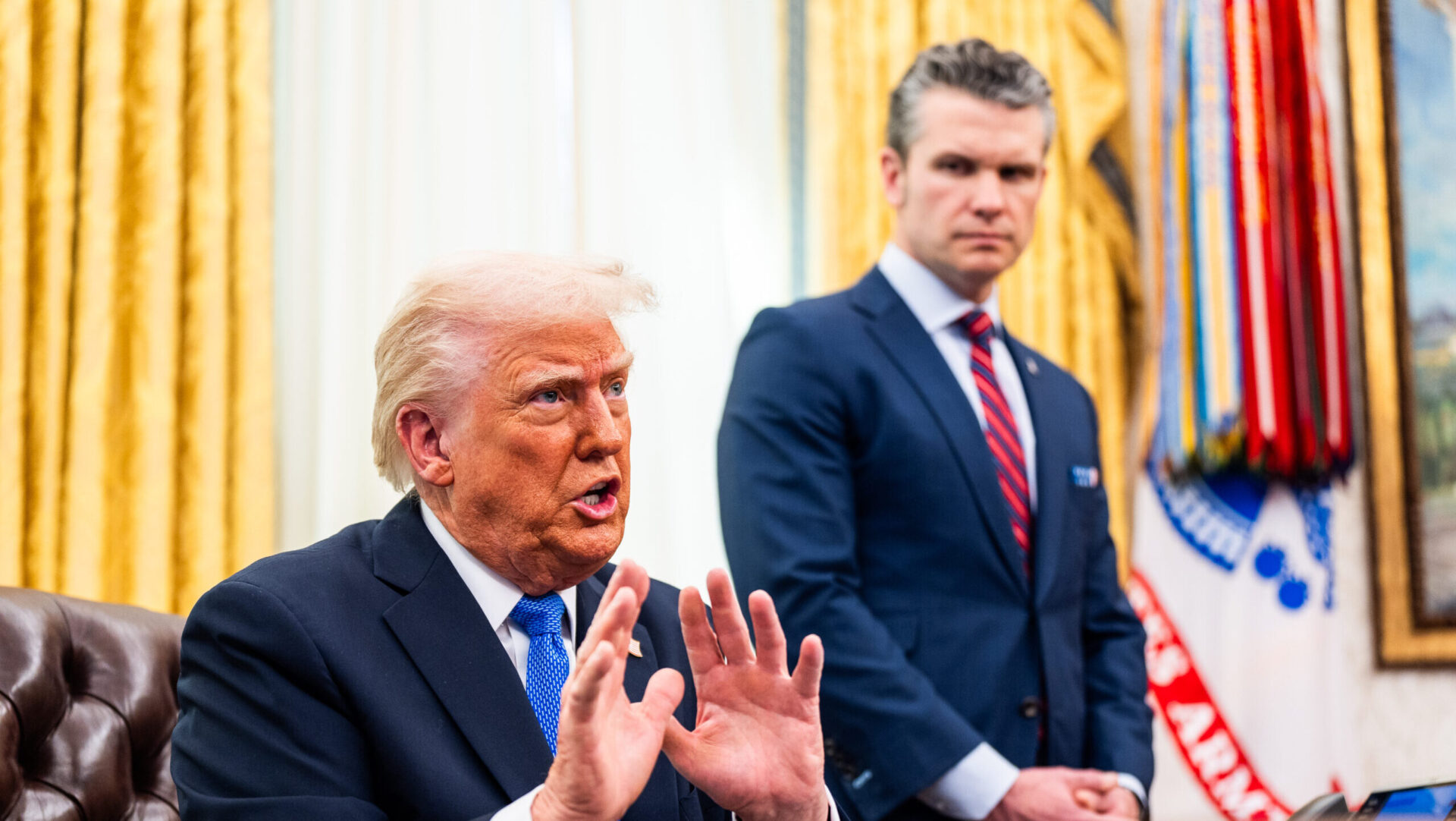
A day later, Trump further upped the ante, threatening that Washington would cut off all aid to Nigeria, ordering the Pentagon to “prepare for possible action” in “that now disgraced country” and vowing to “go in … ‘guns-a-blazing’”, for a “fast, vicious and sweet” operation, if its government failed to stop Islamists from killing Christians. Trump’s secretary of state, Marco Rubio, promptly endorsed those directives as State Department policy. Hours later, the U.S. defence secretary (a title styled as “Secretary of War” by the Trump administration), Pete Hegseth, declared that “the Department of War is preparing for action: either the Nigerian government protects Christians or we will kill the Islamic terrorists who are committing these horrible atrocities”. On 3 November, Trump doubled down on his earlier claim that Christians are being killed “in very large numbers” in Nigeria, hinting that U.S. military action could take several forms, from airstrikes to ground incursions in the country.
Are Christians in particular danger in Nigeria?
It would be hard to credibly argue that Christians, who along with Muslims are one of the two biggest religious groups in the country (the former likely represent somewhat less than half and the latter slightly more of Nigeria’s population), are as a group at greater risk than other Nigerians. Rather, reports that seek to reduce Nigeria’s security situation to a single story of widespread persecution and mass slaughter of Christians, all over Nigeria, misinterpret the complexity of violence and inter-faith relations in the country.
By way of background, Nigeria’s security threats are multi-faceted and overlapping, stemming from among other things religious extremism, banditry, resource competition, communal land disputes and separatist agitation. They also tend to be enmeshed in history, entangled in poverty and exacerbated by political contestation. There is wide acknowledgement that the security situation has gotten worse in recent years, with Amnesty International reporting in May that roughly 10,000 people had been killed and many more abducted since the inauguration of Bola Tinubu as president two years earlier in 2023 – though the government disputed that figure. But claims of numbers of victims by religious affiliation are highly suspect, especially given that it is often difficult to identify the religious affiliation of each person killed or kidnapped.
Data suggest that killings motivated explicitly by religious extremism or intolerance account for only a part of overall fatalities across [Nigeria].
Moreover, narratives that focus solely on the killing of Christians tend to ignore the reality that religion is often a secondary factor in Nigeria’s internal violence, rather than its main driver. While there have certainly been many incidents, in recent years, in which religious groups and places of worship have been targeted for atrocities, data suggest that killings motivated explicitly by religious extremism or intolerance account for only a part of overall fatalities across the country. In 2022, a study by the independent international conflict monitor, the Armed Conflict Location and Event Data Project, found that from 1 January 2020 to 30 June 2022, amid an overall rise in attacks on civilians, “violence in which Christians have been specifically targeted in relation to their religious identity accounts for only 5 per cent of reported civilian targeting events”. In recent years, most victims of violence in the North Central zone (or Middle Belt) have been Christians in farming villages from various sedentary ethnic groups. Most are presumed to have been killed by Fulani herders and militia (who are predominantly Muslim), but they were not killed expressly because of their faith.
Political and communal leaders in the North Central zone sometimes describe the killings in their region as “genocidal”, but they often also elaborate that the killings are motivated by ethnic or material considerations, rather than religious differences. For instance, the Tiv ethnic group’s supreme traditional chief, James Ortese Ayaste, told Tinubu in June that: “What we are dealing with here in Benue is a calculated, well-planned, full-scale genocidal invasion and land-grabbing campaign by herder terrorists and bandits”. In July, the governor of neighbouring Plateau state, Caleb Manasseh Mutfwang, said the recurring attacks were carried out by terrorist groups “targeting our people” because their “land … is very fertile – rich in food produce and mineral deposits”, and that in parts of the state, the marauders were “living conveniently on lands they pushed people away to occupy”. In other words, though the victims are mostly Christians, the primary reasons behind the killings have been land and other resource grabs, not a desire for religious cleansing.
A narrow focus on the “genocide of Christians” narrative misses other considerations as well. One is that the epicentres of instability in Nigeria today include the North East, where Islamist groups have waged a fifteen-year insurgency against the Nigerian state, and the North West, where groups of so-called bandits are continually pillaging rural settlements and terrorising the inhabitants. In both of these regions, the majority religion is Islam, and most of the victims have, by all appearances, been Muslims.
It is also important to take into account that in some regions the perpetrators of violence against Christians may be co-religionists. For example, in the predominantly Christian South East zone, where at least 1,844 people were killed between January 2021 and June 2023, with many clerics and numerous others kidnapped, the governor of Anambra state, Chukwuma Soludo, in July, said that: “99.99 per cent” of the criminals responsible for killings and kidnappings in the South East zone were ethnic Igbo (predominantly Christian), not Islamists or Muslim Fulani herders. More recently, he again said Christians are killing and kidnapping fellow Christians, in the South East, in circumstances that have nothing to do with religion.
Claims of state sponsorship of anti-Christian violence fail to take into account the government’s flawed but still substantial support for the free exercise of religion.
Finally, claims of state sponsorship of anti-Christian violence fail to take into account the government’s flawed but still substantial support for the free exercise of religion. Nigeria’s constitution guarantees freedom of religion and there is no official policy of persecution. Indeed, Nigeria’s security agencies have both Christians and Muslims among their leaders. It is true that in some parts of the country, both Christians and Muslims complain of constraints to their freedoms of religious practice. In some of the twelve northern states where governments restored Sharia law two decades ago, citizens have been lynched or jailed over charges of blasphemy. But, for the most part, Nigerians of all faiths live, trade and work together, peacefully. In the South West especially, there is a high degree of inter-faith tolerance, and Christians and Muslims frequently inter-marry, with the result that many families today follow a mix of faiths. Notably, while Tinubu is a Muslim, his wife is not only a Christian, but also a pastor in one of Nigeria’s largest Pentecostal churches, the Redeemed Christian Church of God.
All that said, the high level of insecurity across the country has left many religious communities, including Christians, at risk, due to deficits of political will in the government and operational capacity in the military and other security services. The failure to hold perpetrators of violence to account has also created both a sense of impunity among those who would carry out attacks and a sense of grievance in the affected communities. Some political, community, and religious leaders, most notably a former army chief and defence minster, Theophilus Danjuma, have charged (without substantiation) that federal forces are “colluding” with the armed groups that are attacking predominantly Christian farmers in the North Central zone in an effort to seize their property.
How do Nigerians account for Trump’s pivot to such an aggressive policy?
The motivations are not fully clear, but several overlapping theories have emerged in Nigerian analytic and government circles.
First, over the years, some Nigerians, at home and in the diaspora, have fed the U.S. Republican Party’s powerful evangelical base reports of alleged widespread persecution of Christians in Nigeria. Many Christian clerics in the Middle Belt, where Christians have suffered numerous mass killings, have called out for help from fellow Christians in Western countries, including the U.S. Biafra separatists. Some groups in Nigeria’s predominantly Christian South East that are agitating for restoration of an independent republic of Biafra – such as the Movement for Actualization of the Sovereign State of Biafra, Indigenous People of Biafra and the Biafra Republic Government in Exile – have repeated narratives of Christian persecution in Nigeria, seemingly to justify their case for an independent country or to attract international sympathy and support.
Some non-governmental groups based in the South East, notably the International Society for Civil Liberties and Rule of Law (Intersociety), have also been vocal drivers of this narrative. In an April 2023 report, InterSociety claimed that, between 2009 and 2023, at least 52,000 Christians were killed and over 14 million displaced from their homes, with more than 20,000 churches and Christian schools attacked by Muslim extremist groups including Boko Haram, Islamic State in West Africa Province and Ansaru, along with others it labelled “jihadist Fulani herdsmen” and “jihadist Fulani bandits”, in many of the country’s states. Another InterSociety report, published in August 2025, claimed that Nigeria was “headquartering” 22 Islamic terror groups that are “seeking to obliterate Christianity and indigenous cultural heritage and impose Sultanate in Nigeria by 2075”. Many Nigerian security analysts, and even some Christian leaders, question the methodology behind this data. On 6 November, a report by the British Broadcasting Corporation’s Global Disinformation Unit said that “for data that could be shaping US policy towards Nigeria, InterSociety’s work is opaque” and that “data sources quoted by InterSociety in its reports do not reflect the figures published”.
Meanwhile, religious freedom advocates in the U.S. raised the profile of these reports. For example:
- In February 2024, Open Doors, an organisation that tracks Christian persecution, claimed that “every two hours, a Nigerian Christian is killed for their faith”, that 82 per cent of Christians killed around the world from October 2022 to September 2023 died in Nigeria and that Nigeria had become “the deadliest place in the world for followers of Jesus”.
- In March, the U.S. House Foreign Affairs Committee, prompted by the testimony of a Nigerian cleric from Benue state, Bishop Wilfred Anagbe, formally advised Trump to sanction Nigeria.
- In July, the U.S. Commission on International Religious Freedom also urged that Nigeria be returned to the Countries of Particular Concern list (where Trump placed it during his first term, and from which the Biden administration removed it).
- In early September, Senator Ted Cruz, a Republican from Texas, introduced a bill to impose sanctions on Nigerian officials “who facilitate violence against Christians”.
- On 27 September, television talk show host Bill Maher, apparently trying to dim the global spotlight on Israel’s deadly military campaign in Gaza, credulously reeled off breathtakingly steep numbers of Christians allegedly killed in Nigeria. It was amid this pressure that Trump put Nigeria back on the Countries of Particular Concern list.
A second (perhaps less well grounded) theory is that the U.S. is seeking to deepen religious fault lines in Nigeria, as a means of crippling Abuja’s influence in regional and global affairs – eg, by blocking its aspiration to represent Africa as a veto-wielding member on a reformed UN Security Council. Proponents of this theory, some in Nigerian government circles, say the Country of Particular Concern designation and Trump’s threat of military action are both intended to punish Nigeria for actions the Trump administration may have perceived as unfriendly, including:
- In January, Nigeria joined the BRICS group of countries as a “partner member”. This is an organisation Trump labelled “anti-American” and “set up to hurt” the U.S. by undermining the dollar.
- In July, Nigeria refused to honour a U.S. request that it take in Venezuelan deportees, including convicted criminals and individuals with unresolved immigration status, and with no legal or national ties to Nigeria.
- In September, addressing the UN General Assembly in New York, Nigeria’s Vice President Kashim Shettima was highly critical of Israel’s campaign in Gaza and the toll it took on Palestinians. According to this theory, the narrative of widespread persecution and mass slaughter of Christians in Nigeria was amplified by some U.S. media, to counter Nigeria’s condemnation of the killings in Gaza.
- Also in September, shrugging off worries about the potential impact of Trump’s trade policy, particularly tariffs on Nigerian exports, President Tinubu said: “If [our] non-oil revenue is growing, then we have no fear of whatever Trump is doing on the other side”. Some analysts saw this remark as an undiplomatic poke at Trump that risked blowback.
A final theory is that President Tinubu has failed to curry favour with Trump. He has not met with the U.S. president since assuming office, instead delegating Vice President Shettima to attend the UN General Assembly for two years in a row. By contrast, he has visited France eight times (and for a total of over 60 days) since he became president in May 2023, cultivating a warm partnership with French President Emmanuel Macron.
But while this speculation about geopolitical motivations is entirely understandable, the reason for Trump’s threats likely has far more to do with domestic politics. Trump’s rhetoric is in keeping with his longstanding efforts to play to his domestic political base, which includes significant numbers of evangelical Christians.
How has the Nigerian government responded to these developments?
Trump’s threats are a setback for President Tinubu at home and abroad. While running for office in 2023, he had promised that, as president, he would “improve Nigeria’s standing and dignity” among nations. But the rift with the U.S., along with other foreign policy challenges (notably the unprecedent breakaway of three member states from the Economic Community of West African States (ECOWAS) while Tinubu was chairman in 2024), have deepened concerns among many Nigerians about Tinubu’s leadership and raised more questions about Nigeria’s global standing.
Responding to the White House threats, the Nigerian president has been trying to project both strength and restraint. On 1 November, he publicly rejected the accusation that Nigeria is allowing Christians to be killed, reminded international audiences that freedom of worship is enshrined in Nigeria’s constitution and insisted that the Nigerian government is fighting terrorism in all its forms. A presidential spokesman, Daniel Bwala, said Nigeria would “welcome U.S. assistance” in combating Islamic insurgents if Washington respected its “territorial integrity”. He later told reporters that Tinubu plans to meet with Trump “in the coming days … either in the State House (Abuja) or White House (Washington)” to ease tensions. (As yet, there is no public confirmation of such a meeting by the U.S.) Information minister, Mohammed Idris, said the government was working through multiple domestic and international channels to address Trump’s claims and threats. Pushing back against accusations that the Nigerian government had done nothing to stop mass killings, Idris said that, under Tinubu’s watch, security forces had killed 13,500 “terrorists” and arrested 17,000 others.
What has been the public reaction in Nigeria?
Views fall along a spectrum. While few prominent Nigerians support the idea of armed outside intervention without Abuja’s consent, some find some utility in the Trump administration’s new posture. The national secretary of a network of opposition political parties, the Coalition of United Political Parties, Peter Ameh, said his organisation would welcome foreign assistance if the federal government fails to end armed group killings of Nigerians on its own, though he suggested that intervention would need to occur lawfully – implying it would require the Nigerian government’s go-ahead. The separatist group Indigenous People of Biafra said it would “fully support” Trump should he move to “end ethno-religious genocide in Nigeria”. Similar figures have argued that even if the U.S. does not eventually carry out its threat of a military operation, it has already sent a necessary message to the Nigerian government. Human rights lawyer Inibehe Effiong said: “If this is what it will take for the Nigerian government to wake up to its primary responsibility, so be it”. The chairman of the Christian Association of Nigeria in the nineteen northern states, Reverend John Joseph Hayab, similarly said Trump’s core message should be seen less as a vow to attack Nigeria, and more as a caution to the Nigerian government to take decisive action against terrorism.
But many Nigerians, including regional groups and diplomats, see Trump’s rhetoric as much more pernicious, viewing it as a threat of “invasion” and an insult to Nigeria’s sovereignty. They point out that U.S. military action in the name of humanitarian intervention has a poor track record, for example in Libya. They add that Trump’s talk may only push Nigerians deeper into sectarian crisis. On 2 November, a prominent northern elders’ group, the Arewa Consultative Forum (ACF), whose leadership comprises both Muslims and Christians, lamented that “for years … successive Nigerian governments have appealed to the U.S. for assistance to no avail”. (The U.S. has in fact provided assistance though it sometimes found the partnership with the Nigerian government frustrating and did not always provide what it sought.) They urged that any foreign support should focus on assisting the Nigerian military rather than benefiting a particular religious group.
In the South West, the pan-Yoruba ethnic organisation Afenifere said no foreign power has the right to “invade” another sovereign nation, whatever the pretext.
Others have made similar points. In the South West, the pan-Yoruba ethnic organisation Afenifere said no foreign power has the right to “invade” another sovereign nation, whatever the pretext. The Supreme Council for Sharia in Nigeria said Trump’s actions reflect a “one-sided narrative” that ignores the complex realities driving violence across Nigeria. A prominent if controversial Kano-based Islamic cleric, Sheikh Ahmad Gumi, called on the Nigerian government to summon the U.S. ambassador to demand a retraction of Trump’s statements. If it is not forthcoming, he said, Abuja should sever diplomatic ties with Washington and explore other options for economic and military partnerships. A former presidential candidate of the African Action Congress and notable Tinubu critic, Omoyele Sowore, said Trump’s threats, allegedly made to protect Christians, “may sound appealing to some” but “history has shown this [tack] to be perilous”, as U.S. military intervention often leaves nations less stable than before.
There are also figures occupying a middle ground – focusing on the need for caution and quick diplomatic engagement to settle the dispute with Washington. A former governor of Kano state (in Nigeria’s North West zone), Rabiu Musa Kwankwaso, who was also presidential candidate of the New Nigerian Peoples Party in the 2023 general elections, urged Tinubu to dispatch “special envoys drawn from seasoned diplomats that could engage the White House directly” and to “appoint permanent ambassadors to represent Nigeria’s interests on the international stage”. He also asked that the U.S. supply the Nigerian authorities with cutting-edge technology to tackle insecurity rather than take action that could further polarise the country.
Finally, there are those who blame the rift on failures of Nigeria’s governance and diplomacy. Tinubu has not appointed ambassadors to head Nigeria’s missions abroad, including to Washington, since he recalled all the country’s envoys in late 2023. Against this backdrop, the Labour Party’s presidential candidate in the 2023 election, Peter Obi, both criticised Washington’s placement of Nigeria on the Countries of Particular Concern list, and said it was a direct consequence of Abuja’s “incompetent leadership and reckless governance”. A former deputy permanent representative of Nigeria to the UN, Usman Sarki, complained that recent events point to a “trust deficit between our president and theirs”. He added, “We don’t manage our diplomatic relations in a professional or strategic manner. Nigeria currently has no ambassador or senior-ranking diplomat at the UN. We lack spokespersons in our foreign missions, which further weakens our voice on the global stage”.
How have international actors responded?
Vocal support for Nigeria has come from two main quarters. On 4 November, China said it “opposes any country using religion and human rights as an excuse to interfere in other countries’ internal affairs, and threatening other countries with sanctions and force”. At a press conference in Beijing, Chinese foreign ministry spokesperson Mao Ning said China, “as Nigeria’s comprehensive strategic partner”, firmly supports the Tinubu government as it “leads its people on the development path suited to its national conditions”.
Later the same day, ECOWAS issued a communiqué, dismissing claims of genocide afflicting any religious group in the region and arguing that such charges are aimed at eroding the bloc’s cohesion and worsening insecurity in West Africa. Such statements from ECOWAS may be more symbolic than substantial, however; and it is hard to know what kind of concrete support China would offer should the U.S. make good on its threats.
What could the termination of U.S. aid and a military operation mean for Nigerians?
Further cuts to aid, which is already diminished by Trump’s shutdown of the U.S. Agency for International Development earlier in the year, risks scaling down or shutting some health and education programs, as well as weakening humanitarian relief efforts, in parts of Nigeria, including where conflict-displaced populations are in dire need. It will not protect Nigerian Christians; instead, it will increase suffering among many people that Trump purports to be defending.
Regarding military action, many Nigerian officials, country experts and Western diplomats suspect that Trump’s threats are mere bluster, but no one seems certain. During his years in office, Trump has displayed an aversion to costly military adventures, but he has not been shy about deploying airpower (as in the short U.S. intervention in Israel’s twelve-day war with Iran) or about escalating conflicts he inherited. In fact, Trump seems to relish lopsided deployments of U.S. force, as seen in the Caribbean Sea, where the U.S. is striking alleged drug smuggling vessels. Notably, late in his first term in office, Trump ordered a special forces raid in northern Nigeria to rescue a U.S. citizen, Philip Walton, who was abducted in neighbouring Niger. The raid rescued Walton and resulted in the death of six of Walton’s seven captors.
Trump’s rhetoric about Nigeria recalls the hubris of other U.S. failed interventions.
Still, Trump’s rhetoric about Nigeria recalls the hubris of other U.S. failed interventions, lacking any realistic sense of what a military engagement might achieve or of what the negative (if unintended) consequences might be. Operationally, it is difficult to conceive how a brief air campaign could afford enduring protection to farming communities spread out across Nigeria’s North Central zone. Islamist groups, and particularly the militias attacking these communities, are dispersed and hard to target with any precision. Some of the killers live in proximity to villages, making “collateral” civilian casualties from airstrikes almost inevitable.
Moreover, instead of protecting Christians, such an action risks deepening Nigeria’s religious divides and increasing insecurity in the country. Washington has already misread Nigeria’s security landscape, viewing it in narrow religious terms, focusing on one group of victims rather than the threats faced by everyone. Any military action to save members of one religious group could polarise Nigerians along religious lines, undermine local efforts at improving inter-faith relations and encourage more extremism. Even if the U.S. does not follow through with a military operation, the toxic commentary its threats have generated among Nigerians on social media are hardly conducive to better social cohesion.
What should the Nigerian government do now?
Trump’s belligerent rhetoric has been able to get traction in part because Nigeria’s mass killings have gone on for years, seemingly with no end in sight. The Nigerian government needs to summon utmost political will, and marshal greater resources, to dismantle extremist and criminal groups in Nigeria’s North East and North West. It must also redouble efforts to secure farmers in the North Central zone against the predations of armed groups, and make rapid and sustained progress on livestock sector reform, which is crucial to ending the herder-farmer tensions, land grabbing and the resultant killings. In these respects, it needs to urgently address the critical deficits of the armed forces and police, especially by scaling up their numbers and ensuring they are properly equipped to protect people from armed groups. It should move much faster on ongoing initiatives for improving citizens’ security, such as quickly deploying the 36,000-man Forest Guards Tinubu established in May to secure forests countrywide, and recruiting the 30,000 new police personnel he approved in June. For these, it should solicit greater technical and material support from foreign partners, who should provide it – taking into account that they cannot afford Africa’s most populous country further losing its grip on human security.
The government should also improve its engagement with international actors, in order to communicate Nigeria’s security realities more clearly and manage narratives about the country more effectively. In this regard, an urgent priority is for Tinubu to appoint competent ambassadors, to staff Nigeria’s key diplomatic missions, as Crisis Group urged in a December 2024 report.
What should the U.S. government do?
The U.S. government should step back from its threats to mount a military operation in the name of saving Nigerian Christians, which could box it into an ill-fated intervention. It should also dial back its abrasive rhetoric toward Nigeria, which is already stirring anti-U.S. sentiment among many Nigerians (including Christians). While there is a constructive role for Washington to play, the U.S. should avoid any policy of selective “humanitarian intervention” and make clear that its concerns encompass all Nigerians of all religions, in order to avoid deepening sectarian divisions in the country.
Additionally, the U.S. government should keep the door open to engagement, dialogue and cooperation with the Nigerian government – from high-level summits to meetings of the U.S.-Nigeria Binational Commission, the foremost platform for expanding and sustaining bilateral cooperation. Through these channels and platforms, it should continue to offer its encouragement and support for strengthening the country’s capacity to protect all of its citizens.
International Crisis Group (ICG)