

By Festus Adedayo, February 1, 2026

SUBÚ-seré? Poetic licence gave me the indulgence of the above headlining. It is a broad, idiomatic expression whose surface is barely scraped by words like “tumbling” or “falling”.
Subú-seré cannot be captured by a single slip. It finds expression in repeated falls. Subú-seré is deeper than its nearest English expression in connotation and texture. It can, in one breath, be deployed to describe a state of chaos, mismanagement, or a “tumble”.
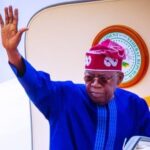
In the last few days, the Nigerian president’s fall in Ankara, the Turkiye capital, has engaged the Nigerian world. At a welcome ceremony by his Turkish counterpart, Recep Tayyip Erdogan, the president suddenly stumbled and fell. He had just walked past a line of dignitaries which included Turkiye soldiers when, as he moved to the right of Erdogan, the Subú-seré occurred. A viral video uploaded on the Turkish president’s X handle showed him helping up his colleague president. Erdogan also held firmly to his hand thereafter like you hold a kindergarten kid crossing the road. About 45 seconds after the fall, the Nigerian president is seen in the video standing next to Erdogan and beaming a wry smile.
The day after, while President Tinubu was shown being seen off Turkiye by Erdogan on a national television, ostensibly on his way to Nigeria, Nigerians do not yet know where in the whole wide world their president is holed up in.
Concerns immediately ripped through Nigeria. The presidency however downplayed them all, maintaining that Tinubu was in great shape. Sunday Dare, his aide, said not only was the president in good health and unhurt from the slip, he immediately continued with a scheduled bilateral meeting in Turkiye. Presidential spokesman, Bayo Onanuga, took the explainer a notch higher. Tinubu had tripped as he stepped on a metal object on the floor, which made him lose his balance, he said.
Onanuga then went into his usual argumentative fallacy of argumentum ad hominem. This fallacy is distinguished by enemy-repelling and blame-trading. It is an everyone-but-self narrative. While at this, the presidential aide took his time to school Nigerians on the difference between a fall and a stumble.
“This is not a big deal, except for those who want to make mischief out of a fleeting incident. It was a mere stumble, thank God, not a fall” he said.
As the Yoruba would say, even if we do not know anything else, we know that three people cannot stand in twos.
On June 12, 2024, during the Democracy Day celebration, President Tinubu had earlier fallen in public. It was at the Eagle Square. The president fell; pardon me, a la Onanuga, he stumbled, as he was about to board a parade vehicle. But Tinubu himself made a light joke of it.
“Early this morning, I had a swagger and it’s on the social media. They’re confused whether I was doing bùgá or doing bàbánrigá (two popular dance steps),” he said. “But it’s a day to celebrate democracy while doing dobale (salute to elders) for the day. I’m a traditional Yoruba boy, I did my dòbálé.”
The president probably dobale-ed for Erdogan, too in Ankara last week, being a good Yoruba boy? But, not to worry, he is in a great shape, said his handlers. But, shouldn’t we be worried?
As Onanuga said, it should ordinarily be no big deal that a mortal man falls, either literally, metaphorically or figuratively. Drilling deep into the figurative of falling, King Sunny Ade, Yoruba Juju music great, in a 1970s LP, pilloried his mockers who were deriding his fall.
“Otá mí má yó mí, b’é mi bá subú” he fired, submitting that “if I fall, I will heave myself up” — “b’émi bá subú, èmi á dide è”.
Falling and rising are part of the existential slopes of humanity. Whether as a literal fall or as metaphor, it is doubtable whether a man can waddle through the sloppy contours of life without experiencing life’s fluctuations. They are embedded into the whole concept of living, so much that life would not be life if man doesn’t rise and fall.
It was probably a realization that life is fraught with falling and rising that Francois-Marie Arouet, famously known by his pen name, Voltaire, one of the best Enlightenment philosophers, satirist and historian, said of life that it is “thickly sown with thorns, and I know no other remedy than to pass quickly through them”.
Voltaire himself lived a life of sicknesses and diseases. He is often quoted as saying my life is a struggle and frequently wrote about the miseries of existence. Born with a weak bodily constitution, Voltaire suffered afflictions of chronic health issues, one of which was the Crohn’s disease, distinguished by its frequently leaving him bedridden.
So also was Blaise Pascal. Voltaire’s French compatriot, Pascal was a mathematician, physicist, philosopher and a Catholic writer. He, too suffered from lifelong, debilitating health conditions which included celiac disease, severe migraines with visual auras, peripheral neuropathy, epilepsy, and possibly craniosynostosis (skull deformity) and autism.
There were and are many more great people whose lives were buffeted by ailments. Yet, sicknesses and diseases did/do not define them.
The Lord Jesus Christ counsels that in this world, there would be tribulations. These include sicknesses, diseases and even death.
Jamaican reggae group, Mighty Diamonds, a harmony trio which recorded roots reggae with a strong Rastafarian influence, said this much. In their famous track, Have Mercy, they sang that:
“Man was made to suffer, yeah / And women were made to feel the pain”
but prayed to “Jah” to “have mercy” on him/her.
On 4 April, 2021 and 20 October, 2024, I wrote two pieces which centered on presidential ill health. While the earlier one was entitled, “The President is a sick man: Buhari’s Secret Therapy Inside the ’Oneida,” the second was, “The president is a sick man.”
The first was a lamentation of President Muhammadu Buhari’s knee-jerk and off-the-cuff jetting out of Aso Rock Villa like a wandering evil spirit. The second lamented that in President Tinubu, Nigerians were “back to presidential night-time recourse to UK hospices and presidency’s spins to shroud the truth.”
Permit me to regurgitate chunks of the essential elements of those offerings.
In those pieces, I took my headlining from Matthew Algeo’s book with the title, The President Is A Sick Man. Algeo, Philadelphia-born, award-winning American journalist, did a chronology of the medical travails of Grover Cleveland, the 22nd and 24th president of the United States of America, presiding over America from 1885 to 1889 and 1893 to 1897.
The president suddenly disappeared from the radar to go have a cancer surgery. The book shows how inexorably linked the health of a president and the health of the nation are.
In those pieces, I said that shrouding the health status of African leaders from their constituents, as well as their sudden disappearance stunts, have a long history.
In October 2016, President Peter Mutharika of Malawi disappeared off the radar, by which time he was 76 years old. Mutharika had attended the United Nations General Assembly mid-September and didn’t come back until 16 October.
The same was the story of Gabonese President, Ali Bongo, son of Omar Bongo. At a time in November 2018, Ali was said to have been “seriously ill,” with speculations rife that he had died after suffering from a stroke. He was just 59 years old then. Findings, however, later revealed that he had not died but that was holed up in a Saudi Arabia hospice.
Benin Republic’s Patrice Talon is perhaps one of the rarest breeds of the African leadership caste. Talon unusually and uncharacteristically made public disclosure of what ailed him. After the 59-year old president, who took over from Thomas Yayi-Boni, disappeared from the radar for about three weeks, his minders, on 19 June, 2017, released the information that he had undergone two successful surgical operations in Paris.
He said doctors had found a lesion in his prostate. This further necessitated another surgery in his digestive system.
In 2006, (I guess), at the Enugu State Governor’s Lodge, I saw then Katsina State governor and PDP presidential candidate, Umaru Yar’Adua, for the very first and last time. He had come to pay a thank-you visit to Governor Chimaroke Nnamani, after being picked as the man to fly the PDP banner in the 2007 elections.
He was frail and looked very sickly. I noticed a round patch of flesh on his left wrist, indicating flesh engraftment. As the meeting progressed, he took a mouthful of his drugs.
In 2011, I also chanced on then ex-Governor Tinubu taking his drugs. In my existential naivety, I was inwardly aghast that anyone would swallow such a mouthful. Today, I swallow almost same ounce of drugs as these men. Like all mortals, I have been served my own breakfast by life and fate.
It reminds me of a line from Ilorin Dadakuada music bard, Odolaye Aremu. He chanted that, only God knows how many more people would be drenched by a ceaseless rain (Ojò tí nò tí ò dá, Olórun l’ó mo iye eni tí yió pa).
Hiding the health status of our leaders is a carry-over of traditional Africa where the king was portrayed as Fredrich Nietzsche’s Superman.
Indeed, the mentality behind pulling shrouds on African leaders’ health is a continuation of the empires and monarchies of Africa. There, kings were infallible, super-human and incapable of falling prey to the afflictions of plebeians and common people.
African leaders of today see themselves in the same mould of kings and emperors. They must not be heard to have failing health, nor their health statuses made public.
In what other way can it be said to them that, no matter one’s status in life, no mortal is immune to health failings and death?
This trend that I call the Kabiyesi mentality, has bred a pandemic of leaders of Africa who, almost like 19th century Cleveland, “abdicate their thrones” covertly to seek remedies abroad, without the knowledge of their people.
Those who argue strongly in defence of Nigerian sovereignty should well know that that same sovereignty is seriously threatened by the Nigerian president being a captive patient in a foreign hospital.
The truth is, presidents are as mortal as the beggar on the street. Any attempt to wear on them a contrary visor is akin to immortalizing their crass mortality.
Presidents’ pooo-poo smells like every other mortal’s and they are capable of taking ill and dying like the mad man on the street.
It is bad enough that citizens don’t know the whereabouts of their president. It is even worse that a president, like the biblical Saul who crept out of the palace at nocturne to consult the Witch of Endor, surreptitiously gropes in the dark to hospices of the world.
Are presidential handlers aware that the office of the president is a public trust which gives citizens the right to know where their president is?
What I counsel was preached over four and a half decades ago by evergreen Yoruba Apala music lord, Ayinla Omowura.
Disenchanted by the then reigning fad of women bleaching, Omowura espoused what I call the parable of the filthy. While asking young ladies to maintain the dignity of their African skin and values, he sang that once the filthy acknowledges their resenting personality, the world would cover them with sweet-smelling cloth.
“Jéwó òbùn k’án dá’so ró e” he sang.
So, let the presidency, like Omowura’s filthy woman, come clean with us on what ails our president.
While it is inhuman for any mortal to disparage another mortal on account of their health, the president’s health status must be on the palm of Nigerians.
In May last year, President Donald Trump underwent a complete health check. Caroline Leavette, the White House Press Secretary, had given Americans Trump’s Annual Physical Examination Results.
The National Assembly must pass a law that makes it compulsory for our presidents to undergo same checks in a Nigerian hospital.
While it is public knowledge that president Tinubu is battling a knee issue and has even undergone a knee cap replacement, details of it should not be kept away from the people.
If need be, the president can be made to operate from the wheelchair. There is no crime in it. Nigerians did not vote to have a macho or an athlete as president.
If he has other predisposing ailments that he is battling, it will be in sync with the life of every other mortal. We will pray for him as we do not want him dead.
To have presidential aides build a wall of immortality round him or make a Superman of the president is childish and distressing.
Whatever it is, we wish our president a speedy recovery.
Festus Adedayo is a renowned columnist with Nigerian Tribune