
By Hakeem Baba-Ahmed

“In moments of crises, the wise build bridges, while the foolish build dams” – African Proverb
The nation should be concerned about the delays in passing amendments to the Electoral Bill, which will provide the legal and operational framework for the 2027 elections. The bill contains several key amendments to the 2022 Electoral Act. The House of Representatives concluded work on the amendments and passed them to the Senate late last year. The Senate reviewed the amendments and decided to establish another committee to examine them more thoroughly. Now, some members of the House say it should look more critically at its work on some aspects of the bill and are likely to propose more amendments in the final bill.
We will have to wait for the House to resume to know whether this review will be undertaken and whether it will form part of the comprehensive amendments to be debated and forwarded to the President. The Representatives are on a two-week recess as we speak. The Senate will then review the proposed amendments (with or without review of earlier amendments), decide on them, and forward them to President Tinubu for his consideration. Whether or not he approves all or some of the amendments, and when he approves them, is entirely left to him and his politics. There are constitutional provisions for overriding the president in the event of delays or hostility on his part. Still, this particular legislature, as currently composed, will not even consider this option.
Substance and timing are critical factors here. If the House of Representatives does revisit certain provisions dealing with multiple membership of political parties, the practice of seeking more ‘friendly’ judges by candidates (forum shopping) to handle selection disputes and addressing penalties for default, how will this affect the work of the special committee of the Senate and eventual submission of the bill to the President? How much substance can be sacrificed for speed? Politicians and keen observers must be looking at vital provisions that could be threatened or breached.
Section 28(1) of the Electoral Act 2022 requires election notices to be published at least 360 days before the general election date. This is still the law, and all deadlines can only exist within its framework. The longer it takes for the key elements of the bill to be settled, the more they will be threatened by the foundational provision for election notice. On the other hand, the provisions of the framework could be affected, putting vital reforms and amendments in jeopardy and potentially affecting the quality of the elections. As things stand, timing is becoming a serious challenge.
Confusing as it may sound, it is not new to Nigerians. Lawmakers spend huge and countless meetings every few years, assembling experts, stakeholders, pressure groups, political parties, and the media to discuss changes that should make our elections more credible. Then they treat key reforms so casually, you would think they do not want to change systems and processes that they are familiar and comfortable with.
The President exerts a huge influence on the reform process, many times sabotaging the process through delays, withholding funding or rejecting changes and leaving too little time for the legislature to contemplate override. This time, the stakes are very high indeed. The reforms make the realtime transmission of election results to INEC’s IReV portal mandatory. This is the magic wand Nigerians call direct and mandatory transmission from polling units to Abuja. The current law does not make such provisions.
Another provision mandates all political parties to maintain digital registers of its members and issue membership cards to them, a provision that will be costly and challenging for millions who have no access to vital documents or technology. It requires all political parties to submit to INEC such registers at least 30 days before the party’s primaries, congresses and conventions. Only members captured appropriately in these registers can be nominated or vote in inter-party contests. No party shall use another type of register, and parties without these registers cannot field candidates for elections. There are other clauses in the amendments such as upward reviews of campaign spending limits and restrictions on individual and corporate donations towards campaign expenses. Though virtually impossible to enforce in our context, they are, nonetheless, useful to have in an Electoral Act.
Ordinarily, the thinking should be that a governing party with 30 governors and more than three-quarters of federal and state legislators in its ranks should not worry over rules of an electoral game. Add a stupendous war chest and an opposition tip-toeing around massive minefields; it will be fair to forgive the thinking that APC will saunter back into power, whatever the rules are. APC does not do ordinary things. An electoral framework which bestows the slightest tilt towards a fair playing field will alarm the party that thinks only having everything is victory. If it has its way, timelines will be managed in a manner that gives it an edge and puts the opposition at great disadvantage.
INEC as is, is unlikely to shout too loudly when resources for ensuring a fail-safe IReV are not available as and when due. INEC and the administration know many parties will labour to produce digital membership registers, and meet deadlines in submitting them. Politicians eyeing last-minute defections will be policed against the new amendments on switching parties at the last minute. APC will be vigilant and resolute in policing internal affairs of the opposition, and will throw both INEC and the judiciary at it without any hesitation.
First, though, the amended electoral act must be passed without any further delays. The Nigerian legislature’s fatality rate has always been high, and this one in particular has a very poor reputation among many Nigerians, no thanks to its barefaced dalliance with President Tinubu. This is one occasion when legislators should be reminded that in a free and fair contest, many of them are unlikely to go back to their seats for many serious and sundry offences, principal among which is their historic capitulation under this President.
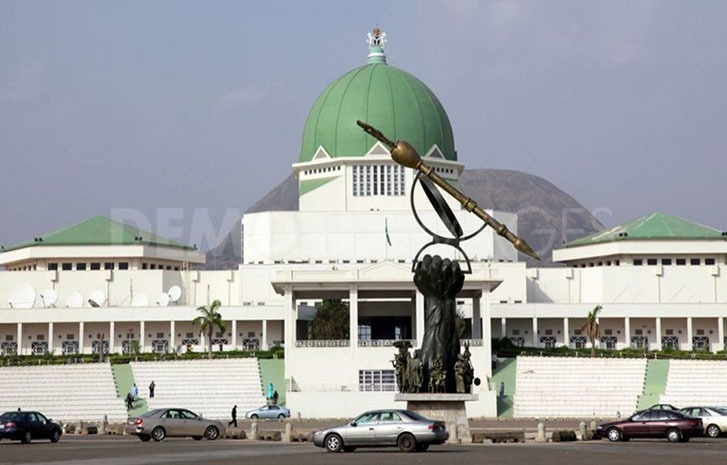
National Assembly will do a lot of good for itself if it concludes the review of the Electoral Act and lets President Tinubu decide whether he wants to take on Nigerians before the elections. There are a lot of good initiatives in the amendments to the Electoral Act. They should be passed in a manner which suggests that this administration recognises that the stakes are very high indeed. The survival of our democratic assets may depend entirely on the integrity of the 2027 elections.
Dr Hakeem Baba-Ahmed can be reached through drbabaahmed@yahoo.com 08057777011 (Text only)