
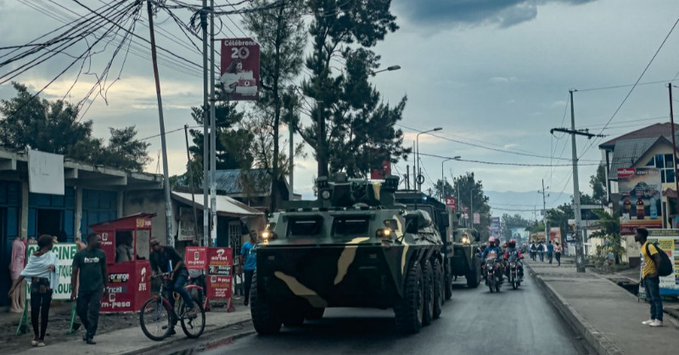
Experts have largely criticised President Cyril Ramaphosa’s decision to deploy the South African National Defence Force (SANDF) to the Western Cape and Gauteng to fight crime, emphasising that soldiers are not trained in policing and community support.

Ramaphosa, as President and Commander-in-Chief of the SANDF, made the announcement during his State of the Nation Address on Thursday 12 February. He did not elaborate on the numbers to be deployed but said troops would in the next few days arrive in the Western Cape and Gauteng to deal with gang violence and illegal mining.
Reacting to the SANDF deployment, political commentator Justice Malala emphasised the Army is not a crime-fighting tool. “The deployment of the SANDF to crime-ridden townships seems, on the surface, a welcome intervention. But it’s not. It’s an admission of defeat, an acknowledgment of just how rotten and incompetent the SA Police Service has become.”
“I said it before and I’ll say it again: Do not use SANDF soldiers to police gangsterism in suburbs,” said defence expert Dean Wingrin. “Besides not being trained in policing and community support, all they provide is a temporary saturation of personnel. The police, at double the Defence budget, should do that.”
He said the deployment of the SANDF was akin to Police Minister Firoz Cachalia admitting that his service is a complete and utter failure when it comes to basic policing.
South African National Defence Union national secretary Pikkie Greeff said deploying the military onto civilian street should never be normalised. Such deployments have been dogged by logistical support issues without the latter being addressed. While those in Parliament are applauding the announcement so enthusiastically, either they are ignorant about deployment requirements or are simply indifferent to what they entail.
According to political analyst Mpumelelo Mkhabela, deploying the SANDF to gang-ridden areas does not address root causes.
“The army is often the last resort when everything else has failed. There is something wrong with this attempt to solve the problem of crime in this fashion,” Mkhabela said, noting the previous deployment of the SANDF in the Western Cape to deal with gang violence did not resolve the problem.
“The problem was not solved, it just subsided and it’s rearing its ugly head again. For the last few years, this place has been a slaughterhouse, which means the presence of the Army is not a solution. You must fundamentally dig into what is going on in the social fabric of the Cape Flats that is eating away at the social cohesion. I don’t think we have gotten there.”
Ian Cameron, Chairperson of the Portfolio Committee on Police, said given the sustained and escalating levels of gang violence, decisive intervention is justified and a properly mandated and time-bound SANDF deployment can help stabilise hotspots and create operational space for law enforcement.
“However, stabilisation is not a strategy,” he warned. “The SANDF cannot replace the investigative and intelligence functions of the South African Police Service or the Directorate for Priority Crime Investigation. Soldiers can assist with visibility and area control. They cannot dismantle drug networks, build racketeering cases or secure sustainable convictions.”
Cameron said that what is needed instead is structural reform, and this includes intelligence-led policing grounded in credible crime intelligence; prosecutor-guided investigations into drug networks and organised crime syndicates; financial disruption and asset forfeiture targeting syndicate leadership; clear expansion of policing powers to competent metropolitan governments; and conviction-driven case building, not arrest statistics.
Cameron emphasised the expansion of policing powers to competent metros. “For example, the City of Cape Town Metro Police has demonstrated operational capacity. Granting it enhanced forensic authority, particularly ballistic analysis powers in gang-related gun violence, could be a major force multiplier. Rapid local ballistic tracing integrated with national systems would link shootings faster, identify repeat firearms, strengthen case dockets and improve conviction rates. Where municipal capability exists and can measurably improve safety outcomes, it should be enabled within a coordinated national framework. If reform enhances safety, it should not be resisted.”
Cape Town’s Mayoral Committee Member for Community Safety, JP Smith, echoed Cameron’s sentiments. He cautioned that deploying the SANDF may only offer short-term relief, unless it is paired with effective policing and prosecutions.
“There are many countries that have had serious gang violence problems that have brought them under control,” he said. “It is about successfully investigating, prosecuting and convicting the persons.”
“We are going to have to invest in the forensic capabilities; bump up our number of detectives and have the right specialised units, under the right monitoring and oversight,” Smith said. “It can all be done.”
He cautioned that the SANDF do not have powers of arrest, search and seizure. “They will temporarily prevent people from shooting. That is a desirable outcome. But as soon as they withdraw, it will resume if you haven’t dealt with the root problem.”
@DefenceWeb