By Group Captain Sadeeq Shehu Garba (rtd)

- An explainer on facts, history, and how the U.S. classifies its presence in Africa
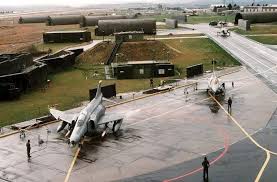
A story is circulating that Kainji Air Force Base is a United States military base. That claim is not supported by publicly available evidence.
Let’s break this down carefully.
IS KAINJI AIR FORCE BASE A U.S. MILITARY BASE?
No.
Kainji Air Force Base is a facility of the Nigerian Air Force (NAF) under the sovereign control of the Federal Republic of Nigeria. It is not designated, leased, or publicly acknowledged as a U.S. military base.
Like many countries, Nigeria has cooperated with the United States on:
Training
Intelligence sharing
Logistics
Joint exercises
Counterterrorism coordination
That cooperation may involve temporary deployments, visiting aircraft, or advisory teams. But that is not the same thing as a foreign military base.
There is no official declaration by Nigeria or the United States that Kainji is a U.S. base.
The Kainji NAF BASE has been fortified and facilities added by US military engineers as part of the Tucano deal.
IS THERE A U.S. MILITARY BASE IN NIGERIA?
There is no publicly acknowledged permanent U.S. military base in Nigeria.
The U.S. has conducted:
Joint training activities
Counterterrorism support missions
Intelligence cooperation
Occasional temporary troop deployments
But these fall under security cooperation frameworks, not base ownership.
If a country hosts a permanent U.S. base, it is usually formalised through:
a. A Status of Forces Agreement (SOFA)
b. A basing agreement
c. Lease arrangements
d. Congressional notifications
No such permanent arrangement has been publicly confirmed for Nigeria.
IS THE U.S. SEEKING A BASE IN NIGERIA?
There is no official, confirmed request by the United States to establish a permanent base in Nigeria.
However, the U.S. has historically sought:
Access agreements
Forward operating locations
Cooperative security locations
Logistics hubs
Access is different from ownership. The U.S. global military model increasingly favours “lily pad” access arrangements rather than traditional large bases.
That distinction matters.
WHERE DOES THE U.S. CURRENTLY HAVE BASES IN AFRICA?
The most well-known permanent U.S. base in Africa is:
Camp Lemonnier – Djibouti
This is the only acknowledged permanent U.S. military base on the continent.
The U.S. also maintains varying forms of access, forward locations, or cooperative facilities in countries such as:
Kenya
Somalia
Niger (until recent withdrawal)
Ghana (access agreements, not permanent base)
(NB. In Ghana, when President John Kuffor government wanted to expand this agreement, Ghanaians rejected it. Some said Kwame Nkrumah will turn in his grave)
Others depending on operational need
Most of these are not “bases” in the Cold War sense. They are:
Cooperative Security Locations (CSLs)
Forward Operating Sites (FOS)
Contingency locations
HOW DOES THE U.S. CLASSIFY ITS MILITARY PRESENCE ABROAD?
The U.S. does not simply use the word “base” in a generic way the way we do.
Under U.S. Department of Defense classification, facilities are generally categorized as:
A. Main Operating Base (MOB) – permanent, large-scale
B. Forward Operating Site (FOS) – smaller, rotational presence
C. Cooperative Security Location (CSL) – host-nation facility with U.S. access rights
D. Contingency Location – temporary, mission-specific
AFRICOM documents often refer to “locations” rather than bases.”
That terminology matters in public debate.
WHAT IS THE AFRICOM MAO document?
AFRICOM uses a framework called “Main Operating Bases and Other Locations” (MOB & OL / MAO) to classify facilities.
This includes some 40 locations across Africa which include :
Camp Lemonnier (Djibouti) – permanent
Other access sites across Africa – rotational, temporary, or cooperative
Presence does not automatically mean sovereignty transfer.
Nigeria’s historical sensitivity to foreign bases
Nigeria has historically through successive documents guarded its sovereignty jealously.
A CLASSIC EXAMPLE:
The 1961 Anglo-Nigerian Defence Pact
Shortly after independence, Nigeria signed a defence pact with the United Kingdom. Public backlash was swift. Many Nigerians perceived it as neo-colonial military influence.
The pact was eventually abrogated.
Since then, Nigerian political culture has remained sensitive to:
a. Permanent foreign troop presence
b. Base arrangements
c. Sovereignty erosion
Any confirmed permanent foreign base in Nigeria would be politically explosive and legally complex.
SO WHAT IS LIKELY HAPPENING?
In modern military cooperation:
U.S. aircraft may land at Nigerian bases.
U.S. advisers may rotate through.
Joint training may occur.
Intelligence fusion cells may operate.
Temporary deployments may take place.
None of these automatically constitute:
“This base belongs to the United States.”
There is a difference between:
-Access
-Cooperation
-Temporary presence
-Permanent basing
Conflating them distorts the discussion.
THE REAL ISSUE
The debate is not whether cooperation exists.
The real questions are:
Who controls the facility?
Who commands operations?
What legal framework governs foreign troops?
Who communicates transparently to the public?
In democratic societies, communication matters as much as substance.
Silence fuels speculation.
BOTTOM LINE
Kainji Air Force Base is not publicly confirmed as a U.S. military base.
There is no acknowledged permanent U.S. base in Nigeria.
The U.S. does maintain permanent and rotational facilities elsewhere in Africa.
The U.S. classifies its presence carefully—often as “locations” rather than “bases.”
Nigeria has a historical record of resisting permanent foreign basing arrangements.
Security cooperation is not new.
But sovereignty narratives are powerful.
Facts must lead the conversation.
Group Captain Sadeeq Garba Shehu (rtd) is a Security & Defence Analyst/Conflict Security & Development Consult Ltd