By Jibrin Ibrahim

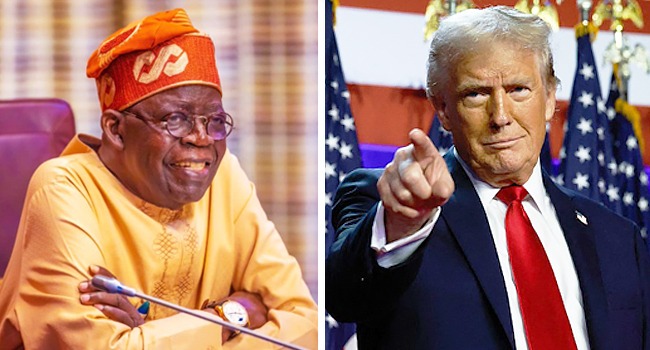
In my column of 9th January 2026 entitled “Nigeria in Trump world: The Dangers Ahead” I warned about the way in which President Tinubu is handing over our country to American imperialism and the necessity to change course. I feel obliged to come back to the theme so soon afterward because of the speed at which we are moving towards perdition.
We recall that our president, Bola Tinubu, begged President Trump to shoot missiles on Nigeria on Christmas evening, allegedly to kill Islamist terrorists. Clearly, the Nigerian presidency had not read the new national security strategy which states bluntly that all American action would only be in the interest of the United States alone and not any other country. The idea that the United States would act to protect Nigerian Christians who are suffering from genocide perpetrated by Islamic terrorists is as far from reality as can be.
After that opener, the Americans informed the world that they had sent some troops to Nigeria without stating the number. Then last week, the Americans announced they were sending 200 additional troops to Nigeria. Then the Americans through one Republican congressman proposed a bill titled the Nigeria Religious Freedom and Accountability Act. The bill was sponsored by US lawmakers, Reps. Moore (R-WV) and Chairman of the House Foreign Affairs Africa Subcommittee, Chris Smith (R-NJ). The bill mandates the U.S. Secretary of State to submit a detailed report to Congress on efforts to address religious violence and mass atrocities in Nigeria. Tinubu gave the Americans an inch and now they are taking a mile including making laws on our country and monitoring it as if it were a protectorate.
An interesting dimension of this protectorate approach to Tinubu’s Nigeria is the sanctions they are including in the bill to punish one person they dislike in Nigeria, Senator Rabiu Musa Kwankwaso, presenting him as a dangerous Muslim fundamentalist who must be death with. The reason why Riley Moore and his colleagues singled him out was that Kwankwaso was the only prominent Nigerian politician who openly criticised the United States’ designation of Nigeria as a Country of Particular Concern. In a public statement, he had argued that the designation was unhelpful and poses the risk of exacerbating interreligious tensions in Nigeria.
The American arrogance is so high that they cannot accept any criticism of their actions. As the columnist Farooq Kperogi has argued, the irony is that Kwankwaso as Kano’s governor was famously unenthusiastic about the introduction of Sharia in 2000. The issue is that the Americans do not accept political criticism of their policies. Of course, Kwankwaso’s political ambition for the next elections are well known and the Americans are indicating that they would fight the political coalition he is building thereby interfering in our internal politics.
The overriding lesson of American foreign involvement in the past 80 years is well known. The United States spent 20 years failing to create a stable government in Afghanistan and killed the Libyan President replacing a functional developmental state with a fractured state that set-in motion massive distribution of small arms and light weapons to entrench terrorism in Africa. The tragic consequences of the 2003 war in Iraq continue to beset America and the Middle East. The United States has also repeatedly destabilised Latin American countries, including Chile, Cuba, Guatemala and Nicaragua, by trying to oust a government through force. In every country in which the United States has intervened to bring “democracy” and “stability”, they have left the country in ruin, destroyed national cohesion, introduced guns into the streets and left the countries much worse than they found them.
It is important to remember that Nigerians have consistently opposed defence agreements with foreign countries since the 1960s when the Balewa administration was forced to abrogate the Anglo-Nigerian Defence Agreement, because the agreement contained a clause which allowed the Royal Air force to overfly and test its aircraft in Nigeria. The Agreement also allowed the Royal Air Force to station maintenance staff in Nigeria. The Balewa administration was pressured to abrogate the Agreement because public opinion perceived it as an impairment of Nigeria’s freedom of action which might draw the country into hostilities against its wishes. This remains true.
In 2001, in his bid to ostensibly reprofessionalise the Nigerian army, President Obasanjo almost unilaterally signed the “Military Cooperation Agreement Between the US and Nigeria.” To its credit, the Ministry of Defence responded appropriately by opposing the agreement arguing that, the ministry was not involved in the negotiations between Nigeria and the US. In fact, the agreement was highly criticised by Lt General Victor Malu, the Chief of Army Staff at the time, when the US military officers demanded for Nigeria’s strategic doctrine and unfettered access to its strategic military locations. According to General Malu, those were “exclusive to Nigerians only” adding that “a friend today can be an enemy tomorrow.”
It is shocking that for the first time in our history we are giving up on our sovereignty and handing over the country to the Americans. As I argued on 9th January, I have so much nostalgia for the proud and assertive Nigeria of January 11, 1976 when our Head of State told the world and the American President, Gerald Ford, that
Africa has come of age. In his speech at the OAU Summit in Addis Ababa, General Murtala Mohammed declared: “Africa has come of age. It is no longer under the orbit of any extra continental power. It should no longer take orders from any country, however powerful. The fortunes of Africa are in our hands to make or mar. For too long have we been kicked around: for too long have we been treated like adolescents who cannot discern their interests and act accordingly. For too long has it been presumed that the African needs outside ‘experts’ to tell him who are his friends and who are his enemies.
“The time has come when we should make it clear that we can decide for ourselves; that we know our own interests and how to protect those interest; that we are capable of resolving African problems without presumptuous lessons in ideological dangers which, more often than not, have no relevance for us, nor for the problem at hand. Nigeria has come to this Assembly determined to co-operate with you, Mr. Chairman, and with all member States to put a stop to foreign interference in our continental matters. As an African nationalist of distinction, I trust that your wise guidance will direct our deliberations to fruitful conclusions of which our peoples will be proud.”
That moment of pride is difficult to find in Nigeria today as delegations after delegations go to the United States to beg them to come and solve our problems. What is most painful is our loss of statecraft. Nigeria no longer has well informed diplomats that could explain to the president that he is leading the country astray. The invitation to the United States to bomb our country, to send their troops to kill our terrorists and make laws determining how our country is run is an indication of the abdication of responsibility by Nigeria’s political and military leadership.
It raises fundamental questions about sovereignty, constitutional governance, civilian protection, and the integrity of Nigeria’s social contract. At the heart of this crisis is the apparent abdication by the President of the Federal Republic of Nigeria, Bola Ahmed Tinubu, of his constitutional role as Commander-in-Chief of the Armed Forces. By inviting a foreign government to manage what is fundamentally an internal security challenge, the President ceded sovereign authority in a manner that undermines Nigeria’s constitutional order.
We are witnessing a profound breakdown of institutional accountability mechanisms. Section 14(2)(b) of the 1999 Constitution (as amended) is unequivocal: “the security and welfare of the people shall be the primary purpose of government.” This provision represents a central pillar of Nigeria’s social contract. Any security action, especially one involving foreign military forces, must be grounded in transparency, civilian protection, and democratic oversight. None of these standards were met.
Nigerians should be particularly troubled by the severe deficit of information regarding the nature, scope, legal basis, and rules of engagement governing the collaboration between the Nigerian and U.S. governments and their security agencies. Why is the National Assembly not exercising any oversight on the matter?
As for the Nigerians enthusiastically applauding American military intervention to save Nigerian Christians from genocide, they should do their research. Is it not American arms and intelligence that are being used in the current genocide against Christians in Palestine and Syria?
Jibrin Ibrahim can be reached through jibrinibrahim@dailytrust.com