
By Olu Fasan

The vexed debate over the Senate’s refusal to guarantee “mandatory” and “real-time” electronic transmission of results in the electoral law ignores two fundamental problems. The first is Nigeria’s utterly weak state capacity; the second is the total lack of institutional independence. Even if the electoral act provides for mandatory and real-time transmission of election results, “mandatory” will not be mandatory and “real-time” won’t be real-time. Furthermore, INEC and the courts can’t be trusted to be above board in discharging their duties. Both problems discredited previous presidential elections in Nigeria and look likely to undermine the 2027 poll.
Earlier this week, the Senate passed, by 55 to 15 votes, the Electoral Act (Amendment) Bill 2026, in which it provides in Clause 60 (3) for electronic transmission of election results but with a proviso allowing for “manual transmission” as a backup, thus rejecting mandatory and real-time electronic transmission of results. Although the House of Representatives provided for mandatory and real-time electronic transmissions, it later caved in by changing its position to align with the Senate.
But why the resistance to mandatory and real-time electronic transmission of election results? Many countries, including in Africa, such as South Africa and Kenya, do so routinely in their elections. Why not Nigeria? Well, the Senate Leader, Opeyemi Bamidele, recently provided a public explanation. In a statement, Bamidele reeled out global statistics showing Nigeria’s acute technological and power infrastructure deficiencies, which, to him, make mandatory and real-time electronic transmission of election results across the country impossible. One may disagree with Bamidele’s conclusion, but it’s hard to ignore the factuality of the data and their implications for state capacity in Nigeria.
The Senate Leader cited the Nigerian Communications Commission’s data showing that broadband coverage in Nigeria stood at about 70 per cent in 2025, while internet penetration covered only 44.53 per cent of the population. He also referred to the Speedtest Global Index, which placed Nigeria 85th out of 105 countries for mobile network reliability and 129th out of 150 countries for fixed broadband reliability. Nigeria’s mobile network performance is ranked well below the global average at 44.14 megabits per second, Mbps, extremely low compared with the United Arab Emirate at 691.76 Mbps; Qatar, 573.53; Kuwait, 415.67; Bahrain, 303.21; and Bulgaria, 289.41. The situation is, indeed, dire.
Yet, notwithstanding the dysfunctionality, a country determined to organise a credible presidential election will pull out all the stops and mobilise all resources to make sure it is hitch-free. Sadly, Nigeria has failed to achieve this feat in successive presidential elections. This is a country where general elections are frequently postponed, often at the last minute. Why? Well, “technical failures”!
Take a few cases. In 2011, INEC postponed the National Assembly elections for two days even after voting had started, blaming “an emergency”, namely, “late arrival of results sheets in many parts of the country”. In 2015, federal elections were postponed for six weeks on the grounds of security challenges. In 2019, INEC postponed the presidential and National Assembly elections, citing “logistical challenges”, including difficulty with “flying election materials” to certain locations. The infamous “technical glitch” in the 2023 presidential election is, of course, fresh in our memories.
Put bluntly, it’s utterly shameful that such appalling excuses as “logistical challenges” and “technical glitches” can be adduced for the failure of a general election planned for several months, if not years, and which has a budget running into hundreds of billions of naira. Such logistical or technical challenges are symptomatic of acutely weak state capacity, associated with failed states. But, in Nigeria, the problem is not just the lack of institutional capacity; it is also the absence of institutional independence and integrity whereby, with a sleight of hand, those tasked with ensuring credible elections apparently exploit the system’s seeming weakness to skew the outcome.
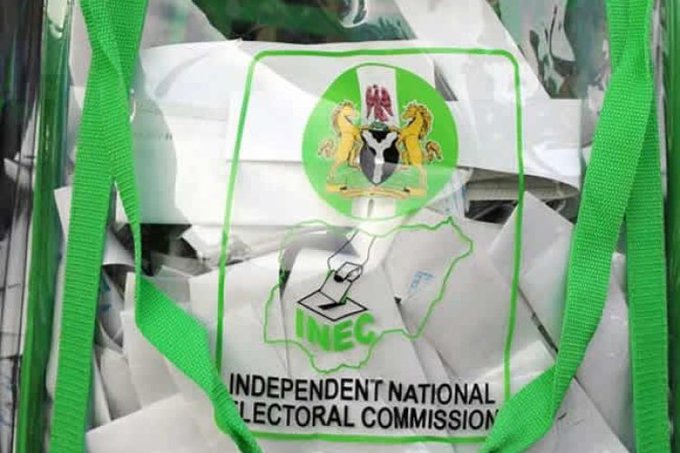
That, if you ask me, is the only plausible explanation for INEC’s shameful behaviour in the 2023 presidential election. Let’s rehash the story. The Electoral Act 2022 provided for two new technologies: the Bimodal Voter Accreditation System, BVAS, for electronic accreditation of voters and transmission of results, and the INEC Result Viewing, IReV, a central portal where election results were transmitted to in real-time so voters could see them contemporaneously. In line with the act, INEC published its “Election Regulations and Guidelines”, in which it stated categorically that it “shall” transmit election results “electronically” and “upload” them “to the INEC Result Viewing Portal, IReV”. Furthermore, INEC’s then chairman, Professor Mahmood Yakubu, repeatedly assured Nigerians at home and abroad that INEC would use the technologies for the presidential election.
But, alas, INEC broke its word. While the BVAS and the IReV worked perfectly well in the National Assembly elections, it mysteriously failed in the presidential election conducted on the same day. Why? INEC blamed “technical glitch”. But the abracadabra that made the BVAS and the IReV work for the National Assembly elections but not for the presidential election conducted on the same day did not fool international observers. They said INEC’s failure to transmit the results electronically and post them on the IReV portal “severely eroded the election’s credibility”. Former President Olusegun Obasanjo called for the cancellation of the results announced outside of the BVAS and the IReV, saying it was “no secret that INEC officials have been allegedly compromised to make what should work not to work.” The European Union Election Observer Mission, EU EOM, said that “only 31 per cent” of the presidential election results eventually uploaded to the IReV system “were formally and mathematically correct.” In other words, manual transmissions were manipulated.
Of course, once INEC declares someone winner of a presidential election, it is a fait accompli, and thus utterly academic and a waste of time to go to court. Truth is, the Supreme Court will never remove a sitting president from office, however deeply flawed his “election”. Instead, the court will resort to technicality and perverse logic to dismiss any appeal, however valid. In the 2023 presidential election petitions, the Supreme Court ruled that even though INEC promised in its regulations and guidelines to use the BVAS and the IReV, it was not bound to keep the promise because the regulations and guidelines were subordinate to the Electoral Act, which didn’t make electronic transmission mandatory. Second, the Supreme Court ruled that results transmitted to the IReV portal were evidentially inferior to the results inputted into the Form EC8A, the paper-based result sheet. Thus, a petitioner cannot rely on the results uploaded to the IReV portal to prove his case; he must produce a certified Form EC8A from each of the 176,846 polling units across Nigeria!
In a piece titled “How 2023 will affect Nigeria’s political stability for decades” (Vanguard, January 11, 2024), I argued that the Supreme Court verdict would pervert presidential elections for a long time to come. For, thanks to the apex court, when it comes to presidential elections, INEC enjoys irrebuttable presumption of regularity: it can literally do what it likes and get away with it!
Unfortunately, the Senate’s bill legitimises INEC’s behaviour and Supreme Court’s verdict in 2023. Electronic transmission prevents the manipulation linked with manual transmission, while real-time uploading of results to the IReV portal ensures transparency. By rejecting the safeguards of mandatory and real-time electronic transmission of election results, the Senate invites a recurrence of 2023. Neither INEC nor the Supreme Court will be bound by vague and discretionary rules on electronic transmission of election results. Truth is, weak state capacity and lack of institutional independence have long impaired Nigeria’s electoral process. But the repeat of 2023’s “technical glitch” and the associated shenanigans in 2027 will deeply trouble Nigeria.
Dr Fasan is the author of ‘In The National Interest: The Road to Nigeria’s Political, Economic and Social Transformation’, available at RovingHeights bookstores