

By Mike Arnold

In November, President Trump signed the Epstein Files Transparency Act. Congress voted 427 to 1. The principle was simple: the American people have a right to know what their government is hiding. Within sixty days, the Justice Department released 3.5 million pages. The law was explicit — no records withheld on the basis of “embarrassment, reputational harm, or political sensitivity.”
Now apply that same standard to the Tinubu Files.
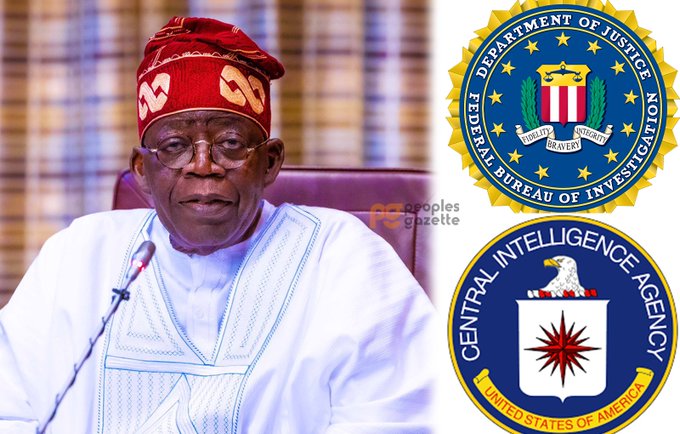
The United States government is sitting on approximately 2,500 pages of FBI and DEA records from a federal narcotics investigation of Nigerian President Bola Tinubu. A federal judge has ordered their release. Twice. The agencies have blown every deadline for three years running.
If the American people deserved to see the Epstein files, they deserve to see the Tinubu files. This isn’t complicated.
What We Already Know
In the early 1990s, federal agents in Chicago investigated a heroin trafficking ring operated by Mueez Akande and his nephew Abiodun Agbele. IRS Special Agent Kevin Moss submitted an affidavit linking Tinubu’s U.S. bank accounts to the operation. Tinubu was earning $2,400 a month at Mobil Oil Nigeria. His American bank deposits totaled $661,000 in 1990 and more than $1.2 million the following year.
In 1993, a federal judge in the Northern District of Illinois ordered $460,000 in Tinubu’s accounts forfeited to the United States as proceeds of narcotics trafficking. Tinubu settled rather than go to trial. He was never indicted. Never charged. Never convicted. The case was dismissed with prejudice.
Those facts have been public since at least 2008. The question is what’s in the other 2,500 pages that the FBI and DEA have been fighting to keep sealed.
Three Years of Stonewalling — Under Two Presidents
In 2022 and 2023, transparency advocate Aaron Greenspan — assisted by Nigerian investigative journalist David Hundeyin — filed twelve Freedom of Information Act requests with six U.S. agencies seeking the full investigative records.
Every agency responded with a “Glomar response” — a Cold War–era legal maneuver that allows the government to neither confirm nor deny that records even exist. The name comes from the Glomar Explorer, a CIA ship from 1975. It’s designed for cases where acknowledging that files exist could compromise national security.
The problem? The U.S. government already confirmed these records exist — in open court, in 1993, when the Justice Department used them to seize Tinubu’s money. You can’t pretend files don’t exist when you already filed them in federal court.
Greenspan sued. In April 2025, Judge Beryl Howell of the U.S. District Court for the District of Columbia ruled the Glomar responses were “neither logical nor plausible” and ordered the FBI and DEA to release all non-exempt records.
Then nothing happened.
The FBI promised to complete its search by August 2025. Then September. Then December. Then January 2026. Then February. Each deadline passed. Zero pages produced.
On February 3, Judge Howell rebuked both agencies for “unreasonable delays.” She ordered sworn statements explaining the failures. She set hard deadlines: first batch by mid-February, second by March 13, full production by June 1, 2026. She put the FBI and DEA on a leash — joint status reports to the court every fourteen days, starting February 27.
This is not a partisan issue. The original Glomar responses came under Biden. The continued defiance of court orders is happening under Trump. Two administrations. Same stonewalling.
Why Are They Hiding This?
The Epstein files were resisted too — until Congress forced the issue with a near-unanimous vote. The principle that broke the dam was simple: the public’s right to know outweighs the government’s desire to avoid embarrassment.
So why do the Tinubu files get different treatment?
Three possible explanations. Diplomatic sensitivity — Tinubu is a sitting head of state. Intelligence equities — the CIA successfully maintained its Glomar response in this case, and OCCRP has reported that agencies argued disclosure could “compromise U.S. national security,” with references to Tinubu’s possible status as an intelligence asset. Or lobbying — Nigeria’s government signed a $9 million contract with Mercury Public Affairs, and narrative management is what that money buys.
None of those reasons are good enough. Congress decided that about the Epstein files. A federal judge has decided that about the Tinubu files. The only people who disagree are the agencies that are supposed to work for us.
The “Nothing New” Defense
Tinubu’s spokesman Bayo Onanuga says there’s “nothing new to be revealed” — that the Moss affidavit has been public for thirty years and never resulted in an indictment.
He may be partly right. The 2,500 pages could turn out to be bureaucratic records that add context but no bombshells. If so, the Presidency will say “told you so.”
That’s a real possibility, and anyone calling for these files should be honest about it.
But here’s what cuts against the “nothing new” argument: if the files are harmless, why has every agency under two administrations fought this hard to keep them sealed? Why did Tinubu personally intervene in October 2023, telling the court he would be “adversely affected” by their release? Why did his lawyers rush into a D.C. courtroom the same day the emergency motion was filed?
You don’t spend three years and a $9 million lobbying contract fighting the release of documents that can’t hurt you.
What the Files Might — and Might Not — Show
These files could contain devastating new evidence — co-conspirator testimony, surveillance records, financial tracing that goes far beyond what’s publicly known. That’s what most Nigerians expect.
Or they could confirm that the 1993 forfeiture was the extent of it. Thirty-year-old investigative files are sometimes less dramatic than people imagine.
Or — and this is the question nobody in Washington wants to ask — they could reveal something about Tinubu’s relationship with American intelligence that reframes the entire story. The CIA kept its Glomar. That fact sits there like a locked door at the end of a hallway.
We don’t know which it is. That’s exactly the point.
Same Standard. Same Transparency.
The Epstein Files Transparency Act set the precedent: “No record shall be withheld, delayed, or redacted on the basis of embarrassment, reputational harm, or political sensitivity, including to any government official, public figure, or foreign dignitary.”
Foreign dignitary.
That language could have been written for this case.
The American people are sending Nigeria more than $3.5 billion in foreign assistance. They have a right to know what their government knows about the man receiving it. The Nigerian people — 220 million of them — have a right to judge their own president based on facts, not thirty years of rumors and stonewalling.
A federal judge agrees. Judge Howell is an Obama appointee who also served on George W. Bush’s Sentencing Commission — a former narcotics prosecutor and member of the National FOIA Hall of Fame. She’s ruled twice that keeping these files sealed is indefensible. She’s right.
President Trump just proved that transparency works. He signed the Epstein bill. The sky didn’t fall. The files came out. The public made its own judgments.
Do it again.
Release the Tinubu Files.
#EarthShaker
Mike Arnold is the author of EPICENTER: Nigeria, Radical Islam, and the War for Global Order (#1 Amazon Bestseller) and founder of Africa Arise International