
By Kabiru Sulaiman Chafe

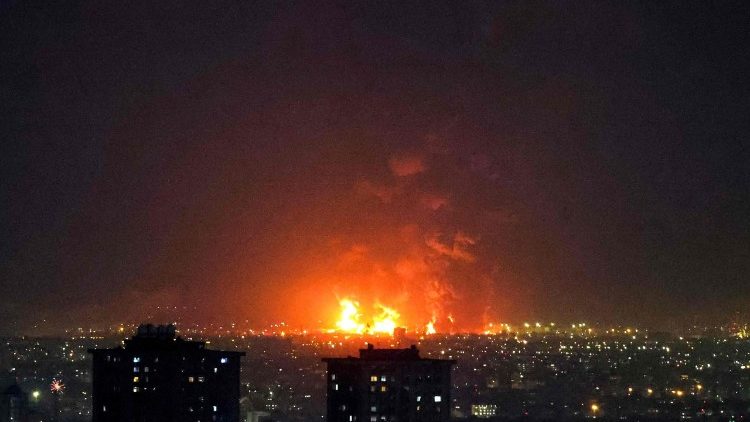
The war now unfolding between the United States, Israel, and Iran is not another distant Middle Eastern flareup. Since the opening strikes of February 28,, 2026, it has become a strategic shock with global implications: oil disruption, financial volatility, military escalation, and renewed pressure on an already fragile international order. What is at stake is not only the future of the Middle East, but the stability of the wider global system.
This is what gives the conflict its wider importance. The world was already in transition before the first missiles were fired. The post-Cold War era, defined by overwhelming Western strategic predominance and an expanding architecture of globalisation, had already begun to fray. Major-power rivalry had returned. International institutions had grown visibly weaker in the face of war. The gap between proclaimed rules and actual state conduct had widened. The present conflict has now exposed those tensions in their rawest form.
For more than three decades, much of global politics operated within what was commonly described as a rules-based international order. That order rested on Western military and financial dominance, multilateral diplomacy, and a global economy built on interdependence. But in recent years, the system has come under mounting strain. Strategic competition among major powers has intensified, and unilateral force has become increasingly normalised. The US-Israel-Iran war is, therefore, not an exception to the new global mood; it is one of its clearest expressions.
This matters because the conflict is unfolding in a world that is no longer truly unipolar. China and Russia may not be direct combatants, but their diplomatic posture, strategic calculations, and economic interests are intertwined with how this crisis evolves. The war will, therefore, be read globally not merely as a regional confrontation, but as part of a larger redistribution of power in the international system. In that sense, the crisis may accelerate the transition toward a harder, more openly competitive multipolar order.
The first major fault line runs through energy. The Strait of Hormuz remains one of the most critical chokepoints in the world economy. According to the U.S. Energy Information Administration, oil flows through the strait averaged about 20 million barrels per day in 2024, equivalent to roughly 20 per cent of global petroleum liquids consumption. When conflict disrupts shipping through that corridor, the economic consequences are immediate and far-reaching.
That is precisely what this war has done. Reuters has reported that oil and gas firms and traders suspended shipments through Hormuz after the strikes and counter-strikes intensified. Prices reacted sharply; analysts warned early in the conflict that crude could surge above $100 per barrel. Markets have
The real Nigerian question is whether temporary oil gains can hide long-standing structural weakness. Nigeria remains vulnerable to exchange-rate pressure, imported inflation, fiscal fragility, and policy inconsistency.
since remained unstable, with prices rising sharply and then retreating amid talk of emergency stock releases and diplomatic maneuvers. Even where panic subsides, volatility itself becomes a form of economic damage.
The disruption is not confined to crude prices. Reuters also reported that about 1.9 million barrels per day of Gulf refining capacity had been shut because of the war. Once refining, shipping, and insurance are disrupted together, the effects spread quickly into transport costs, industrial input prices, inflation, and fiscal stress. That is why this conflict is already being treated not only as a security crisis, but as an economic one.
There is a broader strategic lesson here. Modern war no longer unfolds only through tanks, aircraft, and missiles. It now includes cyber pressure, infrastructure sabotage, coercive signaling, economic warfare, and financial disruption. The boundaries between battlefield conflict and systemic disruption have become increasingly thin. The boundaries between battlefield conflict and systemic disruption have become increasingly thin. In an interconnected world, a regional war now has the capacity to generate global shockwaves with remarkable speed.
For Africa, this is not a distant drama. The continent is deeply exposed to imported inflation, shipping costs, commodity swings, and external financial stress. Some oil-exporting African states may record short-term revenue gains when crude prices rise. But many more economies, including fragile import-dependent ones, will feel the strain through higher energy bills, rising food costs, and broader macroeconomic pressure. Reuters has already pointed to the pain that spiking crude and freight costs are imposing on developing countries, including Nigeria.
There is also a security dimension that African policymakers should not ignore. Instability in the Middle East has historically had spillover effects across North Africa, the Red Sea corridor, and the Sahel through migration pressures, illicit flows, ideological contagion, and shifts in regional alignments. Even when these effects are indirect, they are rarely irrelevant. A major war in such a strategic region seldom stays neatly confined to its point of origin.
For Nigeria, the implications are particularly sharp. At first glance, higher crude prices may appear to offer relief. Nigeria has recently moved to expand output, including the start of exports from a new crude grade. In purely fiscal terms, a tighter oil market may improve short-term earnings. But that is the temptation, not the strategy.
The real Nigerian question is whether temporary oil gains can hide long-standing structural weakness. Nigeria remains vulnerable to exchange-rate pressure, imported inflation, fiscal fragility, and policy inconsistency. The country’s downstream position is indeed changing: recent policy measures, including the 15 per cent import duty on petrol and diesel announced in late 2025, were explicitly designed to support domestic refining and reduce dependence on imported fuel. That is a meaningful adjustment. But it does not remove the larger truth that Nigeria is still too exposed to external shocks because diversification remains incomplete, and productive resilience remains weak.
This is why Abuja should study the war less as a spectacle and more as a warning. A state that depends too heavily on commodity windfalls, reacts late to global dislocation, and lacks productive depth will remain vulnerable in every major geopolitical convulsion. The issue is no longer whether external shocks will come. The issue is whether Nigeria has built enough internal strength to absorb them without renewed crisis.
The challenge extends beyond Nigeria to Africa as a whole. The continent now faces three broad strategic choices. The first is passive adaptation: merely enduring the consequences of crises generated elsewhere. The second is tactical neutrality: maintaining functional relations with competing powers while avoiding entanglement in their rivalries. The third, and most serious, is strategic autonomy: building stronger continental capacity in energy security, trade integration, transport systems, payments infrastructure, diplomacy, and coordinated political action.
The third path is the most difficult, but it is also the most necessary. A continent that is demographically rising yet strategically fragmented will remain exposed to decisions taken in Washington, Tel Aviv, Tehran, Moscow, or Beijing. A continent that builds stronger internal markets, regional energy buffers, production chains, and diplomatic coherence will be better placed to navigate an era of hardening multipolar competition.
The US-Israel-Iran war is still unfolding, and its final trajectory cannot yet be predicted with confidence. It may widen further, settle into deterrence, or move toward uneasy diplomacy. But one conclusion is already clear: the age of relatively cheap geopolitical assumptions is over. The world is entering a period in which strategic shocks will be more frequent, more interconnected, and more costly.
Africa’s task, therefore, is not simply to comment on this war, nor merely to choose verbal alignment with one external camp or another. Its real task is to draw sober lessons from it. For Nigeria and for the continent more broadly, the future will belong less to those who react loudly and more to those who prepare intelligently. In the years ahead, strategic foresight, economic resilience, and continental coordination may prove more valuable than any temporary diplomatic posture. That is the deeper meaning of the present war.
Kabiru Sulaiman Chafe is the Director, Arewa Research and Development Project, Kaduna