

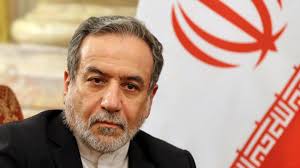
Iranian Foreign Minister Abbas Araghchi said Iran was not interested in talks with the United States, pushing back on President Donald Trump’s stance that Tehran wants a deal to end the war.

“We are stable and strong enough. We are only defending our people,” Araghchi told CBS’s “Face The Nation,” in an interview aired Sunday.
“We don’t see any reason why we should talk with Americans, because we were talking with them when they decided to attack us.
“There is no good experience talking with Americans.”
Trump on Saturday said Iran wanted a deal, but that he was not prepared to make one on current terms, without giving further details.
“We never asked for a ceasefire, and we have never asked even for negotiation,” Araghchi said.
He added that Iran was ready to talk to countries who want to negotiate for selected oil tankers to pass through the key Strait of Hormuz export route.
“I cannot mention any country in particular, but we have been approached by a number of countries who want to have a safe passage for their vessels,” he said.
Meanwhile, Iran has resumed the launch of fresh barrage of nightly strikes on its Gulf neighbors.
Saudi Arabia said on Sunday that its air defenses had intercepted and destroyed six ballistic missiles and at least 34 drones.
In separate posts on X, the Saudi Defense Ministry said all six missiles were shot down over Al-Kharj, home to the Prince Sultan Air Base. Most of the drones were intercepted over the Eastern Province, where major oil refineries are located, while some were brought down over Riyadh region.
The strikes are part of a more than week-long Iranian campaign of nightly missile and drone barrages against Gulf states, launched in retaliation for US and Israeli strikes on targets inside Iran. Attacks have followed a pattern of resuming each evening after several hours of quiet during the day.
The violence has extended beyond Saudi borders.
In Bahrain, explosions lit up the sky over the capital, Manama, early Sunday, according to AFP.
Bahrain’s authorities said they have intercepted 125 missiles and 203 drones since Iran’s campaign began. The attacks have killed two people in Bahrain and 24 others across neighboring Gulf nations.
In Kuwait, Brigadier General Jadaan Fadel, spokesman for the National Guard, said early Sunday that the nation’s defense forces have downed 5 drones during the past 24 hours.
Drones also hit the international airport’s radar system on Saturday night, Kuwait’s Civil Aviation Authority said in a statement.
Flights there have been halted since the start of the war.
The UAE defense ministry on Sunday said they were responding to missile and drone threats from Iran. Air defense systems engaged on Saturday nine Iranian ballistic missiles and 33 drones.
The sounds heard in Marina and Al-Sufouh areas resulted from successful air defense interceptions, the Dubai Media Office posted on X. Iran has called for the evacuations of three major UAE ports, threatening for the first time a neighboring country’s non-US assets.
Since the onsets of the attacks, the UAE has engaged 294 ballistic missiles, 15 cruise missiles and 1,600 drones, the defense ministry said on X, with six fatalities recorded.
Written with reports from Alrabiya, Arab News