By Emmanuel Ogebe, Esq

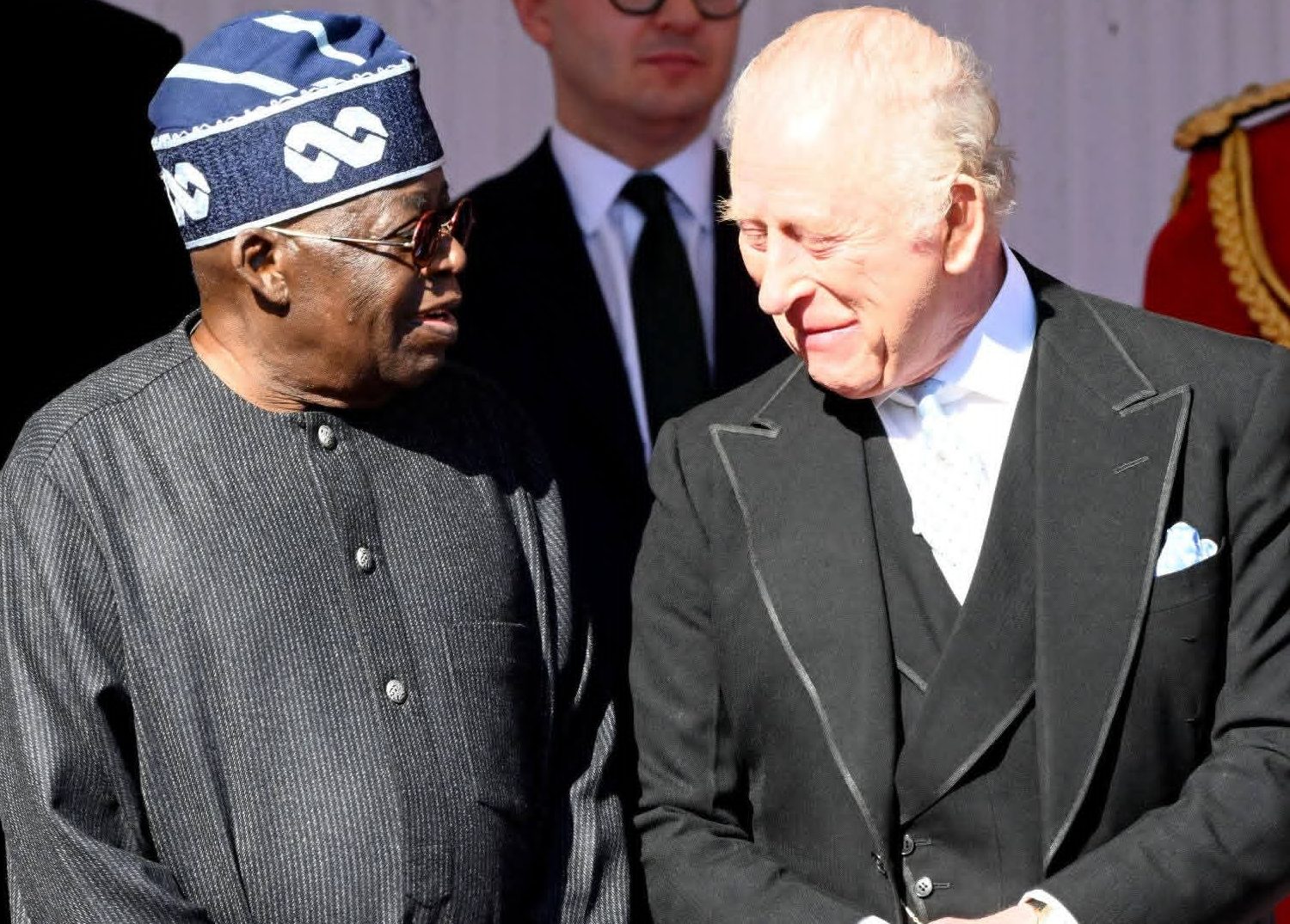
The British royal family’s contribution to UK tourism is around £1.766 billion annually with some studies valuing the royal brand at £67.5 billion. Last week, the Royals made an extra £.746 billion just from extending royal treatment to the Tinubus for two days.
A nursery rhyme goes, “Pussy cat, where have you been?” Cat replied, “I’ve been to London to see the Queen.” Then the follow up, “Pussy Cat, what did you do there?” And cat replied, “I frightened a little mouse out of her shoe.”
After the pomp and pageantry, the follow up question to pussy cat now applies to Nigeria’s presidency: “what did you do there?”
In summary, the FGN agreed to borrow £749 million (N 15 trillion) to import UK steel to improve our ports capacity to be an import-dependent economy. This is akin to a drug dealer providing a credit facility to an addict to buy drug paraphernalia to sustain her addiction!
This is only the latest in a history of poor bilateral agreements entered into post haste by presidents while on visits abroad.
When president Buhari visited USA in 2018 for instance, Trump publicly decried the killings of Christians in Nigeria, to great acclaim.
However inside the privacy of the White House, President Trump signed a deal for Nigeria to buy agricultural produce from the U.S.
This means that the Christian farmers in Nigeria were losing their farms to the Muslim Herdsmen attacks , and then losing their markets to U.S. farmers. This trade transaction wasn’t very well thought-out in terms of policy implications.
In 2015, U.S. agricultural exports to Nigeria were worth $667 million, while Nigeria’s agro exports to the U.S. were a mere $32 million. These gave the U.S. a favorable trade balance of more than half a billion dollars! Buhari also purchased Tucano aircraft for half a billion dollars which cumulatively would have made that fiscal year’s balance of trade deficit with Nigeria over $1Billion.
By contrast, when I visited President Obasanjo on my first return to the Aso Rock presidential villa, after my abduction and torture there by Gen Abacha’s regime barely five years prior, he pulled me aside and said, “President Bush has invited me to Washington. I don’t know what it’s about.”
President Obasanjo had good reason to be concerned. He had a decent relationship with President Clinton who had visited Nigeria in continuation of a groundbreaking precedent established by fellow Democrat President Carter, coincidentally, during Obasanjo’s military rule in the ‘70s.
I told Pres Obasanjo not to worry that he’d find a friend in Washington. Indeed both presidents hit it off instantly. We later on discovered that the President of South Africa had been rejected due to his controversial stance on HIV/AIDS and Obasanjo was selected in view of his continental leadership against the pandemic. Bush’s PEPFAR initiative ended up being his greatest positive legacy saving millions of lives globally.
Some years later, as pioneer Country Representative of a U.S. donor agency of the White House to Nigeria, President Bush sent a White House delegation for our country launch which president Obasanjo warmly welcomed. During my tenure, I implemented the Bilateral agreement of the U.S. and Nigerian Governments for our organization to operate in Nigeria with quasi diplomatic privileges. It had been signed during that U.S. visit, at Obasanjo’s request, and that office has funded SMEs and NGOs with millions of dollars for over two decades now in Nigeria.
This is what it means to be prepared. Leaders must know that if you don’t have a seat at the table, you might be on the menu!
Secondly, apart from being not great for economic growth, Tinubu’s latest multitrillion naira project is also not for electricity that could quadruple our GDP and reclaim Africa’s #1 economy from 4th. It is to improve importation – not production; to increase consumption – not productivity. A trillion dollar economy is a pipe dream so long as electricity is neither a national priority nor imperative.
Thirdly, it is not even opening other ports in the country that would at least ease traffic congestion in Lagos (estimated to cost $300 million in losses weekly), wear and tear on our roads and reduce the landing and final cost of exorbitant goods to the public.
Not Warri or PH. Lagos. This is essentially a tribalistic and not a patriotic project by the same people who warned that if Peter Obi won, he’d open another port outside Lagos for the Ibos but who are also simultaneously threatening to throw Lagos’ Ibos into the Atlantic.
Shorn of all pretense, Tinubu’s Lagos ports project is like Buhari’s train to Niger – a pointless, wasteful, misconceived parochial project of dubious economic value that might never recoup its investment but will jerk up inflation across the nation.
Buhari’s $4Billion rail from his Katsina home to his cousins in Niger not only has no economic value and will never pay for itself but it actually ruins the economy and security through arms proliferation and smuggling. The sea ports also are porous with excrement, toxic waste and illicit arms being some of the shocking things imported into Nigeria in the past.
Fourthly, it is another white elephant project like his multitrillion naira Lagos-CAL coastal highway. In addition to having no economic value addition to the nation, that’s another wasteful drain pipe on the economy which will never recoup its sunk costs. Calling it another misplaced priority is being overly generous. No Nigerian wakes up wondering when he can drive from Lagos to Calabar or when the port will be updated but Nigerians wake worrying about power supply, diesel, solar and generators daily.
For clarity, Calabar is the capital of poverty in the south south. As I toured the nation on my economic development mission, the only two states were I saw five naira notes in circulation were Benue and Cross River. The ill-conceived multimillion dollar Tinapa shopping complex died a natural death there. So also another multimillion dollar vacation resort with cable cars and exotic tourist attractions.
Developing a port in Calabar would harness its God-given natural environment and inject life into the economy while decongesting Lagos ports.
Fifthly, it is excessive. Tinubu has signed at least three of Nigeria’s costliest infrastructure projects ever – the Lagos-Calabar road in the trillions awarded to his friend Gilbert Chagoury, a second one for Kebbi-Sokoto roads and now these ports in Lagos. None of these almost $25 billion projects are for electricity which is the lifeblood transfusion needed for a generator-powered economy.
Abia state has achieved independent power production that is refiring the state’s industrial base which my US agency research team determined during my tenure 22 years ago was exporting goods to the west African region of N18Billion per annum – from Ariaria market alone.
At that time, Gov Tinubu shared with us, for US cofunding, astoundingly innovative proposals for waste-to-energy projects in Lagos amongst others. He had also brilliantly utilized Enron barges from the Atlantic to power Lagos. Where is that innovative Tinubu of old today?
Speaking about leaders and boats on the Atlantic brings us to Gunboat diplomacy of which King Jaja of Opobo’s story is a classic example. In 1887, British Consul Henry Hamilton Johnston invited Jaja aboard the HMS Goshawk, supposedly for negotiations. But, it was a trap! Jaja was arrested, tried in Accra, and exiled to the West Indies for allegedly obstructing British trade and imposing a monopoly on palm oil exports.
The British wanted free trade access to the Niger Delta, but Jaja resisted, wanting to maintain Opobo’s control over the lucrative palm oil trade. He’d built Opobo into a major economic hub, exporting palm oil directly to Liverpool and imposing taxes on British traders.
Johnston’s actions exemplified gunboat diplomacy – using military power to coerce weaker nations. Jaja’s arrest and exile marked the beginning of British colonial rule in Opobo, ultimately leading to the kingdom’s loss of independence.
King Jaja’s resistance against British colonialism is legendary. He was a shrewd trader who built Opobo’s economy. After his exile, Jaja became a symbol of Nigerian resistance against colonial rule.
Jaja’s story highlights the complexities of colonialism and the struggles of African leaders to maintain sovereignty. His legacy continues to inspire Nigerians, with many calling him a national hero.
King Charles put the Tinubus in horse drawn carriage not a ship. He fed them sumptuously not arrest them. And he netted in two days from them the amount of money the whole royal family would generate from the entire world of tourists in five months!
This is new colonialism or neocolonialism. Like the pussy cat, the presidency can well answer, “after going to London to see the king, what did you do there?”, “we frightened a little mouse out of their shoe.” The simple truth is even Kings and Queens have mouse infestation problems that they need outside help with.
To be continued…
Emmanuel Ogebe, Esq, an international human rights advocate, is Convener of U.S.-Nigeria Law Group