

By Dr Umar Ardo, PhD

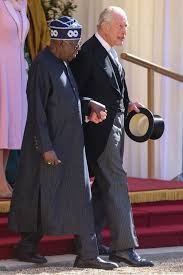
The recent state visit of President Bola Ahmed Tinubu to the United Kingdom was, by every ceremonial standard, a spectacle of prestige. From the stately reception to the banquet hosted by King Charles III at Windsor Castle, from the polished motorcade to the guard of honour, the pageantry was unmistakable. Accolades were generously dispensed; encomiums flowed with diplomatic grace. On the surface, it was an image of Nigeria elevated and respected. In diplomacy, such appearances carry the weight of symbolic honour.
Yet, beneath the glitter of these ceremonies lies a more troubling question: can honour be complete when it is divorced from context? The central flaw of the visit is not in the fact of diplomacy itself, but in its failure to reckon with moral timing – the invisible yet decisive measure of responsible leadership. A state visit may indeed constitute diplomatic honour in the abstract, but politics is never conducted in the abstract; it is judged in the lived reality of citizens.
At the very moment these honours were being conferred on the president and his overbloated entourage, Nigeria was reeling from several profound tragedies. In Maiduguri, innocent lives were being lost to terrorist suicide attacks. In Benue and Zamfara states, bloodshed continued to take its grim toll at the hands of bandits. In Kwara State, Lakurawa terrorists were taking control of towns and villages. Across the North, Nigerian soldiers, custodians of the nation’s sovereignty, were being slain by insurgents on the battlefield. These were not distant or abstract events; they were immediate, painful ruptures in the fabric of Nigeria’s national life. It is in such moments that leadership is tested, not by the splendour of foreign recognition, but by the depth of domestic presence.
Those who feign loyalty to the president may attempt to frame this criticism as the wailing of the opposition – as mere partisan reflex! But in truth, they offer a convenient yet insufficient explanation of the issue at hand. They overlook a deeper civic ethic: that leadership, at its highest level, is not merely about protocol, but about presence. A nation in mourning does not primarily require representation abroad; it requires reassurance at home! Even the symbolism of leadership matters, for symbols communicate priorities. A state visit, however prestigious, is ultimately symbolic – but so too is the decision to proceed with it in the face of national grief. Symbols in politics are never neutral. For many Nigerians, the image of a president receiving royal honours abroad while the nation mourned at home did not evoke pride; it raised unease. It symbolised the normalisation of national tragedies as conditions no longer demanding urgent leadership sensitivity.
The defenders of the visit do argue, not without reason, that diplomacy must continue and that nations do not suspend engagements for every crisis. Yet this argument, while may seem sound, is however philosophically thin. Leadership is not merely about continuity; it is about judgement – the ability to discern when presence at home outweighs prestige abroad! Even if the visit could not be cancelled, its timing renders its honour incomplete. For honour, in its fullest sense, is not conferred solely by foreign courts or royal banquets; it is earned in the silent covenant between a leader and his people. When citizens suffer, they look not for protocol, but for proximity, not for ceremony, but for solidarity. Yet, on this occasion, as on many occasions before it, Nigerians in their grief looked for their president and could not find him – he was in a distant country, engaged in ceremony!
To suggest that muted criticism reflects bias rather than moral discomfort is to misread the moment. The issue is not that Nigeria was honoured, but that the honour appears tragically out of sync with national grief. In political philosophy, legitimacy is sustained not only by actions taken, but by the appropriateness of those actions within context. Thus, the real question is not whether the visit elevates Nigeria diplomatically, but whether it diminishes her morally. A leader who appears distant in moments of collective national grief is actually conveying the message, intended or unintended, that to him foreign ceremony outweighs national solidarity. The grandeur of Windsor Castle, the elegance of the banquet and the precision of the guard of honour remain undeniable. But they do not, and cannot, erase the perception that the honour, if it was indeed one, arrived at the wrong time and was accepted at a high cost to moral authority.
Besides, what tangible value did the visit bring to Nigeria? Other than the deal of deporting ‘Nigerian criminals’ back home, he signed for a loan of £746 million for the upgrading of Apapa and Tincan Island ports on very unfavourable terms that benefit Britain more than Nigeria. In any case, after all like most policies of the Tinubu administration, it is all about Lagos at the expense of the rest of the country. Why not upgrade the dilapidated Calabar, Port Harcourt or Onne ports to further diversify national development? Why must everything be Lagos only?
In that sense, defenders of the visit are merely upholding the optics of power while neglecting the ethics of responsible leadership. In a republic struggling with insecurity and loss, it is the latter – not the former – that ultimately defines honour. In the final analysis, this visit represents not a failure of diplomacy, but a failure of moral timing. In leadership, timing often determines the difference between honour that uplifts a nation and honour that, however grand, feels hollow. For a country burdened by insecurity and loss, true honour is not measured by how brightly one is received abroad, but by how faithfully one stands with one’s people at home. For many Nigerians, therefore, the honour of this presidential visit to the United Kingdom is, indeed, hollow.
Umar Ardo, PhD, resides in Abuja