

By Group Captain Sadeeq Garba Shehu (rtd)

In simple terms, Nigerians are not asking for theory – they are asking for reassurance:
a. Are they truly deradicalized?
b. Are they genuinely repentant?
c. Are they safe to live among us?
These are not emotional questions. They are legitimate security, legal, and moral questions arising from lived experience.
THE CORE PROBLEM: What Does “Deradicalized” Really Mean?
From a policy perspective, deradicalization suggests a deep transformation:
a. A shift in belief systems.
b. A rejection of violent ideology.
c. A commitment to lawful coexistence.
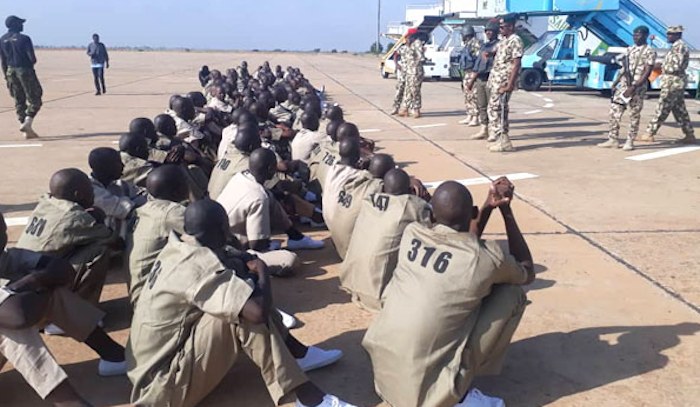
But many experts in counterterrorism caution that true deradicalization – changing deeply held ideological beliefs—is extremely difficult, and in some cases, nearly impossible to verify. Even the most ardent advocate of deradicalization cannot assure you that a deradicalized element will not reoffend or go back into the bush…some will, some wont.
What is more realistic—and more commonly achieved—is disengagement or disassociation ie:
a. The individual stops fighting
b. The individual leaves the group
But the underlying beliefs may not fully change.
Understanding this distinction is critical because:
Disengaged does not always mean deradicalized. And neither automatically means safe.
WHEN POLICY MEETS REALITY: The Nigerian Experience
Nigeria’s non-kinetic approach—through programmes such as deradicalization, reintegration, and the use of “hybrid forces”—is grounded in understandable logic:
a. Encourage defections
b. Reduce insurgent numbers
c. Stabilize communities.
But the real test of any such programme is not its intent, its not statistics or number of those who have surrendered—it is its outcome on the ground.
WHAT LOCAL COMMUNITIES ARE SEEING
Recent field reports from Goniri, Gujba LGA of Yobe State (March 2026) raise troubling concerns.
1. On 14 March around 11 am An ex-militant by name Small Danfulani now operating under a vigilante structure, allegedly shot a civilian (Mohammed Buba) in the stomach following a dispute.
2. Additional incidents linked to other ex-combatants in the same area reportedly include:
The killing of a young boy
The killing of a 35-year-old man
The killing of another adult male (~42 years) following disagreements.
All were reportedly former insurgents deradicalized now working within local security structures.
The community response is telling: They rejected the presence of these individuals, leading to their relocation to other towns (to continue their havoc).
WHAT THIS TELLS US
These incidents—whether isolated or symptomatic—highlight three uncomfortable realities:
1. Behavioural Change Is Not Guaranteed
Completion of a deradicalization programme does not automatically mean:
Emotional stability
Respect for civilian life
Capacity for conflict de-escalation.
2. Reintegration into communities Without Control Can Become Reconfiguration of Risk
When former fighters:
Retain access to weapons
Operate in loosely supervised structures
Are embedded back into fragile communities
Reintegration can unintentionally become redistribution of insecurity
3. Community Acceptance Is the Real Test – not Certification
A certificate of “deradicalization” means little if:
Communities reject the individuals
Locals feel unsafe
Victims see no justice
In Goniri as one example, the verdict was clear: it is tolerance of deradicalized ex BH under pressure—But not acceptance
THE HYBRID FORCES DILEMMA
The use of former insurgents in auxiliary or hybrid roles raises even deeper concerns:
Are they fully under military command and discipline?
What rules of engagement apply to them?
Who is accountable when they misuse force?
This creates a dangerous grey zone: Neither fully civilian
Nor fully accountable combatants
DERADICALIZATION vs REALITY: The Honest Assessment
Nigeria’s approach is not unique. Many countries have used:
Reintegration
Amnesty-like incentives
Disengagement programmes
But globally, one lesson stands out:
Disengagement is achievable.
Deradicalization is uncertain.
Public safety must never be assumed.
So—Are They Safe?
That is the question Nigerians are asking.
And the honest answer is: Not automatically. Not uniformly. Not without safeguards.
Safety is not declared – it is demonstrated over time, through:
Behaviour
Accountability
Community acceptance
Effective monitoring
THE WAY FORWARD
If these programmes are to retain legitimacy:
Call things what they are
(Disengagement ≠ Deradicalization ≠ Amnesty)
Do not equate programme completion with trustworthiness
Strengthen vetting, supervision, and accountability
Listen to communities—they are the first to know when something is wrong
FINAL THOUGHTS
Nigeria is trying to end a difficult war.
Non-kinetic approaches are part of that effort.
But peace is not built on labels—it is built on trust.
And trust, once broken in already traumatized communities, is far harder to rebuild than any insurgent group.
Group Captain Sadeeq Garba Shehu (rtd) is a Security & Defence Analyst/Conflict Security & Development Consult Ltd