
By Jibrin Ibrahim

Power always creates an illusion that those who wield it can dismiss the rule of law and do anything they like and get away with it. History is however full of examples that show that it is often impossible to get away with injustice or that the consequences for the power wielder could be very serious. From the day of his swearing in, President Bola Tinubu has been clear that the main purpose of his first term in office is to use it to obtain a second term. His method has been clear to all keen observers of Nigerian politics, to use the judiciary and INEC to take over the opposition parties so that his opponents would have no platform to contest against him.
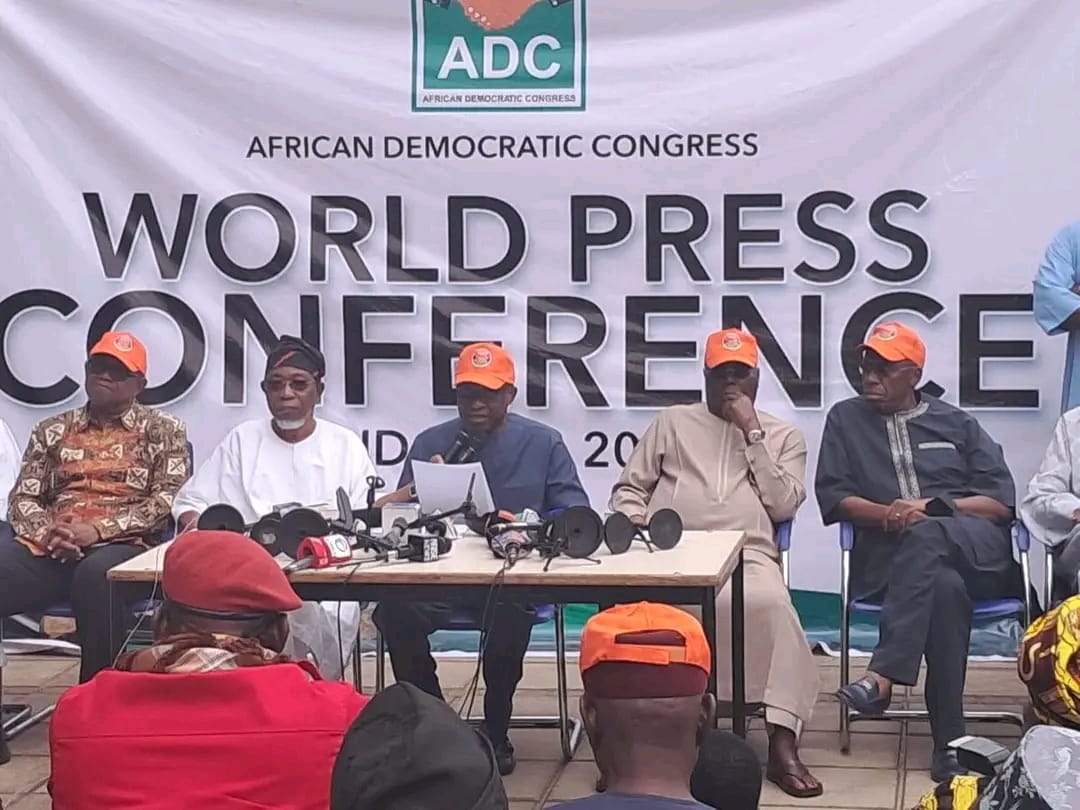
Surrogates have been used to take over and break the ambitions of his opponents in the Peoples’ Democratic Party (PDP), the Labour Party (LP) and the New Nigerian Peoples’ Part (NNPP) so far. This approach however had an unforeseen negative outcome for the ruling APC as all the disparate opposition groups were then pushed into one single formidable opposition party, the African Democratic Congress (ADC). This week, INEC was used as a tool to scuttle the ADC in spite of the lack of legal basis to do so.
Section 83 of the Electoral Act 2026 provides that no court shall entertain suits relating to the internal affairs of a political party and imposes mandatory cost sanctions of not less than N10 million against both counsel and litigants who bring such suits. This is a major shift in the law. It is clearly aimed at reducing the growing number of court cases over party leadership, congresses, and internal fights often instigated by surrogates of the ruling party.
The Independent National Electoral Commission (INEC) has just suspended recognition of all leadership factions of the African Democratic Congress (ADC) following a ruling by the Court of Appeal and ongoing litigation over the party’s leadership. In a statement by its National Commissioner, Mohammed Haruna, INEC said its decision followed the directive by the Court of Appeal, directing that the two factions of the party maintain the status quo pending the determination of a substantive suit currently before the Federal High Court in Abuja. When did INEC become the interpreter of court judgements? In any case, INEC has in its files the resignation letters of the previous party leadership who left voluntarily and some of them are now trying to claim they never left.
The real issue however is that since Tinubu became President, he has thrown away his ancient toga of a veteran fighter for democratic politics and has focused on creating a one-party state in which he is personally in control of every aspect of Nigerian politics and governance. There has been a vast programme to cajole, threaten, blackmail and bribe elected governors and legislators from other parties to join the ruling APC.
Nonetheless, the ADC has succeeded in becoming the last bastion for Nigerian politicians opposed to Tinubu and his party. A big coalition has been assembled around the party with people such as the perennial presidential candidate, Atiku Abubakar who adopted the party in July 2025. Peter Obi, the breakout candidate of the 2023 presidential election who also joined the party. The latest to join the ADC is Rabiu Musa Kwankwaso, the controller of the significant Kano vote. The people who won second, third and fourth positions in the 2023 presidential elections are now all lined up against Tinubu in the ADC. Other stalwarts in the ADC are former Senate President David Mark, who chairs the party, the former Minister of Interior, Rauf Aregbesola, who serves as National Secretary, and former Minister of Youth and Sports, Bolaji Abdullahi, who serves as the party’s spokesperson. President Tinubu is an accountant, he has crunched the numbers and he knows that they are not in his favour.
These leaders are not actually the main concern of the Tinubu administration. The government is in panic mode because the federal government has been deepening and widening misery all over the country because of concerns over the most dramatic level of corruption in the country’s history, the incredibly high level of ethnicity and nepotism in political appointments, the cost of living crisis that are linked with the twin Tinubu policies of removing fuel subsidy and floating the Naira and above all, the complete inability of the government to address the security crisis confronting the people. The APC can lure all the governors in the country to join their party but these governors cannot deliver the votes of their people, who know their suffering and misery comes from the government. Any opposition coalition that speaks to the misery of Nigerians can therefore beat Tinubu in the 2027 elections.
I have seen legal arguments circulating which show that both the court and INEC are acting in total disrespect of the law on this matter. For me, the main issue is that Nigerians know that the judiciary and INEC are both working for candidate Tinubu as partisans. I know that in Nigeria, it is not possible to dismantle all parties except those run by APC surrogates and still pretend Nigeria is running a democratic system of government. The more government agents disrupt political platforms, the more Nigerians feel alienated from them.
In this context, the assumption that people are now so poor that the offer of a few thousand naira can sway the electorate to vote for the APC might be mistaken. Red flags are emerging all over the country that Nigeria is facing a moment of a real threat of democracy collapse and that citizens must come out to save democracy. 2027 will be a vote over the preservation of Nigerian democracy and at such moments Nigerians have demonstrated their ability to take the moral high ground in the past.
Unfortunately for INEC, their newly appointed Chairman is not inspiring confidence. His decision to withdraw recognition of the David Mark ADC leadership is interpreted as partisan and illegal by most analysts. INEC has also just announced it will commence a nationwide revalidation of permanent voters cards of citizens. INEC had always argued in the past that the massive bio-data embedded in the card qualifies it to be permanent. Are they now trying to tinker with the voter’s list beyond the traditional practice of adding citizens who have turned 18-years or are replacing cards that are lost or the owners have relocated. We shall see.
President Tinubu has almost total control of all branches of government, executive, legislative and judicial. He also has vast financial resources under his control. He is beginning to think he can do anything he wants and get away with it. He is forgetting that Nigerian citizens have consistently demonstrated a capacity to contest power when it turns toxic.
Jibrin Ibrahim can be reached through jibrinibrahim@dailytrust.com