

Daily Trust Editorial, Tuesday April 7, 2-26

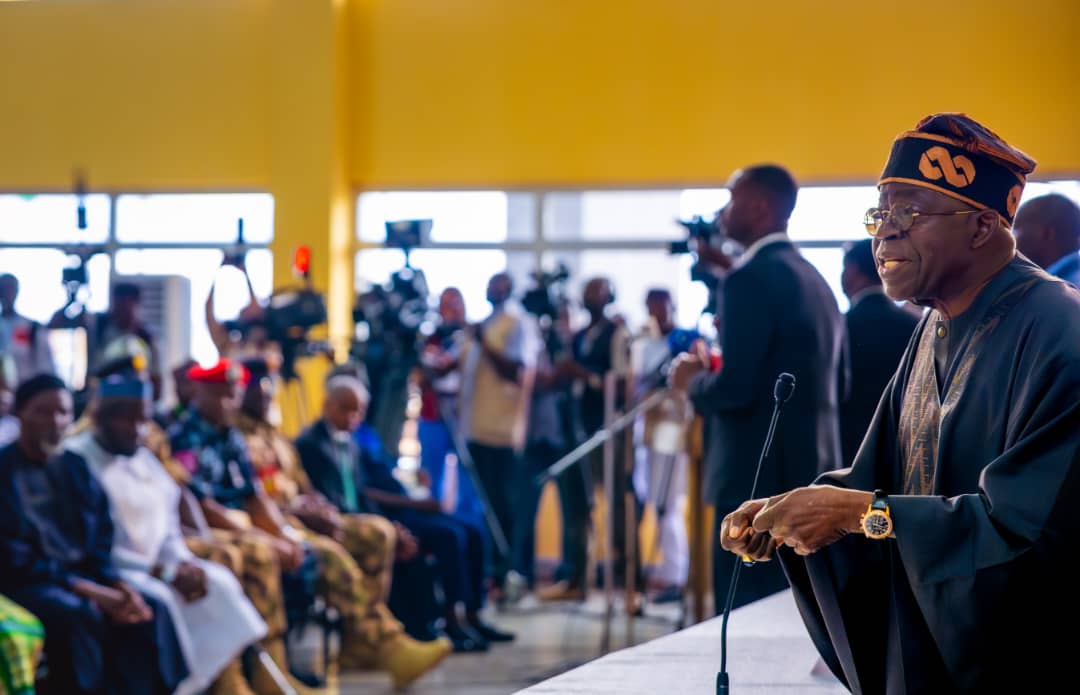
President Bola Tinubu on Thursday, April 2, 2026, visited Plateau State purportedly to meet with grieving families and state leaders following the Palm Sunday, March 29, 2026 massacre in Angwan Rukuba, Jos North Local Government Area.
Instead of traveling to the actual scene of the killings and interacting with victims in the hospitals, and personally meeting with victims’ families, the president’s engagements were confined to a lounge at Yakubu Gowon Airport, Heipang, near Jos. They were transported to meet him at the airport, about a 40-minute drive from Jos, the state capital.
The president’s words were telling: “You have no light at the airport, and I have to fly back within the next 10 minutes. To the victims, there’s nothing I can give—money or any other thing—but to console you and promise you that this experience will not repeat itself. We will try our best to comfort you and work with you. The best solution is for Jos to be just the way people like us grew up to know it.”
There were no further words or actions to soothe the victims’ families; neither was there any meeting with hospitalised survivors, nor clear direction to residents on how he plans to prevent future attacks. There was no immediate tangible aid or assurance on the arrest of perpetrators and bringing them to justice in his remarks before returning to his aircraft and departing for Lagos for the Easter holiday.
He only promised to deploy artificial intelligence-driven 5,000 Closed-Circuit Television (CCTV) cameras across the state to help tackle the state’s security challenges. This pledge of CCTV camera installation is reminiscent of the failed Abuja CCTV surveillance project, funded by about a $470 million Chinese loan, but undone by poor execution and lack of accountability
For a distraught city like Jos, Daily Trust believes that what is immediately required is not cameras but direct engagement with affected communities and other stakeholders. This apparent disconnect has become symptomatic of a deeper crisis that has fuelled over two decades of recurring violence in Plateau State. The roots of the conflict are well known—unresolved farmer-herder disputes, toxic indigene-settler dichotomy, political manipulation of ethnic and religious fault lines, and the troubling compromise of security agencies. Citizens expected successive administrations to confront these issues with sincerity and courage. They failed, opting instead for temporary fixes and rhetorical commitments. Now, instead of Tinubu to use his presidential powers to bear down on the core issues, it appears he is also out of touch with the reality.
Daily Trust, like other concerned Nigerians, is disappointed that instead of the visit symbolising the beginning of a new dawn in the violence-prone state, what emerged was a seemingly superficial and choreographed spectacle. It was indeed a photo opportunity that prioritised convenience over empathy for people in distress. The president came across as insensitive because, as the father of the nation, he did not visit those hurt by insecurity nor spend adequate and meaningful time with them.
The visit risks being dubbed a familiar pattern. A similar visit to Benue State in the wake of the crisis in Yelwata ended at the Government House. As Commander-in-Chief, the president needs to immediately reverse this trend.
Indeed, the public backlash was immediate, as issues of lack of empathy and leadership in the face of persistent killings were amplified. Stung by the reactions, the Presidency defended the arrangement, citing logistical issues: a delayed departure from Abuja due to a bilateral meeting with Chad’s president; flight safety and scheduling constraints, as the Jos airport lacks reliable night lighting; road security concerns; and the need to keep the visit efficient. They argued that the purpose—condolences and reaffirming security efforts—was achieved.
But what is most intriguing is the defence by Presidential Spokesman, Bayo Onanuga, that “President Tinubu’s visit to Jos was not merely symbolic. It was a strategic, high-level engagement aimed at bringing all stakeholders together to address the root causes of conflict and insecurity in the state… Furthermore, the President invited the community leaders to Abuja for further talks on finding a lasting solution to the recurring violence in the state.”
If the visit was successful, what is the need to spend resources and time transporting and accommodating Plateau leaders in Abuja for further discussion? Insecurity is such a serious issue that it requires on-hand, on-ground presidential presence.
It is also noteworthy that Onanuga stated that it was “after Governor Caleb Mutfwang’s briefing, President Tinubu suspended the trip to Ogun. Overnight, the Presidential Villa made arrangements for the visit to Jos, with presidential assets quickly deployed.” Does it mean that for over 48 hours, the leadership of the nation’s security architecture did not brief the President on the massacre until Governor Mutfwang came to Abuja?
Daily Trust believes that the Presidency should admit that the visit was poorly handled, as the idea that it seemed an afterthought was reinforced by how the meeting with victims’ families and stakeholders was rushed. It should be noted that the short, airport-only flyover visit has become a symbol for critics of governmental detachment.
Moreover, whatever the original intentions, the inability of the President to leave the airport is being seen as demonstrating a lack of confidence in the nation’s security apparatus due to worsening insecurity. He needs to be seen as standing with the people where it hurts most—the real site and environment of the suffering of grieving families.
We also note that cameras alone will not resolve the murderous insecurity ravaging the state. What is required is a comprehensive, community-driven, whole-of-society approach. This is because technology, no matter how advanced, cannot substitute for political will. Cameras do not resolve grievances. Algorithms do not reconcile communities. Surveillance does not replace justice.
We advise that none of the president’s activities should create the impression that he is insulting the collective intelligence of the people or showing disrespect, especially to those killed in cold blood in Jos and other places by criminal elements whom the government has failed to tackle despite repeated promises.
Far beyond the visit, what is most required is a coherent, grounded strategy that addresses the human drivers of insecurity. This includes rebuilding trust in institutions, ensuring justice for victims, equipping security forces, and tackling the socio-economic conditions that fuel conflict. In doing this, leadership must be honest about challenges, realistic about solutions, and committed to meaningful change. This is all Nigeria requires now. Anything less is simply posturing.