
By Group Captain Sadeeq Garba Shehu (rtd)

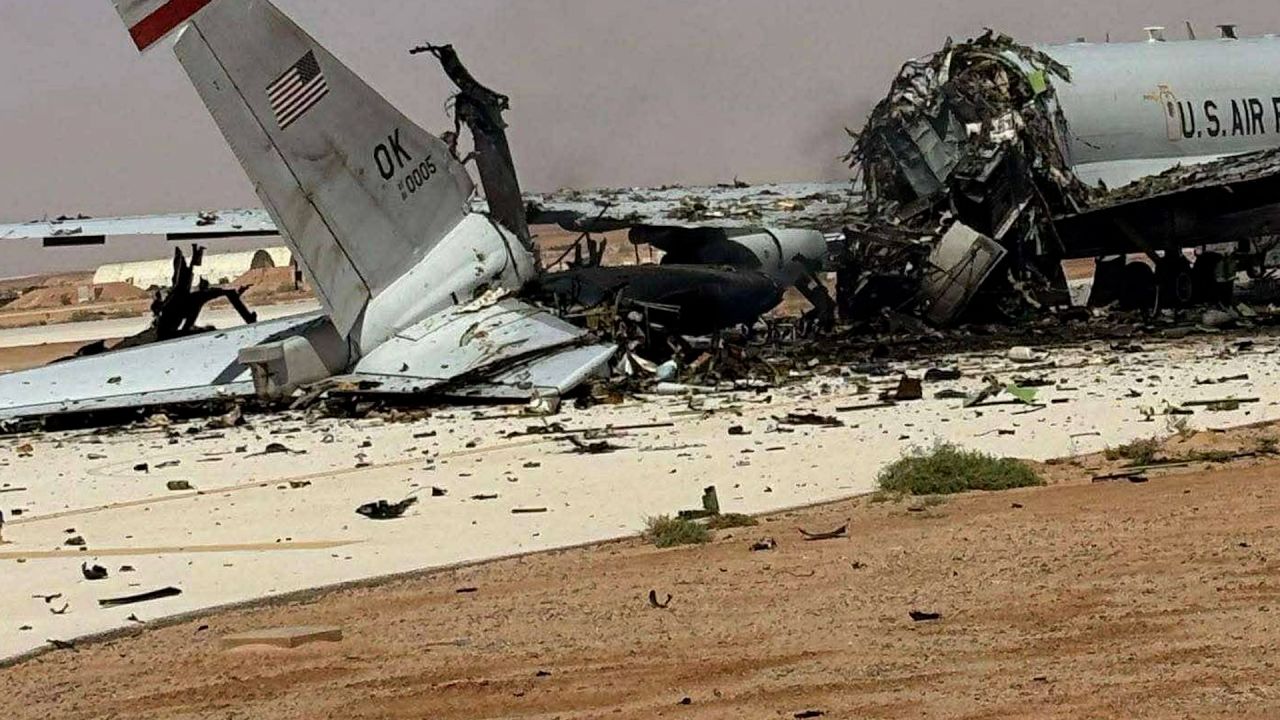
The recent U.S. Combat Search and Rescue (CSAR) episode linked to a reported F-15E Strike Eagle shootdown over Iran will likely be studied in military academies for years—not because it was cheap, but precisely because it was not.
After the aircraft was brought down in contested airspace, the United States launched a complex, multi-platform recovery effort involving helicopters, special operations forces, ISR, and protective air cover. The outcome was clear: both aircrew were recovered and no American was left behind. What matters for the professional is not the headline—but the cost, the losses, and what those losses reveal about doctrine.
WHAT WAS ACTUALLY LOST (With Cost Estimates)
Through Enemy Action
• 1 × F-15E Strike Eagle
- Shot down over Iran
- Estimated unit cost: ~$90–100 million
Primary combat loss that triggered CSAR
ADDITIONAL OPERATIONAL INCIDENT
• 1 × A-10 Warthog
- Damaged / forced down
- Estimated unit cost: ~$18–20 million ( procurement value)
- Pilot recovered
DELIBERATE U.S. DENIAL (Not Enemy Fire)
• 2 × MC-130J transport aircraft — destroyed on ground
o Estimated unit cost: ~$90–100 million each
o Total: ~$180–200 million
• 4 × MH-6 “Little Bird” helicopters — destroyed
- Estimated unit cost: ~$5–10 million each
- Total: ~$20–40 million
These were intentionally destroyed by U.S. forces to prevent sensitive technology capture – not combat losses.
AIRCRAFT HIT BUT SURVIVED
• At least 2 helicopters took fire
- Damaged
- Returned safely
PERSONNEL OUTCOME (The Real Metric)
• F-15E crew: 2 (Pilot + WSO)
- Both ejected
- Both successfully recovered
- One early
- One after evasion inside hostile territory
PERSONNEL LOSSES—Fact vs Rumour
Now to the circulating rumours – claims that American servicemen were killed during the rescue. In high-intensity conflict, such narratives are almost inevitable. Could be true could be false. Adversaries amplify them for psychological effect, while fragmented information environments allow speculation to travel faster than verified facts. Professional militaries, however, report casualties with formality and clarity.
As of now, there is no credible or official confirmation that any U.S. personnel were lost in the CSAR operation itself. That distinction matters. If true, such losses would fundamentally alter the narrative – from a clean recovery to a costly tactical success. But absent verified evidence, the professional assessment for now remains clear: The mission achieved its primary objective without confirmed personnel loss.
• CSAR mission itself:
- ZERO U.S. personnel killed
- All recovery forces extracted safely
• Wider conflict (not CSAR-specific):
- 13 U.S. personnel killed
- Example: KC-135 crash (6 fatalities)
Cost of the Operation (Where the Numbers Matter)
This was not a sortie – it was a system-level operation.
OPERATING COST PER HOUR
• Rescue helicopters (HH-60 class): $5,000 – $10,000/hr
• Tanker/command aircraft (HC-130J): $15,000 – $25,000/hr
• Fighters/escorts: $20,000 – $80,000+/hr
MISSION SCALE
• 6–15 aircraft involved
• Multiple hours airborne
• ISR, drones, satellites, command architecture
Estimated Mission Cost
• Baseline CSAR: $1M – $5M
• High-threat deep penetration: $5M – $15M+ per mission
TOTAL EQUIPMENT LOSSES (Approximate)
• F-15E: ~$100M
• MC-130Js (2): ~$180–200M
• MH-6 helicopters (4): ~$20–40M
Total aircraft losses alone:
~$300M – $340M+
When combined with operational costs, deployments, and risk exposure:
Total cost runs into hundreds of millions – potentially far higher in strategic terms
BOTTOM LINE (Professional Assessment)
• Aircraft losses:
- 1 combat loss (~$100M)
- 6 aircraft destroyed by own forces (~$200M+)
• Personnel:
- 0 killed in CSAR operation
- 100% recovery of downed aircrew
WHAT THIS MEANS
From a narrow financial perspective, it appears excessive – hundreds of millions spent to recover two individuals.
But war is not an accounting exercise.
The United States accepted:
• Loss of a frontline fighter
• Destruction of its own aircraft worth hundreds of millions
• Millions per hour in operational cost
To guarantee one outcome: No one is left behind.
The cost was aircraft, money, and risk.
The benefit was people recovered, morale preserved, and credibility reinforced.
In the end, this was not just a rescue. The US wanted to prove that when the United States makes that promise to its fighting forces, it backs it with action.
If those pilots had been captured, their value to Iran would have been immense – far exceeding the cost of any aircraft lost.
WHAT A CAPTURED U.S. PILOT IS WORTH (Strategically)
A modern U.S. F-15E crew member is far more than a pilot. He is, in effect, a walking classified system. Embedded in his training and experience is intimate knowledge of current tactics, techniques, and procedures, rules of engagement, electronic warfare methods, mission planning processes, and the broader operational patterns in theatre. In an era of networked warfare, that accumulated knowledge can be as valuable – if not more valuable than the aircraft itself. Even with Survival, Evasion, Resistance and Escape training, time, pressure, and systematic exploitation can yield fragments of information that, when pieced together, become operationally useful.
Beyond intelligence, the propaganda value of a captured American pilot would be immense. Such an individual would almost certainly be paraded on state media, presented as proof of U.S. vulnerability, and used to undermine narratives of technological and military dominance. The psychological effect would extend well beyond the immediate battlefield, boosting domestic morale within Iran, energizing proxy actors, and shaping global perception. In modern conflict, perception is power, and a captured pilot can become one of the most potent symbols in the information domain, influencing international opinion, domestic politics, and even coalition cohesion.
Equally significant is the strategic leverage such a captive would provide. A living pilot becomes a bargaining chip—a tool of negotiation, deterrence, and crisis manipulation. He could be used to extract concessions ranging from prisoner exchanges to sanctions relief or operational restraint. The grim reality of conflict is that dead prisoners hold no value; living ones do. A captured airman is not merely a detainee, but a lever that can be pulled repeatedly in the political and diplomatic arena.
The impact would also be felt immediately in U.S. decision-making. The presence of a captured pilot in enemy hands constrains military options, complicates escalation decisions, and introduces intense domestic political pressure.
History offers clear precedents—from Vietnam to the Gulf War—where captured personnel became focal points that shaped national strategy and influenced the tempo and scope of operations. In such circumstances, the battlefield is no longer defined solely by terrain and firepower, but by the political weight of a single individual in captivity.
Finally, there is the psychological effect on the force itself. The confidence of pilots and operators rests, in part, on the belief that if they are downed, they will be recovered. Remove that assurance, and hesitation begins to creep in. Aggressiveness declines, risk tolerance shrinks, and operational effectiveness suffers. In that sense, CSAR is not simply a humanitarian or moral obligation—it is a core element of combat power preservation.
The equation, therefore, is stark. The cost of a CSAR mission may run into hundreds of millions of dollars, but the value of a captured pilot—measured in intelligence, propaganda, negotiation leverage, and strategic constraint—is potentially incalculable. That is why the United States is willing to lose aircraft, destroy its own platforms, and spend millions per hour in hostile airspace to prevent a single outcome: a living American pilot in enemy hands.
In naira terms, the U.S. was prepared to risk and lose well over ₦400 billion in aircraft and equipment, and still spend several additional billions on the rescue operation itself, rather than allow two pilots to fall alive into enemy hands.
Group Captain Sadeeq Garba Shehu (rtd) is a Security & Defence Analyst/Conflict Security & Development Consult Ltd