
“The greatest danger in times of turbulence is not the turbulence; it is to act with yesterday’s logic” – Peter F. Drucker

By Usman Sarki
The reactions generated by my recent article, “Northern Nigeria and an APC Second Term: Negotiation or Surrender?”, have been illuminating, thoughtful, and in many respects, sobering. Among the responses received was a particularly frank intervention from a respected Northern brother and compatriot from Plateau State whose observations deserve deeper reflection, not because they were necessarily comfortable, but because they touched upon several truths that the region must now confront with honesty and courage.
For too long, much of the political discourse in Northern Nigeria has focused almost exclusively on the question of access to federal power. The dominant assumption appeared to be that once the North retained influence at the centre, development and stability would somehow follow naturally. Experience, however, has shown that political presence alone is not a substitute for strategic development. The North today occupies an uncomfortable paradox: it has often remained politically visible at the federal level, yet socially and economically vulnerable at the grassroots. This contradiction should compel introspection.
One of the most important points raised in the response to my earlier article was the argument that many of the pains confronting Northern Nigeria today are substantially self-inflicted. This observation is difficult to dismiss. Indeed, it is impossible to discuss the present condition of the region without acknowledging the cumulative failures of sections of its own political and governing elite over several decades.
The culture of elite capture, patronage politics, weak institutional development, poor governance, marginalisation of traditional authorities, and inadequate investment in human capital, have contributed significantly to the present reality. The tendency to equate political power with actual development created a dangerous illusion that proximity to federal authority was itself sufficient evidence of progress. Yet history repeatedly demonstrates that no society develops merely because its elites occupy positions of influence.
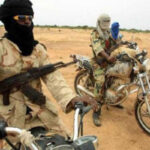
Development emerges from institutions, infrastructure, productivity, education, security, quality healthcare, discipline, and long-term planning. In many respects, Northern Nigeria became trapped in a politics of symbolism while neglecting the harder work of structural transformation. The issue of insecurity offers perhaps the clearest illustration of this contradiction. Under successive administrations, many of the country’s key security institutions have been headed by Northerners. Yet Northern Nigeria itself today remains the epicentre of banditry, insurgency, communal violence, kidnapping, and rural instability.
This reality complicates simplistic narratives of external blame and forces the region to confront uncomfortable internal questions. If political access alone were sufficient, insecurity should by now have significantly receded. That it persists so stubbornly suggests that the crisis is deeper than mere appointments or representation. It points instead to failures of governance, coordination, political will, local administration, intelligence systems, economic planning, and social cohesion.
This is not to absolve the federal government of responsibility. Rather, it is to emphasise that meaningful renewal must begin with internal reform and accountability. Equally significant is the gradual fragmentation of the idea of a monolithic North. The old political assumption of a single, unified Northern bloc no longer entirely corresponds with present realities. Ethnic, religious, generational, social, and political divisions have become increasingly pronounced.
The distinction often drawn between the so-called “core North” and the “periphery” has complicated collective bargaining and weakened the coherence that once characterised Northern political engagement. Yet despite these divisions, certain existential concerns remain widely shared across the region especially insecurity, poverty, educational decline, unemployment, rural underdevelopment, and economic stagnation.
These challenges cut across ethnicity and religion. They affect farmers and traders, urban dwellers and rural communities, Muslims and Christians alike. It is around these common realities, rather than outdated assumptions of uniform identity, that a new basis for strategic Northern cooperation may have to emerge. Another painful but necessary issue concerns education. No modern society can compete sustainably while neglecting human capital development.
Northern Nigeria’s educational crisis has now reached proportions that threaten not merely its development, but its future relevance within an increasingly knowledgedriven global order.
Policies such as federal character and quota systems may originally have emerged as corrective mechanisms designed to address historical imbalances. However, over time, these arrangements often degenerated into instruments manipulated by privileged elites while the wider population remained educationally disadvantaged.
Temporary balancing mechanisms gradually became substitutes for merit, excellence, competitiveness, and broad-based educational investment.
The consequence has been severe. While small elite circles benefited from political patronage and access, millions of ordinary Northern youths remained trapped within collapsing educational structures, poor infrastructure, weak vocational systems, and limited economic opportunity.
The North cannot negotiate effectively externally while remaining divided and internally weak educationally and economically. This reality leads inevitably to the deeper question of leadership selection. Perhaps one of the most enduring tragedies of Northern politics has been the narrowing of leadership recruitment into the hands of a relatively small and privileged political class. The process by which leaders emerge has too often prioritised patronage networks, wealth, godfatherism, and political convenience over competence, vision, integrity, and developmental commitment.
As a result, leadership has frequently become transactional rather than transformational. The response to my earlier article also touched on the experience of the League of Northern Democrats (LND). Its original vision, as recalled by many of its early advocates, was not primarily about capturing immediate federal power. Rather, it sought to establish a long-term framework for regional renewal through strategic planning in agriculture, education, industrialisation, institutional reform, and leadership development.
That vision was fundamentally developmental. Unfortunately, as is often the case within the Nigerian political environment, short-term electoral calculations and 2027 political permutations now appear to have overshadowed many of those original objectives. What began as an attempt to stimulate long-term thinking has become yet another platform for elite political contestation.
This drift is deeply unfortunate because it reflects one of the central weaknesses of Nigerian politics generally which is the inability to sustain long-term developmental thinking beyond immediate electoral cycles. Yet despite these disappointments, to sink into despair would be misplaced. If anything, the current crisis offers Northern Nigeria an opportunity for honest reassessment and strategic calibration. The region must return to the drawing board not merely to negotiate power externally, but to rebuild capacity internally.
The real struggle before the North is, therefore, two-fold. It involves strategic engagement within the national political framework while simultaneously pursuing deep internal reforms. These two objectives are inseparable. No region can negotiate effectively from a position of internal weakness, disorganisation, and underdevelopment.
What is required now is a deliberate shift from the politics of entitlement to the politics of productivity. The future relevance of Northern Nigeria will depend less on the number of offices occupied at the centre and more on the quality of governance delivered within its states and communities. It will also defend on the quality of its representation at the centre, especially in ministerial and legislative texture.
In terms of productivity, agriculture must move beyond subsistence into modern agro-industrial production. Education must become a genuine emergency priority. Industrialisation must be pursued systematically. Institutions must be strengthened. Leadership recruitment must widen beyond entrenched political families and patronage networks. Young people must be equipped not merely for politics, but for productivity and innovation within a changing global economy. Northern women must be appropriately empowered to redeem their dignity.
Above all, the North must rediscover the culture of long-term thinking which once distinguished many of its earlier developmental initiatives. This is not a call for isolation or sectionalism. Northern Nigeria’s future remains inseparable from the future of Nigeria itself. But a stronger, more educated, economically viable, and internally cohesive North would strengthen rather than weaken the federation.
Ultimately, politics alone cannot save any society that refuses to reform itself internally. Federal appointments cannot substitute for schools. Electoral victories cannot replace industrialisation. Rhetoric cannot overcome insecurity. Power without development eventually becomes meaningless. The challenge before Northern Nigeria, therefore, goes far beyond 2027. It is a civilisational question about the kind of society the region seeks to become in the decades ahead.
That is why the debate must continue not in anger or mutual recrimination, but in honesty, reflection, and strategic seriousness. For, if the North is to reclaim both relevance and dignity within the evolving Nigerian federation, it must first rebuild itself from within. It must overcome the “Core North” and “Middle Belt” divides, which are constructs created and imposed from outside the region to divide and conquer it with ease.
And as my respected brother rightly concluded: “a luta continua vitoria e certa,” – the struggle continues, and victory is certain!
Usman Sarki can be reached via usmansaiki@dailytrust.com