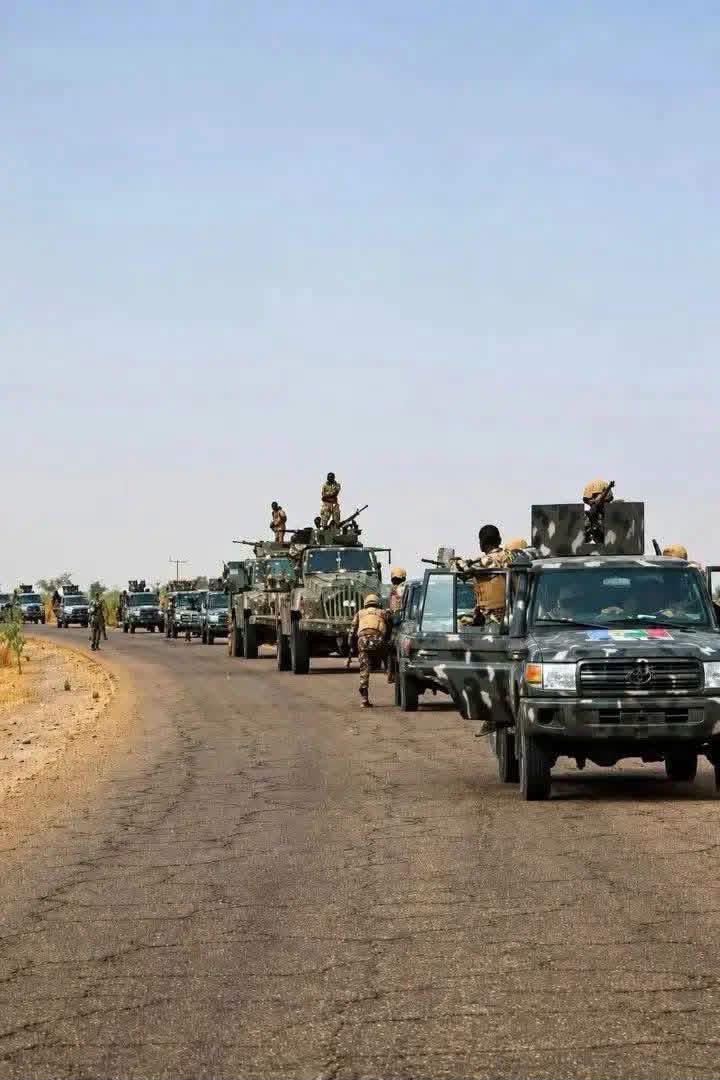

The federal government’s decision to double the minimum monthly salary of soldiers from N49,000 to N100,000 has raised a fundamental question about the value placed on those defending the country.

The April report of the National Bureau of Statistics’ (NBS) Cost of a Healthy Diet (CoHD) shows that the cost of a healthy diet for one adult stands at N1,589 daily.
At this rate, a soldier, who earns N100,000 monthly, can afford a nutritious diet for only about 63 meals, equivalent to roughly 21 days of three square meals daily.
The NBS Statistics Office and a researcher involved in the report told Daily Trust that the CoHD is for a healthy diet at a point in time. It could be breakfast, lunch or dinner.
N100,000 salary for 21 days of healthy feeding
The latest NBS Cost of a Healthy Diet Report highlights the pressure rising food prices are placing on low-income earners, including military personnel.
According to the bureau, the average cost of maintaining a healthy diet increased from N1,541 per adult per day in March 2026 to N1,589 in April, representing a 3.12 per cent month-on-month rise. Compared with N1,518 recorded in April 2025, the cost increased by 4.74 per cent year-on-year.
At N1,589 daily, maintaining a healthy diet three times – breakfast, lunch and dinner – costs about N4,767 daily and around N143,010 monthly for an adult. Based on three square meals daily, a soldier earning N100,000 can only afford about 63 meals, enough for approximately 21 days, before the salary is exhausted.
The challenge becomes even greater for soldiers with spouses or children, as the NBS estimate covers only one adult and excludes other household expenses.
The report attributed the latest increase to rising prices across nearly every food group except starchy staples. It noted that animal-source foods remained the most expensive component of a healthy diet, accounting for 40 per cent of total cost despite contributing only 13 per cent of calorie requirements.
State-level data further illustrate the disparity. Ekiti recorded the highest daily healthy diet cost at N2,036, followed by Imo (N2,018) and Bayelsa (N1,909), while Adamawa had the lowest at N1,143, ahead of the Federal Capital Territory (N1,278) and Akwa Ibom (N1,314). Regionally, the SouthEast recorded the highest average daily cost at N1,830, followed by the South-West (N1,753), while the North-East recorded the lowest at N1,415.
According to the NBS, the CoHD measures the minimum amount required to meet recommended daily nutritional needs using locally available foods and serves as a key benchmark for assessing food affordability and household welfare.
Soldiers’ salary structure, allowances
The Manual for Financial Administration of the Armed Forces of Nigeria (MAFA), signed in 2017, states that “personnel remuneration is governed by the Consolidated Armed Forces Salary Structure (CONAFSS) and other financial guidelines, including directives issued by the National Salaries, Incomes and Wages Commission (NSIWC), the Public Service Rules and the Harmonised Terms and Conditions of Service.”
According to the manual, CONAFSS comprises not only the basic salary but also a range of consolidated mandatory allowances approved by the President as Commander-inChief of the Armed Forces. These include rent subsidy, utility allowance, leave grant, uniform maintenance allowance, hazard allowance, house upkeep allowance, general services allowance, entertainment allowance, transport allowance, non-practising allowance, hardlying allowance, torchlight allowance, retention incentive allowance, qualifying pay allowance, furniture allowance, command expenses allowance and meal subsidy. It also provides personal servant allowance for officers.
The manual states that the salary structure is subject to periodic review by the National Salaries, Incomes and Wages Commission, although it notes that the current CONAFSS reflected in the document took effect from July 1, 2010.
Beyond the consolidated package, the MAFA provides for several incidental allowances, which are payable only under specified conditions.
For instance, personnel posted from one duty station to another are entitled to Packing on Posting Allowance, equivalent to five per cent of annual CONAFSS on Step Five of their rank, provided official transport is not supplied. The allowance is payable only once in a year and does not apply to personnel posted within the same location or those proceeding on courses.
Similarly, retiring or discharged personnel are entitled to a Terminal Packing Allowance amounting to 10 per cent of annual CONAFSS on Step Five to facilitate their exit from military barracks.
The manual also provides for a Lodging Allowance, equivalent to 40 per cent of CONAFSS, for personnel who are not provided accommodation in military barracks or government quarters. The allowance is payable with monthly emoluments and is calculated using Step Five of each rank. It applies to personnel at their permanent duty station where official accommodation is unavailable or when they are away on temporary duty without government accommodation.
Many personnel residing in military barracks pay little or nothing for accommodation, while soldiers deployed on operational missions receive meals at government expense, reducing some of their direct living costs.
In addition, personnel deployed for specialised operations receive extra allowances. Under the manual, members of the Amphibious Force who have completed the prescribed training and are actively engaged in amphibious duties receive N50,000 monthly, while divers are entitled to N25,000 monthly. Certified divers in the Nigerian Navy receive N50,000 every month.
Similarly, personnel trained and actively deployed in special warfare operations receive a Special Warfare Allowance of N50,000 monthly, while Special Boat Service operatives of the Nigerian Navy are entitled to 25 per cent of their monthly salary when deployed on special operations.
The manual further provides a Counter-Terrorism/CounterInsurgency (CT/COIN) Allowance of N50,000 per month for personnel who have undergone specialised CT/ COIN training and are actively deployed in such operations. The document states that payments for these operational allowances are subject to approval by the appropriate service authorities and may continue for personnel who are temporarily incapacitated or hospitalised for less than six months.
However, while these allowances and benefits form part of the military welfare framework, many of them are conditional, rank-specific or deploymentdependent, meaning they are not received uniformly by every soldier.
Nigerian soldiers’ pay below counterparts’ in Togo, Gambia, others
The soldiers’ new N100,000 monthly minimum salary falls short of what their counterparts in several African countries earn.
A private in the South African National Defence Force (SANDF) earns between R8,500 and R12,000 monthly, equivalent to about N715,607 and N1.01 million using an exchange rate of R1 to
N84.19, according to the 2026/27 South African National Defence Force salary schedule published by MoneyToday, a South African publication tracking salaries.
The gap is equally pronounced in East Africa. Estimates published by BusinessThisday in Kenya show that privates and corporals in the Kenya Defence Forces (KDF) earn between KSh19,941 and KSh70,000 monthly, equivalent to about N212,908 and N747,383 using an exchange rate of KSh1 to N10.68.
Even among Nigeria’s West African neighbours, soldiers generally earn considerably more. According to World Salaries, an entry-level soldier in The Gambia earns about 125,100 Gambian dalasi annually, equivalent to approximately N2.35 million or about N195,910 monthly.
The same database estimates that entry-level soldiers in Togo receive about 3.83 million CFA francs annually, equivalent to approximately N9.21 million, or about N767,564 monthly, using an exchange rate of 1 CFA to N2.41.
Comparable entry-level salaries stand at roughly equivalent of N526,962 per month in Niger Republic, about N661,892 in Benin Republic, around N547,000 in Senegal, and approximately N803,046 monthly in Cameroon.
CSOs seek living wage for soldiers
Country Director, Accountability Lab Nigeria, Friday Odeh, told Daily Trust that the debate should not focus on whether the government increased soldiers’ salaries but whether the new wage is sufficient to meet the basic needs of military personnel and their families.
According to him, while doubling the minimum monthly salary from N49,000 to N100,000 is a positive step, the real measure of the policy should be its purchasing power amid rising living costs.
“The issue is not whether salaries increased, but whether they can meet the basic needs of the military personnel and their families expected to protect Nigeria,” Odeh said.
He suggested that salary reviews be assessed against prevailing economic realities rather than the nominal figures announced by the government.
“Doubling pay is good, but public policy should be compared with purchasing power on the ground, not numbers. If public data shows that three square meals alone consume most of a soldier’s monthly salary, then remuneration has not kept pace with the cost of living,” he stated.
Odeh said the government has a responsibility to ensure that members of the Armed Forces receive compensation that enables them to live with dignity and reduces the financial pressures that could affect their welfare and effectiveness.
He stated: “Government has a responsibility to ensure that all security personnel receive wages that preserve their dignity, support their wellbeing, and reduce vulnerabilities connected with financial hardship.
“Beyond announcing salary increases, there should be evidence-based reviews of military compensation that reflect inflation and the actual cost of living. From a CSO perspective, it is important to measure whether public spending reflects practical improvements that can be felt in people’s lives, not just big numbers on paper as the government announces all the time.”
The International Society for Social Justice and Human Rights (ISSJHR) also urged the government to undertake a comprehensive review of military remuneration, arguing that the new N100,000 minimum salary falls short of what is required to guarantee a decent standard of living for soldiers.
The ISSJHR Chancellor, Comrade Omenazu Jackson, said: “The recent announcement by the Minister of Defence that the federal government has increased the monthly salary of some soldiers from about N49,000 to N100,000 is a welcome development. However, the central question remains: is N100,000 a living wage in today’s Nigeria?
According to the group, the rising costs of food, transportation, housing, healthcare, education and other essential needs have made the salary inadequate for many soldiers who are responsible for supporting their families while confronting terrorism, banditry, kidnapping and other security threats.
Jackson said countries that place a premium on national security adequately compensate their military personnel through competitive salaries and comprehensive welfare packages.
“Countries that take national security seriously understand that soldiers must be adequately compensated and supported with housing, healthcare, insurance, pensions, and family benefits. Nigeria must adopt the same standard if it expects professionalism, loyalty, and high morale from its armed forces.
“Inadequate remuneration also increases the risk of unethical conduct, as financial pressure may push some personnel toward unofficial sources of income. At the same time, it is difficult to justify the enormous salaries and allowances enjoyed by many political office holders while soldiers struggle to meet basic needs,” he said.
The organisation called on the federal government to urgently review military salaries and expand welfare packages to include decent housing, health insurance, educational support for soldiers’ children, life insurance, improved pensions and adequate operational equipment.
“A nation that values security must value its soldiers. Paying them a living wage is not an act of charity; it is a necessary investment in national security, discipline, and patriotism. Economic justice demands that those who defend Nigeria should not be condemned to poverty while those who govern enjoy extraordinary privileges. A secure nation begins with well-motivated and adequately remunerated security personnel,” he added.
Lead Consultant, Hadassah Nutritional Health Consult, Esther Olorunfunmi Sayo, warned that the inability of soldiers to consistently afford healthy meals could undermine both their health and combat readiness.
She said military personnel require balanced nutrition to sustain the physical and mental demands of their profession.
Sayo called for military welfare reforms that go beyond periodic salary adjustments to include nutrition-focused interventions capable of guaranteeing access to balanced diets.
“To address this challenge, salary increases should be complemented with nutritionfocused interventions. These could include subsidised healthy meals in military barracks, strengthened ration systems that meet nutritional standards, periodic nutrition education, and regular reviews of soldiers’ welfare packages to reflect inflation and the actual cost of living,” she said.
She added that ensuring soldiers have reliable access to nutritious meals should be viewed as an investment in national security rather than merely a welfare programme.
“Ensuring that soldiers have reliable access to nutritious food is not only a welfare issue, but also an investment in national security, as a well-nourished military is better equipped to perform its duties effectively,” Sayo said.
@Daily Trust