
By Group Captain Sadeeq Garba Shehu rtd

I recently appeared on television to discuss the Nigerian Senate’s call for the suspension of the Federal Government’s reintegration (often referred to as “amnesty”) programme for former Boko Haram members. As is often the case with live television, time did not permit a full explanation of the complex legal, military and policy issues involved.
As someone who has spent over three decades working at the intersection of counter-terrorism, Disarmament, Demobilization and Reintegration (DDR), International Humanitarian Law (IHL), military operations and humanitarian affairs, I believe this debate deserves far more nuance than simply asking whether the programme should continue or stop.
THE DEBATE SHOULD START WITH INTERNATIONAL HUMANITARIAN LAW
Much has been said about “amnesty”, but very few commentators have explained where the concept originates in modern international humanitarian law. The relevant provision is Article 6(5) of Additional Protocol II (1977) to the Geneva Conventions, which states:
“At the end of hostilities, the authorities in power shall endeavour to grant the broadest possible amnesty to persons who have participated in the armed conflict, or those deprived of their liberty for reasons related to the armed conflict, whether they are interned or detained.”
This provision did not appear by accident. It was inserted by experts during negotiations because the drafters understood the unique nature of Non-International Armed Conflicts (NIACs) such as insurgencies and civil wars. Unlike wars between States, insurgents are usually citizens of the very country against which they are fighting. It is desirable but not possible that all insurgents are killed during battle. Some will surrender, or be captured. When the conflict eventually ends, they do not simply cross an international border and disappear. They remain members of the same communities that must somehow rebuild and live together again.
Article 6(5) therefore seeks to facilitate national reconciliation after the fighting has ended, while recognising that not every participant in an armed conflict is necessarily a war criminal.
THE MOST IMPORTANT PROVISIONS ARE OFTEN IGNORED
The critical words in Article 6(5) are: “At the end of hostilities…” Those words were deliberately inserted. They recognise that accountability and reconciliation should be properly sequenced. First, end organised hostilities. Then distinguish between ordinary participants and those responsible for war crimes and other grave offences. Only then should authorities consider granting the broadest possible amnesty.
This raises an important question for the amnesty or deradicalization programmes in Nigeria. Have hostilities actually ended?
In my professional opinion, the answer is No. Boko Haram and ISWAP remain organised armed groups. The Nigerian Armed Forces continue active combat operations. Military casualties continue. Civilian attacks continue. The legal threshold contemplated by Article 6(5) has therefore not yet been reached. Amnesty programme started too early. This is one mistake.
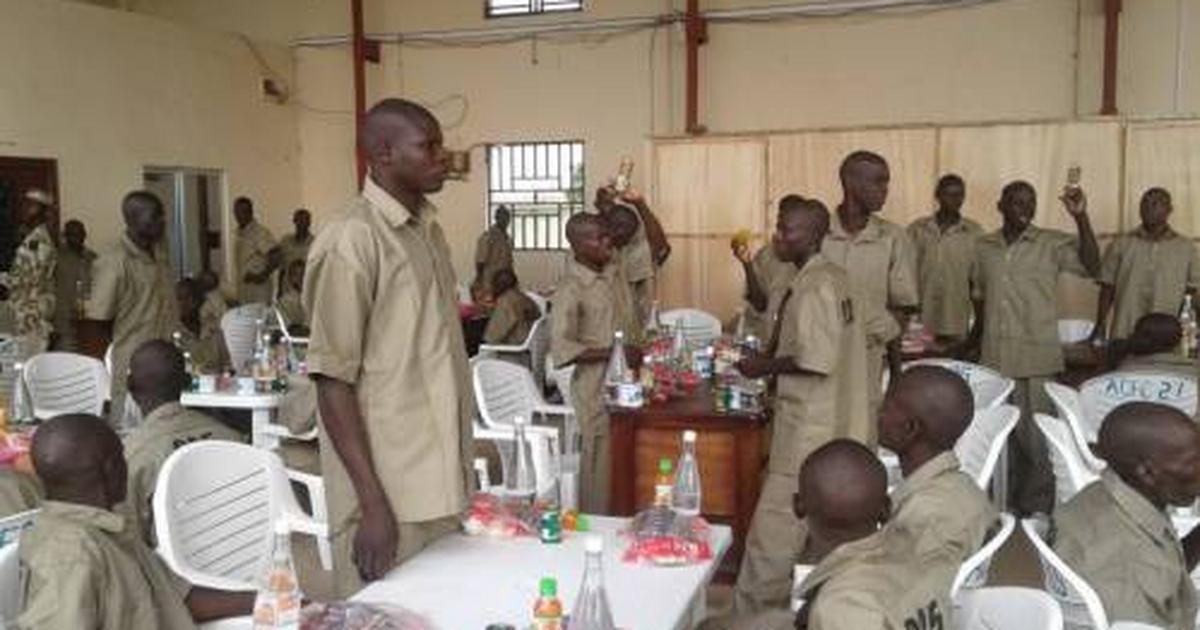
Consequently, whatever terminology is used, Operation Safe Corridor and the Borno State reintegration model are better understood as wartime disengagement and rehabilitation initiatives rather than the post-conflict amnesty envisaged by Additional Protocol II.
AMNESTY WAS NEVER INTENDED FOR EVERYBODY
Another widespread misconception is that everyone who surrenders automatically qualifies. International humanitarian law has never supported blanket amnesties. Those suspected of: war crimes; crimes against humanity; attacks against civilians; rape; torture; child recruitment; hostage-taking; and other grave crimes, even if they surrender, remain liable to investigation and, where appropriate, prosecution.
The challenge is therefore differentiation. Who qualifies for amnesty? Who does not? How is evidence gathered? Who decides? This process must be transparent, credible and legally defensible. One of the concerns in Nigeria is that this differentiation has not always been sufficiently explained to the Nigerian public, even international partners thereby creating understandable doubts and suspicion.
TWO PARALLEL PROGRAMMES OPERATION SAFE CORRIDOR AND THE BORNO MODEL
Public discussion often treats the various amnesty programmes these as though they are identical. They are not.
Operation Safe Corridor is a Federal Government/Defence Headquarters initiative involving the Armed Forces and multiple federal agencies.
The Borno Model is a State Government-led reintegration approach developed in response to the realities on the ground in Borno State.
Although they differ institutionally, both pursue broadly similar objectives: encouraging disengagement;reducing the fighting strength of insurgent groups; facilitating rehabilitation;supporting reintegration.
Rather than operating as parallel systems, there is a strong case for harmonising them within a single national legal and policy framework with common standards, clear eligibility criteria, defined institutional responsibilities and effective oversight.
CAN TERRORISTS TRULY BECOME “Repentant”?
This is perhaps the question I am asked most often. The honest answer from contemporary research is that beliefs are extremely difficult to measure. Modern counter-terrorism experts increasingly distinguish between:
Deradicalization – changing extremist beliefs. Disengagement – ceasing involvement in violence. Disassociation – breaking organisational links with terrorist groups. Rehabilitation – addressing psychological, educational and social needs, and Reintegration – returning safely to society.
Many leading researchers argue that deradicalization cannot always be reliably verified, because beliefs are internal. Behaviour, however, can be observed. For this reason, many modern programmes place greater emphasis on behavioural disengagement and sustained disassociation from violence, supported by long-term monitoring, rather than claiming certainty that an individual has completely abandoned extremist ideology. In other words: Behaviour is measurable. Belief is not. That distinction matters. No one can measure deradicalization. Noone can swear that an ex Boko Haram is deradicalized simply because he has attended deradicalization programme. Indeed there are cases albeit few of such repentant ex Boko Haram attacking locals or some returning into the bush. I have personally interviewed and taken a picture of a young man in Yobe State who was shot by a “Repentant” ex Boko Haram and a case of another who went back into the bush after being “deradicalized”
REPORTS OF FORMER BOKO HARAM MEMBERS ACCOMPANYING MILITARY OPERATIONS
There have also been persistent reports—although these have not been officially confirmed by either the Federal Government or the Nigerian military—that some so-called repentant Boko Haram members have either: been recruited into security structures; been absorbed in some capacity; or accompany military units during operations.
Until there is official clarification, these reports remain allegations and should be treated as such. However, if such arrangements exist, they deserve careful public discussion and transparency from the government/military.
Potential operational advantages could include: superior local knowledge; intelligence on insurgent networks; understanding of terrain; identifying routes and hideouts; persuading active fighters to surrender.
At the same time, the risks are equally significant: insider threats; infiltration; compromised operations; reduced troop confidence; diminished public trust; concerns among victims’ communities; reputational risks nationally and internationally.
If such a policy exists, transparency becomes essential. The public should understand: the legal basis; recruitment criteria; vetting procedures; supervision arrangements; permissible roles; accountability mechanisms; and safeguards against abuse. Transparency protects not only the public but also the professionalism and credibility of the Armed Forces.
WHAT SHOULD THE SENATE DO?
The Senate is entirely justified in demanding accountability, transparency and stronger oversight. However, simply calling for the programme to stop without giving an alternative leaves an equally important question unanswered. What should Nigeria do with: surrendered fighters? those captured during military operations? low-level participants? abducted children? women forced into insurgent camps like the Dapchi and Chibok girls , coerced support personnel? injured combatants unable to continue fighting?
Every successful counter-insurgency requires not only a military strategy but also a credible exit strategy. Without one, some fighters may conclude they have nothing to gain from surrendering.
Rather than abolishing existing programmes outright, the National Assembly should enact comprehensive legislation establishing a National Disengagement, Accountability, Rehabilitation and Reintegration Framework that clearly defines:
• eligibility;
• exclusions;
• timelines;
• victims’ rights;
• investigation procedures;
• prosecution standards;
• rehabilitation requirements;
• reintegration criteria;
• post-release monitoring; and
• parliamentary oversight.
This would replace uncertainty with law.
Final Reflection
This debate is not really about whether Nigeria should be compassionate or punitive. It is about how a democratic State balances:
• national security;
• justice;
• accountability;
• reconciliation; and
• international humanitarian law.
Military victories alone rarely end insurgencies. Equally, reconciliation without accountability rarely produces sustainable peace. The challenge before Nigeria is therefore not choosing between security and justice. It is designing institutions capable of delivering both.
I hope this contributes to a more informed national conversation, and I welcome respectful engagement from colleagues in the Armed Forces, law enforcement, the legal profession, academia, civil society, humanitarian organisations and the wider public.
A Final Clarification: Do Not Confuse Amnesty under International Humanitarian Law with Political Amnesty for Banditry
One final point deserves emphasis. The discussion above relates specifically to amnesty in the context of a Non-International Armed Conflict (NIAC) as contemplated by Article 6(5) of Additional Protocol II to the Geneva Conventions. This should not be confused with amnesties or negotiated settlements that have at various times been offered by some Nigerian State Governments to armed bandits. The two situations are legally and conceptually different.
Article 6(5) was developed within the framework of International Humanitarian Law to assist societies emerging from an armed conflict by facilitating reconciliation after hostilities have ended, while expressly preserving accountability for war crimes and other serious international crimes. It is therefore a narrowly defined legal concept applicable only in the context of an armed conflict governed by international humanitarian law.
By contrast, banditry is generally addressed under Nigeria’s domestic criminal law. Political decisions by State Governments to negotiate with, pardon or offer incentives to bandits arise from domestic security and public policy considerations, not from obligations or provisions contained in Additional Protocol II. Whether such initiatives are effective is a legitimate subject for public debate. However, they should not be cited as examples of, or confused with, the amnesty contemplated by Article 6(5).
Maintaining this distinction is essential. Conflating these two very different legal frameworks risks obscuring the real issues, confusing public discourse and weakening informed policy development. A serious national conversation on Operation Safe Corridor, the Borno Model and Nigeria’s response to the Boko Haram/ISWAP insurgency must therefore begin with a correct understanding of the applicable legal framework.
Group Captain Sadeeq Garba Shehu (rtd) is a Security & Defence Analyst/Conflict Security & Development Consult Ltd