
Iran’s supreme leader has warned that any attack by the United States would spark a “regional war” in the Middle East, further escalating tensions as US President Donald Trump threatens military action over the Iranian government’s crackdown on recent nationwide protests.

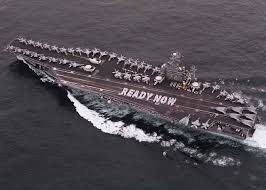
The comments from the 86-year-old Ayatollah Ali Khamenei on Sunday are the most direct threat he has made so far and follow the deployment of the USS Abraham Lincoln and other American warships to the Arabian Sea, where they were sent by Mr Trump after Tehran’s deadly response to the anti-government protests.
Trump has repeatedly said Iran wants to negotiate and has brought up Tehran’s nuclear program as an issue he wants to see resolved.But Mr Khamenei referred to the nationwide protests as “a coup”, hardening the government’s position amid the reported detainment of tens of thousands of people since the start of the demonstrations.
Sedition charges in Iran can carry the death penalty, sparking renewed concerns about Tehran carrying out mass executions for those arrested — a red line for Mr Trump.
“Of course, the coup was suppressed,” Mr Khamenei said.
“Their goal was to destroy sensitive and effective centres involved in running the country and for this reason they attacked the police, government centres, [Revolutionary Guard] facilities, banks and mosques — and burned copies of the Koran. They targeted centres that run the country.”
Mr Khamenei warned that a US attack would trigger a broader conflict.
“The Americans should know that if they start a war, this time it will be a regional war,”
he said.
Asked about the Iranian leader’s warning, Mr Trump told reporters: “Of course he is going to say that.”
“Hopefully we’ll make a deal. If we don’t make a deal, then we’ll find out whether or not he was right,” he said.
EU lists Guard Corps as terrorist organisation
The demonstrations in Iran began as an expression of discontent at the high cost of living, but grew into a mass anti-government movement that the country’s leaders have described as “riots” stoked by the US and Israel.
As tensions heightened between Iran and the US, Tehran’s Foreign Minister Abbas Araghchi said he was concerned about “miscalculations” but said he believed MrTrump was “wise enough to make the correct decision”.
Mr Araghchi said Iran had lost trust in the US as a negotiating partner, adding that some countries in the region were acting as intermediaries to rebuild trust.
“So I see the possibility of another talk if the US negotiation team follows what President Trump said: to come to a fair and equitable deal to ensure that there is no nuclear weapons,” he said in an interview with CNN.Tehran has acknowledged thousands of deaths during the protests, and on Sunday the presidency published a list of 2,986 names out of the 3,117 that authorities said were killed in the unrest.
Of the total, 131 are yet to be identified but their details will be released soon, it said in a statement.
Authorities say most were members of the security forces and innocent bystanders, attributing the violence to “terrorist acts”.
However, the US-based Human Rights Activists News Agency (HRANA) said it had confirmed 6,713 deaths, mostly of protesters.
The response prompted the European Union to list the Islamic Revolutionary Guard Corps (IRGC) as a terrorist organisation, and Iranian politicians retaliated on Sunday by slapping the same designation on European armies.Members of parliament wore the green uniform of the IRGC in a display of solidarity at the legislative session, during which they chanted “Death to America”, “Death to Israel” and “Shame on you, Europe”, state television footage showed.
It remained unclear what immediate impact the decision would have.
The step matched similar classifications enacted by the US, Canada and Australia.
US warships sent to Middle East
Mr Trump said that dialogue was taking place and said “we’ll see what happens”, but did not withdraw his earlier threats.
Mr Trump previously said he believed Iran would make a deal over its nuclear and missile programs rather than face military action.
Tehran, meanwhile, has said it is ready for nuclear talks if its missile and defence capabilities are not on the agenda.The US Navy has six destroyers, one aircraft carrier and three littoral combat ships in the region. As the “massive armada” of the United States approaches Iran to be in place for a possible military attack, a key question remains: what can such firepower actually achieve? Mr Trump has laid out two red lines for military action: the killing of peaceful protesters or the possible mass execution of those detained in the crackdown.
He has increasingly begun discussing Iran’s nuclear program, over which the US negotiated with Tehran in multiple sessions before Israel launched a 12-day war with Iran in June.
The US bombed three Iranian nuclear sites during the war.
Activity at two of the sites suggests Iran may be trying to obscure the view of satellites as it tries to salvage what remains there.
AFP/AP/Reuters