

- The U.S.-Israeli war with Iran is entering its third week, with no end yet in sight. Crisis Group experts offer a 360-degree view of its effects on peace, security and economic stability around the world
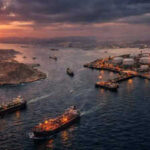
From the moment that the U.S. and Israel began striking Iran on 28 February, it was clear that the new war in the Middle East would have global repercussions. States have raced to ensure the security of their citizens in the region, while bracing for the economic fallout of Iran’s de facto closure of the Strait of Hormuz, which has halted oil, gas and fertiliser exports via the Gulf. Governments have also wrestled with how to position themselves diplomatically vis-à-vis a conflict that the U.S. and Israel started, to the quiet frustration of many, even as it is Tehran’s missiles and drones that pose the immediate threat to their people and assets in the region.

Against this backdrop, this Crisis Group survey of global responses to the war – following a similar round-up of views within the Middle East – captures how decision-makers in various parts of the world see the conflict overlapping with or impinging on their interests. In some cases, the analysis focuses on individual countries. In others, it highlights regional patterns in how states are responding.
If one theme emerges, it is that the bulk of governments have hedged in their early responses – calling for an end to the war and the protection of their citizens and assets but shying away from public reproval of the U.S. and Israel. Their reactions evince reluctance to upset a Trump administration that can respond harshly to criticism from partners and adversaries alike, even as the governments worry about how they will manage conflict-related costs and risks. These may take the form of refugee flows and spillover fighting (an acute concern among Tehran’s neighbours), or public frustration (a particular challenge in majority-Muslim countries) or economic dislocation (a near universal worry).
The war and states’ reactions to it will also leave a mark on the already unravelling international order. Washington’s Atlantic and Asian allies, traditionally vocal advocates for the international rule of law, at first steered clear of commenting of the legality of the U.S.-Israeli campaign, which is widely seen as violating UN Charter prohibitions of the use of force. Most were clearly uneasy about confronting the Trump administration on normative questions – though Spain, Norway and Türkiye were prominent exceptions, and others eventually joined them. Some no doubt worried about U.S. retreat from longstanding mutual defence commitments or feared that Washington would withdraw its last support from Ukraine as that country continues to battle Russia’s all-out invasion. Few were eager to be seen as defending the Islamic Republic, a brutal regime despised by much of the Iranian people as well as its neighbours. Rather than find fault with Washington, U.S. allies thus preferred to focus on the Iranian regime’s nuclear program, repression of dissent and retaliatory strikes on countries that want no part of the war.
While Iran has cultivated economic ties in regions from Latin America to the Sahel, the future value of good relations with Tehran is now in doubt.
Yet many countries outside the U.S. alliance system have also been deliberately circumspect, calibrating their stances to minimise friction with the U.S., the Gulf Arab states and Israel. This wariness likely reflects an interest-based calculation. While Iran has cultivated economic ties in regions from Latin America to the Sahel, the future value of good relations with Tehran is now in doubt and less well-off countries are especially vulnerable to the war’s economic fallout. On 11 March, 135 UN members – a record figure – co-sponsored a UN Security Council resolution tabled by Bahrain and the Gulf Cooperation Council countries condemning Iran’s strikes on their territory without including a reference to the U.S. and Israel.
Even those powers like China and Russia that have nurtured close ties with Tehran, and have denounced the U.S.-Israeli attack, tempered measures to aid Iran, in the case of China, or kept them plausibly deniable, in the case of Russia. Beijing’s behaviour suggests that its priority is not to spurn Washington, but to see what it can get at the negotiating table when Presidents Donald Trump and Xi Jinping meet at a summit later in March. Moscow, which is benefiting from the spike in energy prices and a temporary relaxation of U.S. sanctions on Russian oil sales, has likely offered Iran covert assistance, but also looked for opportunities to use the crisis as an opening for closer diplomatic engagement with the Trump administration.
States’ attitudes may change over time, but for now, most seem to be keeping their powder dry, while they wait to see how quickly the U.S. and Israel can bring hostilities to a close, notwithstanding the apparent lack of an exit strategy. For some, like China and Russia, the prospect of a protracted conflict that drains the U.S. militarily, financially and reputationally may have some appeal, provided they can sufficiently protect their economic interests in the Gulf. For most of the world, however, this war cannot end soon enough.
Iran’s Neighbours
Pakistan
The Middle East war presents Pakistan with a mix of diplomatic and domestic dilemmas. It shares a porous 900km border with Iran, and Pakistani officials fear that the conflict could unleash a wave of refugees for which they are ill-prepared. They also worry that anti-government militants from the Baloch ethnic group in south-eastern Iran could step up cooperation with their fellow insurgents in Pakistan’s adjacent Balochistan province, especially if the central authorities in Tehran start to lose their grip on the country.
The most serious challenge associated with the war may, however, be a spike in anti-U.S. sentiment among Pakistani Shia, who make up roughly a fifth of the population and the largest Shia community in the world outside Iran. Pakistani Shia have long looked to Iranian clerics for spiritual and ideological guidance as well as political support. Shia protesters have responded furiously to the U.S.-Israeli attack and the killing of the Islamic Republic’s Supreme Leader Ali Khamenei, rioting and assailing U.S. diplomatic facilities. State forces killed 22 demonstrators in the first weekend of the war, injuring hundreds more.
The nightmare scenario for Pakistan is a general state breakdown in Iran, which would not only permit Baloch militants greater freedom of manoeuvre but might also inspire Pakistani Shia to join anti-Western Shia militias in Iran. That development, in turn, could encourage anti-Shia armed groups inside Pakistan and along the Iranian border to take a harder line, creating further conflict risks.
Licit Iranian-Pakistani trade … is also likely to diminish, though contraband, drug trafficking and people smuggling could increase.
There are economic considerations, too. The longer the Middle East war lasts, the harder it will likely pinch the Pakistani economy, both by raising energy costs and by reducing the flow of remittances from Pakistani workers in the Gulf. Licit Iranian-Pakistani trade – already depressed by U.S. sanctions on Tehran – is also likely to diminish, though contraband, drug trafficking and people smuggling could increase. The government has already adopted austerity measures to reduce fuel consumption, including a four-day work week and the closure of public schools for two weeks, while higher education institutions will move their courses online.
But while Pakistani leaders see the U.S.-Israeli campaign as counter to their interests in myriad ways, they also need to keep good relations with the Gulf Arab countries and the U.S. for both economic and security reasons. Juggling these priorities, Pakistani officials have tried to project an even-handed approach to the conflict by condemning both the U.S.-Israeli strikes and Iranian retaliatory actions in the Gulf. While Islamabad is keen on consolidating its security partnership with the Trump administration, Pakistan’s relationship with Saudi Arabia, with which it signed a mutual defence pact in 2025, and its ties with the Gulf states, essential sources of energy supplies and economic support, remain a top diplomatic priority.
Afghanistan
The Afghan Taliban have been notably low-key in their response to the U.S.-Israeli bombardment of Iran. Prior to the strikes, with the U.S. flooding the Middle East with military assets, Taliban officials had implied that Afghans might assist Iran if it were attacked. But on 1 March, after the first exchanges of fire, the foreign ministry merely noted “deep regret” at both the U.S. and Israeli actions and Iran’s decision to respond by launching missiles and drones at Gulf Arab countries.
The reasons for the muted response are not entirely clear, particularly given that the Taliban roundly condemned Israel and the U.S. during the twelve-day war in June 2025. One possible explanation is that Afghanistan is locked in hostilities of its own, after Pakistan launched airstrikes on Kabul and other Afghan cities in late February, citing the Taliban’s support for Pakistani insurgents on Afghan soil. Another factor could be that the U.S. has been directly involved in this new bombardment from the start and the Taliban are not eager for a new source of friction with Washington. But Afghan interlocutors have told Crisis Group that the Taliban are also irked by what they perceive as Iran’s failure to criticise Pakistan’s strikes. To be sure, they need to maintain good relations with next-door neighbour Iran – with which Kabul works closely on cross-border issues like security, trade and migration – but they must also tend to their close ties with the Gulf Arab countries.
The war nonetheless threatens the country with serious economic and humanitarian harm. In 2025, Iran overtook Pakistan as Afghanistan’s largest trading partner, gaining even greater importance in October, when Islamabad closed border crossings into Afghanistan after a first round of fighting between the two countries. Much of the country’s limited trade with the world goes through Iran’s Chabahar port. Iran is also a major conduit for humanitarian aid into Afghanistan. Pakistani blockages and aid cuts have already reduced the amount of relief supplies reaching Afghans, who remain in the grip of a major humanitarian and economic crisis. A drawn-out war or a period of chaos in Iran can only worsen their plight.
Azerbaijan
Azerbaijan tends to treat its relations with Israel and Iran as a balancing act, and both countries have tried to stay in Baku’s good graces of late. The Israeli foreign minister, Gideon Sa’ar, visited President Ilham Aliyev in Baku in late January, and Iranian Defence Minister Aziz Nasirzadeh met with Aliyev days later in early February. The two high-level visitors appeared to be trying to clarify what Baku’s position would be in the case of war.
For Iran, the interest in good relations starts with geography. Azerbaijan sits on Iran’s northern border, and ethnic Azerbaijanis make up Iran’s largest single minority. While its approximately 15 million Azerbaijanis are well integrated into society at large, underlying grievances remain, particularly concerning linguistic and cultural rights. Occasionally, the grievances spark separatist sentiment, which Baku does not encourage but watches closely. In 2005, the neighbours signed a non-aggression treaty in which Azerbaijan committed not to let other powers use its territory to attack Iran.
Still, bilateral relations have been under strain in recent years. Baku suspects that Tehran supported Armenia during its prolonged struggle with Yerevan and the ethnic Armenian de facto authorities over control of Nagorno-Karabakh, resolved when Baku regained the territory in 2023. Earlier that year, a lone assailant attacked Azerbaijan’s embassy in Tehran, killing a security guard, for reasons that remain unclear. During the twelve-day war of 2025, Iran accused Azerbaijan of allowing Israeli jets and drones to pass through its airspace to strike Iranian targets, as well as permitting use of Azerbaijani territory for Israeli intelligence purposes, a claim that President Aliyev denied.
Azerbaijan provides Israel with substantial oil supplies through the Baku-Tbilisi-Ceyhan pipeline, which at times account for up to half of Israel’s oil imports.
At the same time, Baku has been keen to foster ties with Israel. The countries maintain a close strategic relationship, particularly in the field of advanced military technology, with Israel supplying a significant share of Azerbaijan’s high-tech weaponry, which many analysts argue played an important role in Azerbaijan’s campaign to retake territory in and around Nagorno-Karabakh in 2020. In return, Azerbaijan provides Israel with substantial oil supplies through the Baku-Tbilisi-Ceyhan pipeline, which at times account for up to half of Israel’s oil imports.
Against this backdrop, when the U.S.-Israeli campaign against Iran began, Baku publicly reaffirmed its 2005 treaty commitment and called for a return to dialogue. Azerbaijani officials assured Iranian counterparts that they would not permit U.S. or Israeli strikes from Azerbaijani territory. President Aliyev took the unusual step of visiting the Iranian embassy to sign a book of condolences after Supreme Leader Khamenei was killed.
But despite these efforts at reassurance, Azerbaijan found itself in the line of fire. On 5 March, several drones that Azerbaijan claims originated in Iran struck facilities near the international airport in the Azerbaijani exclave of Nakhchivan, wounding civilians. Aliyev condemned the strikes as a “terrorist attack” and pledged that the country would defend itself as necessary. But Tehran and Baku then moved quickly moved to limit the damage, with Aliyev and Iranian President Masoud Pezeshkian speaking by telephone and Tehran promising to investigate the incident. Azerbaijan has since sent humanitarian aid to Iran.
Baku sees itself as having little to gain from either escalation with Tehran or a protracted war. From Baku’s perspective, the longer the war goes on, the more likely it is that hostilities will unsettle its border with Iran – still closed after the COVID-19 pandemic – or spill over into Azerbaijani territory again. The conflict also complicates efforts to maintain good relations with Israel, and it could undermine the web of regional trade, transport and energy corridors and agreements that Baku has been promoting. There is also the question of what will happen if the regime in Tehran collapses, which Baku worries could create unpredictable and potentially unstable dynamics with Russia, Türkiye, Armenia and others. Baku’s priority in the current crisis is to maintain as much regional stability as possible, and the best way to do that is to bring the war to a swift close.
China
China has strongly condemned the U.S.-Israeli attack on Iran, but it has yet to threaten any concrete action in response.
While Beijing has forged tight links with Tehran – and joined hands with Moscow to reject European and U.S. efforts to restore nuclear-related UN sanctions on Iran in 2025 – Chinese leaders were better prepared for a disruption in the relationship than many observers had assumed. Though China gets around 13 per cent of its total crude oil imports from Iran and conducts regular joint naval exercises with Iran (along with Russia), it has established more economically significant ties with Saudi Arabia and the United Arab Emirates. Moreover, Beijing has taken active steps to prepare for a Middle East crisis. Since 2006, it has been building up its strategic petroleum reserves for this contingency. To bolster its resilience in the future, China will continue to expand investment in clean energy and deepen its energy-related cooperation with Russia.
That said, China is the world’s largest importer of crude oil, relies heavily on supplies from the Gulf and cares a great deal about whether it loses access to the Strait of Hormuz. With the Strait in effect closed off, Beijing reportedly held talks with Tehran to allow Chinese ships carrying crude oil and Qatari liquefied natural gas to pass through. These efforts have had some success. Iran has sent at least 11.7 million barrels through the Strait since the war began, all destined for China. Several ships, including non-Chinese ones, have also changed their signal to “Chinese owner”, “all-Chinese crew” or “Chinese crew on board” to avoid attack while in transit through the Strait. Further, to protect its long-term energy supply deals with Iran and the Gulf Arab states, Beijing has dispatched its Middle East envoy – Zhai Jun, who helped broker the Saudi-Iranian détente of 2023 – to Riyadh to discuss with Saudi officials the need to de-escalate the conflict.
But Beijing has undertaken these efforts quietly, and while it continues to criticise the U.S.-Israeli campaign, it shows no sign of wanting a row with the Trump administration. Beijing is preparing to host a meeting between Trump and Xi at the end of March, and despite speculation by Western media outlets that it might postpone or even cancel the summit in light of the war, Chinese Foreign Minister Wang Yi signalled on 8 March that the gathering will go ahead as planned. Media reports suggest that the two leaders’ priority will be to extend the trade truce that they reached in South Korea after the 2025 tariff wars.
The Chinese defence ministry went so far as to label the U.S. a “war addict”.
Meanwhile, the war may serve China’s grand strategy in other ways. It has given Beijing another golden opportunity to contrast its declared faith in multilateralism and cooperation with the so-called Global South with U.S. adventurism. The Chinese defence ministry went so far as to label the U.S. a “war addict”. But notwithstanding these words, Chinese officials can only be happy to see the U.S. plough its military might once more into the Middle East, leaving it with fewer assets to support its allies and partners in the Asia Pacific. (As noted below, the U.S. has reportedly moved a number of anti-missile system components from South Korea, as well as naval assets and troops from Japan, to the Middle East.) The war will also likely provide Beijing with a clearer glimpse of what Washington might be able to do in a future Asian conflict. Among other things, the prowess the U.S. military has demonstrated in precision strikes and cyber and electronic warfare could prompt Beijing to re-evaluate the effectiveness of its air defence systems and strengthen its missile defence and anti-stealth capabilities. The U.S. performance could also lend additional impetus to the Chinese military’s efforts to enhance both its long-range precision-strike capabilities and its sophistication in conducting electronic and cyber warfare. In the near term, Beijing will also keep tabs on how the war is affecting U.S. combat readiness, including through depletion of its ammunition and missile stockpiles.
On the domestic front, the apparent effectiveness of U.S. intelligence in Iran (also on display in its raid extracting Venezuelan President Nicolás Maduro in January) may heighten Beijing’s concerns about what it views as “the enemy within”. In a 3 March social media post, the Chinese military listed the need to invest in counter-espionage as the number-one lesson from the new Middle East conflict to date.
Russia
Russia, which has a security partnership with Iran, reacted with rhetorical outrage to the U.S.-Israeli attack. It has also reportedly provided Tehran with targeting support, though Moscow has denied doing so in talks with U.S. representatives. President Vladimir Putin called the assassination of Supreme Leader Khamenei “a cynical violation of all norms of human morality and international law” (mirroring the criticisms that were directed at Russia for its war in Ukraine). While Moscow has endorsed the idea of diplomacy to end the Middle East hostilities, the Kremlin has stressed that this war is not Russia’s and that it will be guided primarily by the need to defend its economic interests.
Since Russia’s full-scale invasion of Ukraine in February 2022, Russia and Iran have deepened longstanding military and intelligence ties, exchanging technology and trading lessons of battlefield experience. In 2025, the two countries entered a strategic partnership agreement, though they stopped short of extending each other defence commitments. While the war means that Iran is likely to cut back or cease exports of Shahed drones to Russia for use in Ukraine, Russia already manufactures its own, more lethal version of this weapon, and it no longer depends on Tehran to keep its armoury stocked.
Details of what help Russia has sent to Iran since the end of February remain largely confidential. Western press reports suggest that Russia may have shared satellite intelligence, enabling Tehran to strike U.S. bases in the Middle East with fuller effect. Moscow has denied it.
At root, the Kremlin is surely preoccupied with what the Middle East war could mean for its negotiations with the U.S. over ending the war in Ukraine.
At root, the Kremlin is surely preoccupied with what the Middle East war could mean for its negotiations with the U.S. over ending the war in Ukraine – talks that Russia sees as a route to securing its war aims and, potentially, normalising relations with Washington – as well as the conflict’s impact on global energy markets. The attack on Iran came as Moscow was growing ever more sceptical about reaching a deal with Kyiv and Washington to end the fighting in Ukraine. Moscow may be hoping that, if the Middle East war becomes protracted, Washington will cut sales to European states of weapons to be sent on to Ukraine, particularly aerial interceptors, or even stop providing intelligence to Ukraine. Sustained rises in oil and gas prices could also boost Russian revenues at a time of growing deficits, putting new wind in the sails of Moscow’s Ukraine campaign. Already Putin’s suggestion that the U.S. and Europe ease sanctions on Russian oil to help stabilise energy markets has proven prophetic: on 12 March, the U.S. announced a temporary lift. For these and other reasons, some Russian analysts speculate that a new window may be opening to end the war in Ukraine on the Kremlin’s terms – or something close to them.
Moscow has reiterated its longstanding idea of convening a summit of the UN Security Council’s five permanent members to discuss the situation in the Middle East, among a wealth of other topics. Moscow has also indicated openness to positioning itself as a mediator between Iran, on one side, and the U.S. and Gulf Arab states, on the other. But if Moscow can be expected to continue to look for diplomatic advantages in the Middle East, the war in Ukraine remains its strategic priority.
India
India finds itself in a particularly uncomfortable position. On one hand, it has historically had cultural and commercial ties with Iran, from which it imported much of its oil for decades. On the other hand, it has a good rapport with the Gulf Arab states, from which it now imports oil and gas. More than 10 million Indians live and work in the Gulf. Furthermore, though it remains a U.S. strategic partner in Asia, its relations with Washington have been rocky under the second Trump administration, especially since August 2025, when the latter slapped the world’s highest tariffs on India. The two sides have subsequently tried to ease tensions, with Washington reducing tariffs to 18 per cent after India agreed to curb its Russian oil imports, but it will take a long time until trust is fully restored, not least because, under Trump, the U.S. has grown closer to India’s arch-rival Pakistan.
Finally, and perhaps most decisively to date, under Prime Minister Narendra Modi, India has had much warmer relations with Israel. Alignment with Israel plays well with the Modi government’s Hindu nationalist base, due to a convergence of narratives about fighting Islamist extremism. India has been one of the few major powers in the so-called Global South to refrain from reproaching Israel for its post-7 October 2023 war in Gaza. In late February, on the eve of the U.S.-Israeli strikes, Modi was in Tel Aviv to announce a “special strategic partnership” with Israel, alongside his counterpart Benjamin Netanyahu. The two sides agreed to deepen cooperation in areas including defence (India is already the world’s top importer of Israeli weaponry) and advanced technology. It therefore comes as little surprise that, to date, India has not criticised the U.S.-Israeli attack on Iran or the killing of Iranian leaders, even as it has condemned the Iranian retaliatory strikes and called for dialogue to end the conflict.
But the 4 March sinking of an Iranian frigate off the coast of Sri Lanka by a U.S. submarine, killing the vast majority of its crew, has complicated matters. The ship was returning from a joint exercise India had organised days earlier, in which the U.S. also participated. The ship was in international waters when the U.S. torpedoed it, meaning that India cannot be held responsible for its fate. But the U.S. attack was humiliating for New Delhi, which had invited Iran to take part in the exercise and has long portrayed itself as the “net security provider” in the Indian Ocean. The government received widespread criticism, including from the opposition Congress party, for remaining silent and “having surrendered [India’s] strategic autonomy”.
Though India halted purchases of Iranian oil in 2019 … more than 40 per cent of its oil imports pass through the Strait [of Hormuz.]
The stoppage of traffic in the Strait of Hormuz has also brought the Middle East conflict close to home. Though India halted purchases of Iranian oil in 2019, under pressure from the first Trump administration, more than 40 per cent of its oil imports pass through the Strait, leaving it exposed to supply disruptions – even if Washington has granted it a waiver to buy sanctioned Russian oil until 1 April. Perhaps more concerning are looming shortages of liquefied natural and petroleum gas, which India imports from Gulf Arab states for domestic consumption, as well as fertiliser production and other industrial uses. Shortages of cooking gas are already affecting hotels and restaurants in certain cities. The government could find itself facing a political crisis, replete with opposition protests, if Indian households also start running out of cooking gas.
On a diplomatic note, India is expected to host a summit for leaders of the expanded BRICS grouping later in the year. As both Iran and the United Arab Emirates now attend these events regularly, the 2026 gathering could prove a high-wire act for India, which is keen that multilateral forums held on its soil be seen as successful.
Traditional U.S. Friends and Allies
EU and European NATO Members
Over the past week, European Union and NATO members have scrambled to respond to the fallout from the joint U.S.-Israeli military campaign and Tehran’s retaliatory strikes. They have had to manage internal divides, complex relations with their ally in Washington and the risks of getting pulled into the war themselves.
The first reactions from these capitals to the U.S.-Israeli attacks were mixed. Prominent critics were Spain and Norway, which called out the bombardment for breaching international law, and Türkiye, which decried “the clear violation of Iran’s sovereignty”. Madrid also said it would not allow Washington to use joint bases to prosecute the war. Most other EU and NATO governments, however, refrained (at least initially) from commenting on the legality of the strikes. A collective statement by the 27 EU member states on 1 March called for restraint, de-escalation and “full respect for international law”, but made no direct reference to the U.S.-Israeli campaign. German Chancellor Friedrich Merz argued that it was “not the time to lecture our partners and allies”, adding that “categorising the events under international law will have relatively little effect”. Many leaders and officials did, however, note the risks of escalation and greater regional instability. British Prime Minister Keir Starmer also stated that London “does not believe in regime change from the skies”.
But EU and NATO members were much more decisive in their responses to the Iranian retaliation. As Tehran ramped up its strikes – hitting targets in the Gulf Arab countries, a British base in Cyprus and a French hangar in the UAE, as well as firing missiles at Türkiye – most European governments condemned Tehran. Some, including the United Kingdom and France, began aiding the U.S.-Israeli effort, granting permission to use their air bases, albeit only for certain operations deemed to be defensive support as opposed to the broader offensive. But even as French President Emmanuel Macron dispatched the Charles de Gaulle aircraft carrier to the Mediterranean Sea and air defence units to Cyprus, he took a firmer position on the U.S.-Israeli decision to launch the war – arguing that Paris “cannot approve” of the killing of Iran’s supreme leader, which he said was conducted “outside international law”. Other leaders, such as Italy’s Prime Minster Giorgia Meloni, echoed these comments.
The war continues to put Washington’s allies in Europe in a difficult position.
The war continues to put Washington’s allies in Europe in a difficult position. Most have, over the years, come to see the Iranian regime as a growing threat not only to the Middle East but also to their own security interests. Tehran’s support for non-state armed groups such as Hizbollah in Lebanon and the Houthis in Yemen, its ballistic missile and nuclear programs, and its open backing of Russia in its war in Ukraine have all played into this perception. Many European governments also remain reluctant to criticise Israel, which they have seen as a close political and security partner, even as the relationship has become more fraught in the face of Israeli conduct in Gaza and the West Bank. Finally, EU and NATO member states’ officials fear that reproaching the U.S. and Israel will lead to backlash from the mercurial Trump administration, whose commitments to European security and to continuing (already diminished) support for Ukraine have been shaky.
But at the same time, officials privately express concern about becoming entangled in the conflict themselves. They also worry about being seen to support a war that many view as undermining the fundamental legal prohibition of aggression, which their governments frequently invoke both globally and in support of their own interests, such as in Ukraine and Greenland.
Complicating things further still is the reality that Iranian attacks, and those by its proxies (such as a lethal drone attack likely launched by a pro-Iranian group in northern Iraq), have put EU and NATO member states’ own people, facilities and economic interests in the crosshairs. Thus far, the governments in question have independently mounted defensive military responses to these threats (including deployments of naval assets, air defence and counter-drone capabilities), rather than working under the NATO umbrella. The exceptions to date have been three interceptions by NATO air defence systems of missiles heading into Turkish airspace, which Iran claims it did not launch. NATO Secretary General Mark Rutte has underlined that NATO was and is not involved in the U.S.-Israeli military campaign. But it could be drawn in if the war continues to escalate, especially if Iranian projectiles reach a member state’s territory. Even in that case, however, it is not clear what might cause the alliance to engage. Though Rutte has said the alliance intends to “defend every inch” of NATO territory, the bar for action is high, and Article V of NATO’s constitutive treaty leaves wide discretion to individual states.
Whatever posture they take, Washington’s European allies are consigned to a largely reactive role, with limited clout they can use to help bring the war to an end. For much of the last two decades, France, Germany and the UK (the so-called E3) and the EU played a significant role in nuclear diplomacy with Iran. But their influence faded when the U.S. withdrew from the Iran nuclear deal under the first Trump administration in 2018. The generally non-critical response by the EU and the E3 to Israeli and U.S. strikes on Iran in June 2025, followed by the restoration of UN sanctions in September, further narrowed the space for European diplomacy. At this point, none of the conflict actors appears to be paying attention to European calls for de-escalation. Pierre Vimont, a former French ambassador to Washington, Brussels and elsewhere, put it bluntly: “Brussels has slipped into a starkly paralysed role as a mere commentator on the geopolitical upheaval on its southern flank”.
U.S. Allies Outside Europe
U.S. allies outside Europe have broadly backed Washington’s actions, while holding back from direct involvement. Canadian Prime Minister Mark Carney, who grabbed headlines in January with a speech at Davos decrying the “rupture” of the post-World War II international order, and suggesting that principled middle powers would have to carry it forward, undercut his own message by supporting the U.S.-Israeli strikes – though he later added that he did so “with some regret”.
Carney’s Australian counterpart Anthony Albanese was also quick to endorse the strikes, while insisting that his country would not become engaged in the war, even after an Iranian drone hit an air base in the UAE where Australians were present. But Canberra seems to have changed its tune about getting involved in the conflict. On 6 March, Albanese confirmed that three Australians were on board the U.S. submarine that sank an Iranian frigate off the coast of Sri Lanka, though they did not take part in the attack directly. On 10 March, the Australian government announced it would deploy E-7A Wedgetail aircraft to the UAE, along with 85 personnel, to support the defence capabilities of Gulf Arab states. It is likely to try to confine its support to defensive operations going forward. Encouraged by Trump, Canberra also granted asylum to several players on the Iranian women’s football team who were in Australia, after supporters raised concerns about the fate that might await them at home following the team’s refusal to sing the national anthem before a match.
Under Japanese law, the Middle East war does not constitute a “survival-threatening situation” that would allow Tokyo to get involved militarily.
As for U.S. allies in North East Asia, Japanese Prime Minister Sanae Takaichi, who is set to visit President Trump in Washington on 19 March, told legislators on 9 March that, under Japanese law, the Middle East war does not constitute a “survival-threatening situation” that would allow Tokyo to get involved militarily. Instead, Tokyo has called for de-escalation and a diplomatic outcome to the war. The Iran conflict could however begin to have implications for Japan’s own security arrangements. On 13 March, reports emerged that the U.S. was moving over 2,200 troops from a marine expeditionary unit based in Okinawa to the Middle East, along with at least one amphibious assault ship (the USS Tripoli).
South Korea faces similar concerns. As South Korean and U.S. forces began their annual large-scale drill in the first week of March, the U.S. started to move Patriot and THAAD anti-missile system components from the Korean peninsula to the Middle East. President Lee Jae-myung publicly expressed displeasure at this step but pointed out that Seoul has little say in the matter. He also downplayed the impact it could have on peninsular security, correctly, given the continuing presence of 28,500 U.S. troops in the South, as well as the U.S. nuclear umbrella. Nevertheless, the 2017 deployment of THAAD to South Korea came at some cost. It infuriated China, and the resulting sanctions are estimated to have cost the South Korean economy $7.5 billion in the remaining months of that year, to say nothing of losses incurred by Korean firms thereafter. A temporary redeployment to the Middle East is unlikely to unduly faze South Korea, but Seoul will be keen to ensure that systems taken off the peninsula return. Meanwhile, North Korean authorities – who have cooperated closely with Iran as it has advanced its missile technology and excoriated the U.S.-Israeli attacks – no doubt see the strikes on Iran as justifying their own decision to acquire nuclear weapons. A deal on denuclearisation has become even less likely.
Ukraine
Ukraine has unequivocally supported the U.S.-Israeli attack on Iran, as it looks to keep arms and intelligence flowing from Washington while it continues to defend itself from Russian aggression.
There is also no love lost between Kyiv and the Islamic Republic. Ukraine-Iran relations became severely strained in January 2020, when the latter’s Revolutionary Guards mistook a Ukrainian passenger plane for a U.S. missile and shot it down shortly after takeoff in Tehran, killing 176 people on board. After the beginning of Russia’s full-scale invasion of Ukraine, tensions heightened as Iran supplied Russia with Shahed drones, which soon became a household word among Ukrainians, connoting terror from the skies. In speeches at Davos in January and Munich in February, President Volodymyr Zelenskyy called on the world to support anti-government protesters in Iran and fiercely criticised the Islamic Republic.
A day before the U.S.-Israeli attack, Zelensky said he would back a military campaign to oust the regime, and after the bombing started, Zelenskyy said Ukraine had suffered from “Iranian-backed terror” in the form of Shahed drones. He added that it was “fair to give the Iranian people a chance to rid themselves of a terrorist regime and to guarantee security for all nations that have suffered from terror originating in Iran”. He further noted that “whenever there is American resolve, global criminals weaken. This understanding must also come to the Russians”. The Ukrainian foreign ministry posted a lengthy statement reiterating Zelenskyy’s remarks.
With such rhetoric, Zelenskyy is clearly aiming to please Trump, who curtailed what had until his second administration been a steady flow of U.S. military assistance to Ukraine (Washington continues to furnish intelligence and sell weapons to European states for delivery to Ukraine). The Ukrainian president’s relationship with Trump has sometimes been stormy.
The jump in oil prices and temporary lifting of U.S. sanctions will help Moscow fill its coffers, buoy its economy and enhance its staying power in Ukraine.
But other than creating an opportunity for Kyiv to curry favour with Washington, the Middle East war’s direct implications for Ukraine are mostly negative. First, the jump in oil prices and temporary lifting of U.S. sanctions will help Moscow fill its coffers, buoy its economy and enhance its staying power in Ukraine. A second, overriding worry is that Washington’s military aid will dwindle further. In an open-ended war, the U.S. is likely to limit already tight stocks of ammunition and air defence missiles that could have been bought by European allies for Ukraine. In a social media post on 2 March, Trump said supplies of high-end U.S. weaponry are “not where we want to be”, blaming Biden for giving away too many armaments to Zelenskyy, whom he derided as “P. T. Barnum” – a 19th-century U.S. showman famed for staging circuses. (European partners have already pledged to supply Ukraine with more Patriot missiles, but not in the numbers needed to fend off barrages of Russian ballistic missiles in the months to come.)
Thirdly, embroiled in its own war, the Trump administration may be distracted from its efforts to forge a peace between Ukraine and Russia, undermining the negotiations that, at least on paper, remain under way. Trilateral talks that were scheduled to continue in Abu Dhabi in the beginning of March have been postponed to an unspecified date. If the Middle East war escalates, negotiations could break down completely. But with talks to date having been marked by far more U.S. pressure on Ukraine than on Russia, Kyiv may not entirely regret such a development.
Finally, Ukraine risks being accused of double standards and perhaps paying a reputational price if it continues to gloss over the legal principles at stake in the U.S.-Israeli campaign – ie, the widely held view that this campaign violates the same legal principles that Kyiv and its partners invoke to accuse Russia of waging aggressive war in Ukraine.
In the meantime, to demonstrate both its support for Washington and its overall usefulness, on 3 March, Zelenskyy said Ukraine was prepared to share its domestically produced interceptor drones with Middle Eastern countries facing Iranian attack in exchange for their Patriot missiles, which Ukraine lacks and are ineffective in bringing down swarms of drones. Soon after, Zelenskyy said Ukraine had sent drone interceptors and military experts to help protect U.S. military bases in Jordan, later indicating that its experts had also been dispatched to Qatar, the UAE and Saudi Arabia.
Africa
The Middle East war is liable to cause severe economic disruption in much of Africa, as many countries have meagre oil stocks they cannot easily replenish so long as the Strait of Hormuz remains de facto closed. Large oil producers like Angola and Nigeria may benefit from the rise in oil prices, although high inflation will offset their gains. But countries that rely heavily on imported oil and fuel, such as Kenya and Mali, will have great difficulties. Fertiliser shortages will also hit hard on a continent where the bulk of the population relies on farming for income.
The war may also indirectly complicate efforts to prevent and resolve conflicts on the continent, where the Gulf Arab countries have been playing a significant role both as mediators and, in some cases, as backers of warring parties. Saudi officials have been involved in shuttle diplomacy between Ethiopia and Eritrea to head off a war in the Horn of Africa, while Qatar is working with the U.S. to shore up a faltering peace deal in the Democratic Republic of Congo. Washington has also been attempting to corral Egypt, Saudi Arabia and the UAE to help broker a ceasefire in Sudan. Now that the U.S. and Gulf countries are embroiled in the Middle East war – and Egypt is warning that the conflict will push it into economic crisis – all these actors are distracted.
There are also open questions about how this war could affect regional security dynamics, in the Horn of Africa in particular. Regional players are looking for signs of whether it might ameliorate or exacerbate the rift between Saudi Arabia and the UAE over the war in Sudan and the Horn more generally. They are also watching closely to see if the UAE pulls back any of its support for key allies, such as the Ethiopian government, which is embroiled in a dispute with Eritrea, or the paramilitary Rapid Support Forces battling the army in Sudan. Overall, it is likely that the new crisis over the Strait of Hormuz will only deepen the strategic importance of the Red Sea; in the medium term, it may therefore galvanise the scramble among middle powers for influence in the Horn and East Africa.
The Sahelian states import far more arms from Russia and Türkiye than from Iran, and the overall impact of the war on their arsenals may be minor.
The conflict could also curb African states’ access to Iranian weaponry, notably among the military governments in Burkina Faso, Mali and Niger that make up the Alliance of Sahelian States. Reports indicate that Mali is pursuing acquisition of an Iranian air defence system from Tehran, while the Burkinabé defence chief of staff was in the Iranian capital less than a week before the U.S.-Israeli campaign began to explore drone purchases. But the Sahelian states import far more arms from Russia and Türkiye than from Iran, and the overall impact of the war on their arsenals may be minor.
In Nigeria, with its large Muslim population, the killing of Supreme Leader Khamenei has spurred demonstrations in northern cities and Lagos state by the Islamic Movement of Nigeria. The Islamic Movement is a Shia group that has been largely dormant since 2015, when state forces killed hundreds of its members after some of them allegedly tried to assassinate a senior army officer. To date, the Movement’s protests have come off peacefully.
Finally, the U.S.-Israeli strikes have presented South Africa – which has had difficult relations with the Trump administration and been highly critical of Israel over Gaza – with the diplomatic conundrum of how to speak up for international law without creating extra problems with Washington. The U.S. insists on repeating false claims that South Africa’s white Afrikaans-speaking minority is being subjected to violent persecution, with Trump creating a refugee program for those who want to live in the U.S. It is also upset about South Africa’s genocide case against Israel at the International Court of Justice. Pretoria drove tensions with Washington higher by hosting Iranian vessels during naval exercises in January with member states of the BRICS geopolitical bloc, which also includes China and Russia. President Cyril Ramaphosa, seemingly worried about the diplomatic fallout, instructed his defence minister at the last minute to withdraw the invitation, but the Iranian ships participated anyway. The incident came after another gaffe for the armed forces in August 2025, when the defence chief remarked while meeting Iranian counterparts in Tehran that South Africa and Iran have “common goals”.
Against this backdrop, South Africa has trod carefully in discussing the new Middle East war, calling for a diplomatic solution, and emphasising that Iran, Israel and the U.S. have all breached international law, rather than singling out any of them for particular criticism. As a senior South African diplomat warned, “deterrence through strength without the guardrails of how you use force is just going to lead to lots more conflicts and wars”.
Latin America
To some extent, Latin American responses to the war appear to track local politics. When the U.S. grabbed Venezuelan leader Nicolás Maduro in January, left-leaning Latin American governments broadly condemned the raid (even if they did not lament Maduro’s departure), while right-leaning ones welcomed it. A similar pattern is visible in the region’s responses to the U.S.-Israeli attack on Iran, but with many on the left showing greater caution, even though Iran has made a point of cultivating ties with both hard and moderate left governments in Latin America. There were condemnations from hardliner countries such as Nicaragua and Cuba – the former went so far as to call Supreme Leader Khamenei a “martyr” following his killing. But moderate leaders, no doubt seeking to avoid Washington’s ire, were more circumspect. Brazil expressed “deep concern”, while Mexico blamed the UN for its impotence and Colombian President Gustavo Petro – who has been trying to ease frictions with the White House – proposed a peace conference in the Middle East.
In contrast, the Trump administration’s allies on the right tended to be more supportive of Washington, though in a variety of ways. Ecuador condemned Iran’s retaliatory acts against Gulf states without mentioning the initial U.S.-Israeli strikes. The Argentinian government welcomed both the strikes on Iran and Khamenei’s killing, reflecting not just the close ties between President Javier Milei and the Trump administration, but also deep-seated grievances over Tehran’s alleged role in the 1994 bombing of a Jewish community centre in Buenos Aires that claimed 85 lives. Other governments, such as those in Bolivia and Peru, avoided blunt statements, calling for peace but not challenging Washington.
In times gone by, Tehran could have counted on especially firm diplomatic support from Venezuela. The two states signed a range of energy and defence deals as part of their shared anti-U.S. stance, though the exact details of their cooperation were often murky. There was also a widely reported overlap in how they used a “shadow fleet” to dodge sanctions and sell their oil, including to third countries. Since Maduro’s ouster, however, the Trump administration has made clear that Venezuela’s interim President Delcy Rodríguez will remain in her post only if she follows Washington’s directions. As a result, Caracas has oscillated in how it weighs in on global affairs. It has spoken out in support of Russia in the Ukraine war, as Maduro did, but in other ways it has strayed from the old chavista tendencies. On 28 February, Caracas criticised the military action in Iran without mentioning the U.S. or Israel. But just hours later, the foreign ministry removed this statement in favour of another that more narrowly expressed solidarity with Gulf Arab states facing retaliatory attacks from Iran. While Venezuela may benefit economically from rising oil prices associated with the Iranian war, its leaders are walking a fine line in reconciling their long-time political instincts with the new realities of U.S. coercion.
South East Asia
For many South East Asian governments, the first order of business has been to ensure the safety of their citizens living and working in the Middle East. These include some 100,000 Thais, 500,000 Indonesians and over 2 million Filipinos, among others. While the numbers applying for emergency repatriation remain limited, officials worry that a prolonged war could lead many more of their citizens to seek an escape route.
South East Asian governments are also worried about the economic impact of an extended closure of the Strait of Hormuz and the possibility that Iran will encourage terrorist threats to Israelis on holiday at Asian resorts. Countries in the region are being hit hard by fuel shortages: reports indicate that half of Thailand’s fishing fleet will be forced to remain in port in the coming weeks, while almost a third of Cambodian petrol pumps have already been shut down. To reduce energy consumption, Thailand and Vietnam have ordered civil servants to work from home. Hanoi has requested that private businesses do the same, and Manila has encouraged similar methods of saving fuel among Philippine citizens. On 11 March, a carrier ship under the Thai flag was reportedly struck and damaged in waters off Oman; three crew members are still missing.
That said, the only state in the region to have taken a strong political stance on the war is Indonesia, which had previously played a significant role in U.S.-led discussions of Gaza’s future, offering up to 8,000 soldiers to help police the strip under the supervision of the Board of Peace. Having already taken strident criticism from Muslim clerics for thus aligning with Washington, Jakarta suspended its work with the Board in the first week of March. It says it will pull out entirely if the Board does not bring benefits to the Palestinians. Indonesian President Prabowo Subianto has also offered to fly to Tehran to act as a mediator between Iran and the U.S.
United Nations
The outbreak of a new war in the Middle East has only highlighted how far the UN’s influence in the region has sunk. During his briefing to the emergency Security Council meeting on 28 February, Secretary-General António Guterres condemned both the U.S.-Israeli strikes and the subsequent Iranian barrages aimed at Gulf Arab states as violations of the UN Charter. He has since spoken with the Qatari emir and Iranian foreign minister, met with Gulf state ambassadors in New York, and visited Ankara and Beirut to discuss the war. But given the UN’s poor relations with both the U.S. and Israel, he has little diplomatic purchase to draw upon beyond urgent appeals for de-escalation and a cessation of hostilities.
Diplomatically neutered, the UN has raised alarms regarding the deteriorating humanitarian conditions in Iran and elsewhere. Humanitarian chief Tom Fletcher decried the frequent attacks on civilian infrastructure (including health facilities) and warned of the knock-on effects that supply chain disruptions will have on UN aid operations in Lebanon, Afghanistan, Pakistan, the occupied Palestinian territories and Yemen.
Pressure for diplomatic action bubbled into a vote on duelling draft resolutions in the Security Council on 11 March, one tabled by Bahrain (on behalf of the Gulf Cooperation Council countries) and the other by Russia. The former condemns Iran’s attacks across the region, determines that they violate international law and demands their immediate cessation; the latter urges all parties (without naming any country) to halt military operations and return to negotiations. Bahrain’s resolution reached an unprecedented 135 co-sponsors (beating the previous record held by a 2014 resolution on the Ebola virus). It passed with thirteen yes votes and abstentions by China and Russia. The Russian text was squashed with only four votes in favour. While the votes were a clear signal that Iran’s retaliations against its Gulf neighbours have lost it much global sympathy, the resolution that passed is unlikely to be of tangible help in stopping the conflict.
@International Crisis Group (ICG)