
By Yemi Kolapo

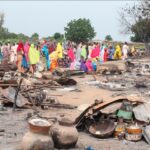
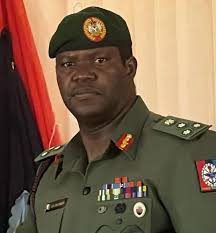
On Friday, Nigeria’s Defence Headquarters confirmed the death of the Commander of the 29 Task Force Brigade in Benisheikh, Borno State, Brigadier General Oseni Braimah, and three other soldiers, following a ruthless attack on the military formation. Though this confirmation calmed initial reports that more than 17 soldiers were killed in the April 9, 2026 attack, it, however, ignited a deeper cause for concern among Nigerians, considering the fact that just about five months earlier, another brigadier general, Musa Uba, was murdered in cruel but avoidable circumstances near Wajiroko, in the same Borno State.
The attack on the military formation was not the only terrorist strike that week. That same Thursday, the devastating news of the soldiers who paid the supreme price had not been fully digested when another report filtered in, at night, that no fewer than eight persons had been killed by gunmen, in Mbwelle village, Bokkos Local Government Area of Plateau State. This was besides the bloodshed recorded in Shanga Local Government Area of Kebbi State on Easter Sunday, where 24 people were killed, according to the Kontagora Catholic Diocese, and in Kebbi and Kwara states, where 49 villagers were reportedly killed on Friday.
Despite the confusion, mourning and grief that followed the killing of these helpless civilians in various communities, described by authorities as some of the deadliest incidents recorded in recent months, the report of the military formation invasion and the killing of soldiers specifically caused panic attacks among citizens and gave a “hopeless situation” slant to the worsening security crisis. And this has become a trend since the beginning of the Boko Haram insurgency in 2009.
It is true that Nigeria’s security forces under the current administration have been dismantling bandit networks and killing scores of terrorists. But the relentless attacks on innocent citizens, which have led to the death of over 10,000 people in two years, and the kidnapping of more than 1,100 people in northern Nigeria, in just four months, appear to have enveloped security agencies’ efforts and boxed the current All Progressives Congress administration into a more precarious corner than previous opposition governments.
A few analysts have tried to compare the security situation under the late former President Muhammadu Buhari with the situation now. While some scored the President Bola Tinubu administration above his predecessor’s, others like Olu Fasan, in his article: “Recurring bloodbath: Nigeria is too fragile, too fractured to be safe”, said, “It has taken Tinubu less than three years in office to achieve a worse security situation than Buhari did in (his) eight years in power.”
I may not directly agree with this notion, but I know that the prevailing economic hardship or widespread poverty in the country, despite significant, growth-targeted policy reforms like exchange rate unification, subsidy removal, and fiscal coordination, can be justifiably linked to rising insecurity.
The Nigerian Institute of Social and Economic Research, in a 2024 study brief, titled: “Insecurity takes the lead as the key driver of poverty in Nigeria”, said, “Once a country experiences conflict and insecurity, it faces a reversal of economic development, which in turn increases the likelihood of further conflict, resulting in a cycle economists refer to as doom-loop. By undermining household livelihood activities on massive scales in Nigeria, increasing insecurity in the last five years has not only intensified poverty in the country, but has also opened up new frontiers of multidimensional poverty across Nigeria.”
Insecurity, according to NISER, drives poverty by disrupting and destroying livelihood activities and by reducing access to basic needs, thereby stifling meaningful improvement in the quality of life in Nigeria. This argument can be better appreciated if one considers how many Nigerians have abandoned leisure or commercial farming, especially in rural areas, owing to rising insecurity.
It would be unfair to pin the blame for this lingering crisis on the current administration; past governments were not also able to do much to stem the tide. But the fact that political IOUs seemed to have trumped competence during the initial formation of President Tinubu’s cabinet inadvertently gave room for unpalatable political treatment of delicate security matters across the states.
The Ministry of Defence, according to analysts, was the worst hit until recently, as analysts found it difficult to decode the consideration behind the choice of the two ministers who were initially saddled with such a priority responsibility. Perhaps, if the issue of security had been given the kind of attention it is being given now, from the beginning of the current administration, the terrorists might not have been this emboldened amid international focus.
The result is that, unlike when Nigeria was ranked the Number One Destination for Investment in Africa for two consecutive years (2012 and 2013), other African countries have, since then, continued to displace the nation, owing to a combination of factors, including accessibility and innovation, economic stability and investment climate, among others.
Of the 31 countries that were tracked in the 2024 edition of the “Where to Invest in Africa” report, published by Rand Merchant Bank and the Gordon Institute of Business Science, Nigeria was ranked as the ninth most viable destination for investment in Africa, behind South Africa, in fourth position; and Ghana, sixth. The 2025 report sadly reflected a further decline for Nigeria, by nine places, to the 18th position.
It doesn’t take an economist to understand that banditry, kidnapping, killings, among other forms of security crisis being witnessed on a large scale in Nigeria, can seriously damage the investment climate and trigger capital flight. Any government that picks the socio-economic well-being of its citizens as Number One on its priority chart must, therefore, go all out to first ensure the security of lives and property, against all odds.
That the Federal Government has published a list of 48 individuals linked to terrorism financing is a step in the right direction. That it has also secured 386 convictions, out of 508 cases in a mass terrorists’ trial, is another feat that can deter others and stem the tide, but politicians must, in the interest of the masses and the well-being of the nation, stop playing politics with this sensitive issue of insecurity.
Rather than mock or blame the APC administration for the current predicament, opposition figures and Nigerians as a whole must converge on the need to be united against this monster. However, the Tinubu administration must also avoid actions or statements that could trigger a revolt at this period. With the economic challenges from almost every angle, Nigerians seem to be constantly on edge.
In March 2014, the APC, then the main opposition party, lambasted the former President Goodluck Jonathan administration for trying to cover up its “incompetence and cluelessness” in tackling the Boko Haram insurgency.
The APC, in a statement signed by Lai Mohammed, its interim National Publicity Secretary at the time, said, “A country that has no discernible counter-terrorism strategy that will clearly identify the multiple means for preventing, responding and defeating terrorist groups, including the alignment of political, military, social and economic instruments and objectives, cannot expect to successfully battle any insurgency.”
Now that the APC is the ruling party, and Nigeria is still not out of the woods, should citizens still agree with the party’s assertion? How the authorities handle the situation will determine the answer. What goes around comes around!
@The PUNCH