

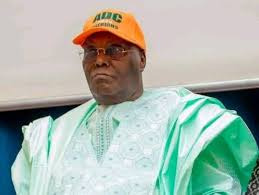
There are politicians who chase power, and there are those who come to embody the chase itself. Atiku Abubakar belongs firmly in the latter category. For more than three decades, he has pursued Nigeria’s presidency with a persistence that is at once admirable and, increasingly, self-defeating. As the country drifts toward the 2027 election, the question is no longer whether he can run again. It is whether he should. The answer, though awkward for his loyalists and perhaps unpalatable to the man himself, is no. Atiku’s last campaign should be the one he does not run.

Atiku’s political career is, by any measure, extraordinary. From his emergence in the dying days of the Third Republic to his tenure as vice-president under Olusegun Obasanjo, he has remained a central figure in Nigeria’s endlessly shifting political theatre. His networks span regions, religions and factions.
His capacity to assemble coalitions, often at short notice, is unmatched. And yet, for all his reach, he has never quite grasped the one office that has defined his ambition. Repeated defeats have not diminished his stature so much as reshaped it.
Atiku has become, in effect, a permanent contender: always plausible, never victorious. In another political culture, this might be seen as romantic—a testament to resilience. In Nigeria’s harsher arithmetic, it increasingly looks like diminishing returns. There is, in politics as in markets, such a thing as brand fatigue.
The electorate, restless and increasingly volatile, has shown a growing appetite for disruption. The success of outsider narratives, however loosely defined, suggests that familiarity is no longer an unalloyed asset. Atiku’s greatest strength, his longevity, has become a subtle liability.
Age, in politics, is often discussed obliquely. Nigeria is no exception. But it exerts its influence nonetheless. By 2027, Atiku will be well into his eighties. This does not disqualify him—Nigeria’s constitution is permissive on such matters—but it complicates the argument for renewal. The contrast with an emerging, if still incoherent, generation of younger political actors is unavoidable.
Across parties, there is a slow, uneven shift toward candidates who present themselves as agents of change rather than custodians of experience. Even where such claims are thin, they resonate with an electorate weary of recycled promises. Atiku’s candidacy would struggle to embody that mood. He is, inescapably, a figure of continuity in a moment that increasingly rewards rupture.
Those close to him speak of 2027 as a final throw of the dice. This is both understandable and dangerous. Politics is littered with candidates who mistook urgency for inevitability. The sense of a “last chance” can sharpen strategy, but it can also cloud judgment. A campaign framed as a personal culmination risks becoming inward-looking. It shifts the focus from national renewal to individual destiny. Voters, however, are not in the habit of electing candidates to complete their life stories.
Moreover, the very perception of finality may weaken Atiku’s bargaining power within his own party, the African Democratic Congress (ADC). Ambitious rivals, sensing the limits of his runway, may be less inclined to defer. What was once a commanding presence within the party could become, paradoxically, a rallying point for those eager to move on.
The Nigeria Atiku first sought to govern is not the Nigeria of 2027. The electorate is larger, younger and more fragmented. Social media has altered the mechanics of mobilization. Regional alignments, once relatively stable, have become more fluid. Most importantly, the old certainties about political machinery are eroding. Money still matters, as does structure. But they no longer guarantee victory. The 2023 election, which brought Bola Tinubu to power, also revealed the limits of traditional dominance. Insurgent campaigns can now disrupt established calculations in ways that were once unthinkable.
Atiku’s political model – broad alliances, elite negotiations, formidable financing – remains formidable.
But it is no longer sufficient on its own. The electorate demands not just reach but resonance. And here, his message has often struggled to evolve beyond familiar themes. There is also a collective argument against another Atiku candidacy. Nigeria’s opposition, fragmented and frequently self-defeating, faces a structural disadvantage against an incumbent-backed ruling party such as the All Progressives Congress (APC). Unity, or something close to it, is essential. Atiku’s repeated bids, however, have become a source of quiet division. Each cycle, they trigger internal contests that sap energy and fracture coalitions.
Younger aspirants, regional power brokers and reform-minded factions find themselves navigating around a figure who is both indispensable and immovable. A decision by Atiku to step aside could, paradoxically, strengthen the opposition. It would create space for a genuine contest of ideas and personalities, rather than another referendum on a familiar candidacy. It might even allow him to play the role of kingmaker; a position for which his experience is uniquely suited. There is a final, less tangible consideration: legacy.
Politics is unforgiving to those who overstay their moment. The line between persistence and obstinacy is thin, and often only visible in retrospect.
Atiku has little left to prove. His place in Nigeria’s political history is secure. He has been, for decades, a central actor in the country’s democratic evolution; sometimes controversial, often consequential, always relevant. To run again in 2027 would be to risk reducing that legacy to a single, unresolved ambition. To step aside, by contrast, would be to redefine it. It would signal a recognition that leadership is not only about seeking power, but also about knowing when to relinquish the chase.
If not candidate, then what? Here, the possibilities are considerable. Atiku could serve as a bridge between generations, lending his networks and experience to a new standard-bearer. He could help shape a more coherent opposition platform, one capable of addressing Nigeria’s pressing challenges with clarity and credibility. Freed from the demands of personal ambition, he might even find a more enduring form of influence. In politics, as in life, the roles that matter most are not always the ones most visibly sought.
For a man who has spent a lifetime pursuing the presidency, the decision not to run may be the hardest of all. It requires a different kind of courage: not the defiance of repeated bids, but the restraint to recognise when the pursuit has run its course. Nigeria, for its part, would benefit from such a choice.
A political system prone to recycling its elite needs, occasionally, a deliberate break. The emergence of new leadership, however imperfect, is part of that process. Atiku has long been defined by his refusal to give up. In 2027, he has an opportunity to be defined by something rarer: the wisdom to stop.
Editorial by Huhuonline, https://huhuonline.com/index.php/home-4/guest-columnists/18013-editorial-why-atiku-abubakar-should-quit-the-2027-race