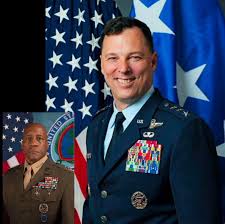

The senior United States (US) military officer in Africa and Commander of African Command (AFRICOM), U.S. Air Force (USAF) General Dagvin Anderson, says terror networks is ascending as the continent is being hampered and facing “a precarious situation due to bad actors.”

The AFRICOM Commander last week updated the U.S. Senate Armed Services Committee on the continental security environment.
General Anderson told the committee: “Africa sits at the crossroads of global commerce and security, bridging the strategic terrain between the Atlantic and the Indo-Pacific. It’s the world’s supplier of critical minerals for advanced defence systems and home to 12 of the world’s 20 fastest-growing economies.”
Additionally it will account for a third of the global working age population by 2050.
Terror networks, the U.S. Senate committee heard, are – as the continent ascends internationally – also ascending in Africa.
“The epicentre of global terrorism is in Africa. ISIS leadership is African; al-Qaeda’s economic engine is in Africa — both these groups share the will and intent to strike our homeland,” Anderson said, adding ISIS and al-Qaeda affiliates are showing increased connectivity.
As an example, he said a nexus has developed between al-Qaeda’s East African affiliate, al-Shabaab and the Iranian-sponsored Houthis – the terror group attacking US and British warships and commercial vessels in the Red Sea between October 2023 and October 2025.
As of late 2025, the State Department foreign terrorist organisation list recognised at least 10 terror groups operating on the African continent, with six being ISIS affiliates.
To counter the terror threat, Anderson said Africom is prioritising relationships with willing and capable partners and supporting them with capabilities only the US military can provide.
“These efforts have driven ISIS leaders in Somalia underground, disrupting their command and control of the global ISIS network,” he said.
Anderson noted a 75% reduction in Africom’s regional posture across the continent over the past decade — coupled with a drawdown of allies in the region — led to an “intelligence black hole” for the command and its allies and partners.
“Africom’s lack of expeditionary capabilities and diminished force posture compromise crisis response. In a crisis, we can always surge assets, but you cannot surge trust,” Anderson told the committee.
In addition to the terror threat Africa faces, Anderson said US adversaries, like China and Russia, also demonstrated malign intent toward Africa.
“China views Africa as a second continent, securing control over critical minerals and infrastructure [and] potentially boxing (the U.S.) out of resources that energise our industrial base,” Anderson said.
He noted further Africa currently serves as Russian President Vladimir Putin’s “purse,” where Russia exploits instability to extract resources – including human lives – to fuel the country’s war against Ukraine.
Despite the challenges Africom currently faces — including a reduced geographical footprint and funding that is a small fraction of the War Department’s overall budget – Anderson said the command continues to think and operate differently, maximising every taxpayer dollar to deliver an outsized return on investment.
“Africom continues to leverage low-cost, high-yield activities to amplify our impact on the continent,” he said.
An example is Africom’s International Military Education and Training programme, which provides funds for international personnel to attend US military professional training programmes.
The success of the National Guard’s State Partnership Programme, which creates long-term, people-to-people ties between US states, territories and the District of Columbia and partners – including African nations — supporting both military and civilian sectors is another example.
In terms of materiel, Anderson said Africom needs investment in non-traditional intelligence, surveillance and reconnaissance and innovative force protection programs that enable willing and capable partners to conduct experimentation with emerging technologies, so as to be able to respond to crises at the time and point of need.
“Africa is a continent of opportunities, not only crises,” he told the committee.
“With the continued support of this committee, I can assure you every dollar you authorise for Africom will contribute directly to the security, safety and prosperity of the US.”
Written with reports from Pentagon News