
By Chidi Omeje

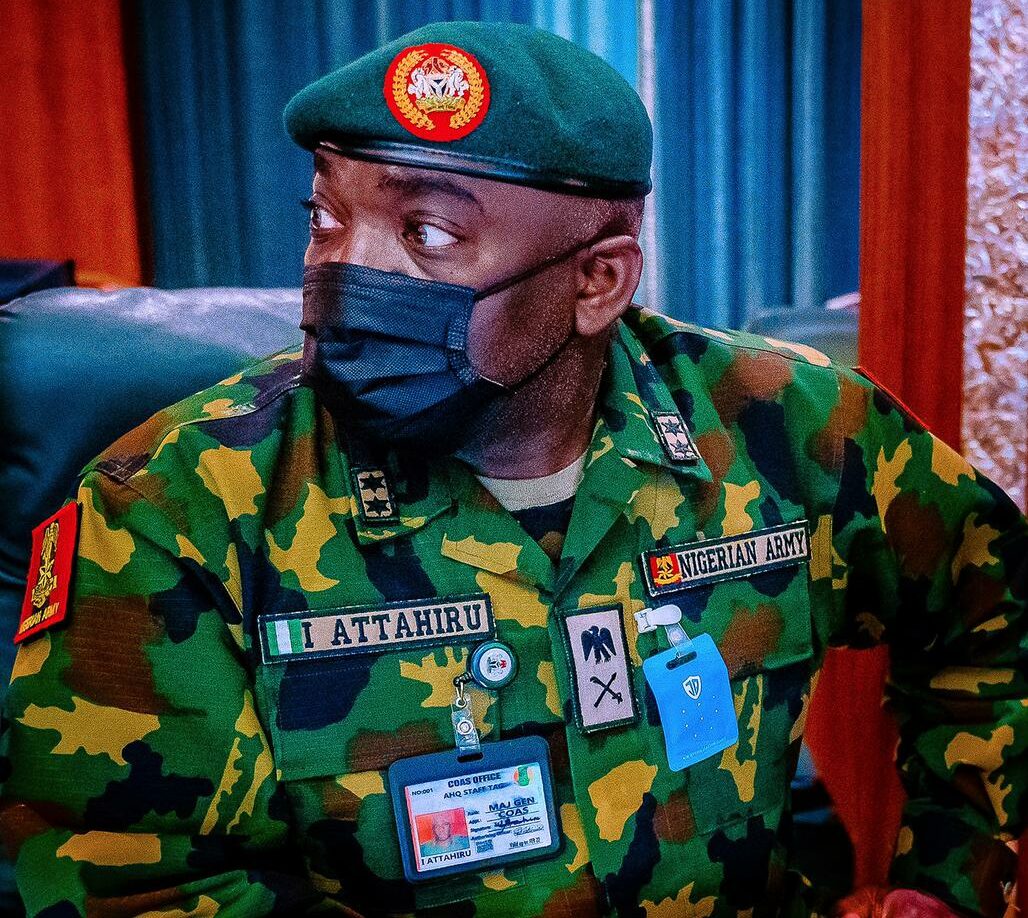
On May 21, Nigerians once again paused to remember the late Chief of Army Staff (COAS), Lieutenant General Ibrahim Attahiru, a gallant officer whose life was tragically cut short in active service at a defining moment in Nigeria’s counterterrorism campaign. Though his tenure as Army Chief lasted exactly 115 days (from January 26, 2021, to May 21, 2021), the impact of Nigeria’s 21st Chief of Army Staff, on the Nigerian Army’s operational tempo, troop morale, and national confidence left an enduring imprint that history will not forget.
For many Nigerians, Attahiru represented courage, urgency, and uncommon patriotism at a time the nation desperately needed decisive military leadership. He came into office with clarity of purpose and an unmistakable determination to change the narrative in the war against Boko Haram and ISWAP terrorists. Unlike leaders content with routine briefings from distant headquarters, Attahiru was a battlefield commander in spirit and action.
Having had the rare privilege of working with him as Special Assistant on Strategic Communication in the Office of the Chief of Army Staff, this reporter witnessed firsthand the character of the man behind the uniform. Attahiru was fearless but humble, demanding yet deeply compassionate toward his troops. He carried the burden of command with a sense of urgency that reflected his understanding of what was at stake for Nigeria. Every operational discussion, every directive, and every battlefield assessment revolved around one overriding objective: ending terrorism and restoring peace to the country.
In those brief three months he spent in office, General Attahiru spoke and acted in ways that rekindled hope among Nigerians and restored confidence within the ranks of the Armed Forces. He embodied the philosophy of offensive action and constantly reminded commanders that the initiative must never be surrendered to terrorists. His famous mantra, “take the attack to the enemy,” soon became both a battle cry and an operational doctrine.
One defining moment came during his visit to the North-East theatre of operations on Sunday, February 21, 2021. At the time, Boko Haram insurgents had occupied several strategic locations including Marte, Chikingudo, Kirenowa, Kirta, and Wulgo. Many Nigerians feared that the terrorists were once again gaining momentum. But Attahiru refused to accept defeatist narratives.
Standing before battle-weary troops, he issued what would become one of the most memorable operational directives of the counterinsurgency campaign. He gave the troops a 48-hour ultimatum to reclaim some communities that Boko Haram terrorists occupied, and charged them with words that inspired courage and resolve:
“You cannot let this nation down. You must go there and do the needful, and I will be right behind you.”
It was not empty rhetoric. The troops responded with renewed determination and, remarkably, recovered the territories within 24 hours. That operation became symbolic of Attahiru’s leadership style: bold, direct, and mission-oriented. He inspired confidence not merely through speeches but through visible commitment to the battlefield mission.
What distinguished Attahiru from many military leaders was his unwavering belief that terrorism could be defeated through sustained offensive pressure, troop motivation, intelligence-driven operations, and leadership by example. He constantly pushed commanders to remain aggressive against insurgent enclaves while simultaneously improving troop welfare and operational coordination.
The late Army Chief repeatedly expressed confidence that Boko Haram would, “Insha Allah,” become history before the end of 2021. While fate denied him the opportunity to witness the later gains recorded in the theatre, many security analysts agree that the momentum generated under his command laid part of the foundation for subsequent operational successes.
Indeed, the massive surrender of approximately 35,000 Boko Haram and ISWAP fighters and their family members that later followed was not accidental. It was the cumulative outcome of sustained military offensives that weakened terrorist strongholds, disrupted logistics networks, and shattered the morale of insurgent fighters. Attahiru’s aggressive operational philosophy played a significant role in setting that trajectory.
Beyond the battlefield, Attahiru was deeply patriotic and profoundly concerned about the unity and stability of Nigeria. He understood that the military’s role extended beyond kinetic operations to reassuring citizens that the state remained capable of defending them. At a period when public confidence was strained by persistent attacks and insecurity, his words and actions gave Nigerians renewed psychological assurance that the Armed Forces were regaining the initiative.
His tragic death in the ill-fated Nigerian Air Force Beechcraft King Air 350i plane crash near the Kaduna International Airport while enroute to a passing out parade alongside several senior military officers on May 21 2021, sent shockwaves across the nation. Nigeria lost not just a Chief of Army Staff, but a courageous field commander whose vision, energy, and patriotism had begun to inspire a renewed sense of purpose within the military establishment.
Five years after his passing, the memory of Lt Gen Ibrahim Attahiru continues to resonate within military circles and among ordinary Nigerians who saw in him the image of a soldier-statesman committed to the defence of his country until his final breath. His legacy is not measured merely by the brevity of his tenure, but by the intensity of his commitment, the boldness of his actions, and the hope he restored in a difficult moment of national uncertainty.
In honouring Attahiru, Nigeria honours sacrifice, courage, and selfless service. He died in active service to the nation he loved, pursuing the cause he believed in most passionately which was the defeat of terrorism and the restoration of peace to Nigeria.
Though he did not live long enough to see the full fruits of that effort, history will remember him as one of the fearless Generals who put his right foot forward when Nigeria needed brave leadership the most.
Chidi Omeje is the Publisher/Editor-in-Chief, Security Digest (www.securitydigestng.com)