
Daily Trust Editorial, July 14, 2026

The Senate on Tuesday July 7, 2026 called on the federal government to stop its policy of rehabilitation and reintegration of repentant Boko Haram/Islamic State West Africa Province (ISWAP) terrorists into society. The motion, anchored on escalating attacks, abductions and killings of serving and retired military personnel, and sponsored by Chairman of Senate Committee on Army, Senator Abdulaziz Yar’Adua (APC, Katsina), condemned the rehabilitation of Boko Haram insurgents, bandits, kidnappers, and other criminals under the government’s Disarmament, Demobilization, Rehabilitation, Reintegration, and Reconciliation (DDRR) programme.
The following day, the House of Representatives joined the Senate bandwagon, but added that “those who invade communities, kidnap innocent Nigerians and kill security personnel do not deserve rehabilitation,” alleging that some programme graduates might be leaking intelligence to their former comrades.
While we agree with the National Assembly that the programme is not fully yielding the anticipated results, the reality is that it cannot simply be discarded through a Senate or House resolution. Daily Trust believes that instead of scrapping, what is needed is to fix it. While we admit it is flawed, we don’t believe in throwing away the baby with the bath water.
Though structurally weak and has not contributed significantly to eradicating violent extremism, it is a well-thought out policy and programme which started as part of Nigeria’s soft approach to addressing terrorism violence in 2013 when the President Goodluck Jonathan administration negotiated with Boko Haram leaders towards creating a framework for amnesty and disarmament. But the terrorists’ leaders frustrated and rejected the move.
Notwithstanding the refusal, a new agency called “Countering Violent Extremism” was set up and code-named “National Security Corridor” which culminated in Operation Safe Corridor (OPSC) conceived by the late President Muhammadu Buhari-led administration in September 2015 and operationalised in September 2016 to reshape the security landscape.
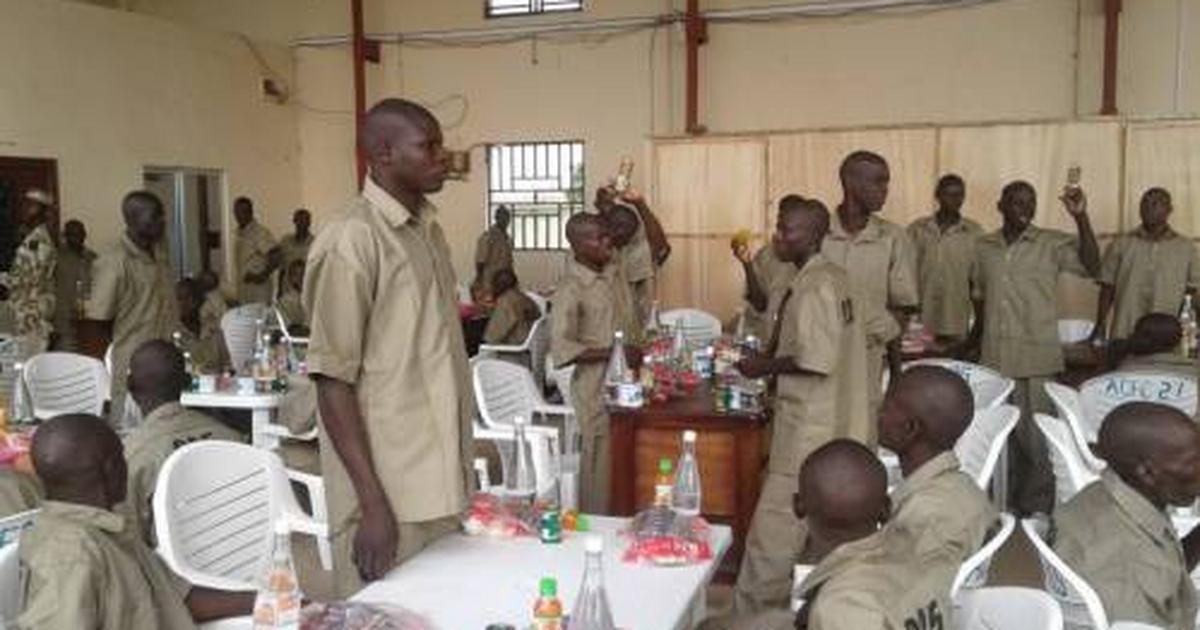
A joint, multi-sectoral operation involving 17 Ministries, Departments, and Agencies (MDAs), the programme identified two categories of defectors: “high-risk” and “lowrisk.” While the high-risk defectors, considered to be the most hardened fighters, would be prosecuted even after defecting, the low-risk were categorised as those with less vicious record who were to undergo intensive 52-week programme including de-radicalisation therapies, vocational training and basic education. Religious re-education before reintegration into the society was also included.
Altogether, the programme is being undertaken in two different rehabilitation camps Mallam Sidi, Gombe State for male defectors which has successfully graduated over 2,600 low-risk former combatants and the Bulumkutu Rehabilitation Centre in Maiduguri, Borno State for women and children managed by Borno State government with support from UNICEF Nigeria, which has graduated over 9,680 former associated individuals. The latest single-batch released up to 720 men and 3,000 associated family members (spouses and children).
Daily Trust agrees with stakeholders that ending terrorism requires both military and non-military approaches that eliminates the root causes of the endless killings, abductions, and violence; and that this includes political negotiations, grassroots development especially the initiatives of de-radicalisation, disarmament, rehabilitation and reintegration.
Therefore, we call for reform of the programme to incorporate engaging communities and affected victims in order to help stop the prevailing deepening negative perceptions arising from strong resistance to the rehabilitated defectors who are still perceived as dangerous and unfit for the society they are coming back to. With their non-involvement in either the design or implementation, they see the programme and its graduates as imposition. This situation makes the returnee ex-combatants to face stigma, ostracism, and or suspicion.
There should be practical reconciliation and forgiveness as the present set up doesn’t seem to address the horrendous experiences of victims and survivors who mostly see the programme as prioritising ex-fighters over them. No affected community should continue to live without any form of rehabilitation, payment of some form of reparations, at least for the trauma they have gone through. And in carrying out this engagement, the federal government should involve local leaders, traditional rulers, clerics, and civil society.
Daily Trust also insists that the reintegration initiatives must be accompanied with substantial economic empowerment that offers opportunities away from increasing unemployment and poverty. The exit end of the programme should create realistic, marketlinked vocational training and post-release support in terms of jobs and mentorship. Otherwise, the programme would turn out to be wasted, which invariably leads the ex-terrorists back to their comrades in arms. And more importantly, in order to reduce suspected high rates of recidivism, we call for sophisticated monitoring systems in order to closely track the graduates after reintegration.
In addition, the programme should incorporate pre-emptive aspects that discourages easy recruitment and radicalisation by targeting potential recruits instead of the current strategies of focusing on only fighters. This entails the tiers of government tackling the root causes of poverty, unemployment, governance deficits and economic inequality and lack of opportunities.
We believe that OPSC still remains a valuable non-kinetic tool and a realistic pathway for willing and repentant low-risk armed actors to disengage from violence and embrace peace. But it must refocus on addressing reintegration deficits, community buy-in, justice gaps, and coordination issues and operate under a unified inter-agency national framework centred on a victim-centred, community-owned reintegrated peacebuilding programme. Most importantly, there must be conscious efforts by the government to build public trust for the programme in order to clear the skepticisms and suspicions surrounding it.