

- Large-scale Israeli air campaign targets nuclear facilities, military leadership as tensions escalate across Middle East.
- Experts tell Al Arabiya English the operation was designed not just to disrupt Tehran’s nuclear program but to fundamentally cripple its military capabilities
Israel launched a massive air campaign against Iran on Friday, striking nuclear facilities and killing senior military commanders in what experts describe as an operation designed not just to disrupt Tehran’s nuclear program but to cripple its military capabilities and potentially destabilize the regime fundamentally.

The strikes, involving some 200 Israeli fighter jets hitting more than 100 targets across Iran, marked a mass escalation in the long-simmering conflict between the two regional powers. Among the confirmed casualties were Iran’s Armed Forces General Staff Chief Major General Mohammad Bagheri and Islamic Revolutionary Guards Corps Commander Major General Hossein Salami, along with several nuclear scientists.

People look at a damaged building in the aftermath of Israeli strikes, in Tehran, Iran, June 13, 2025. (Reuters)
“The breadth and scale of these strikes – against senior Iranian officials and other military facilities in addition to nuclear sites – suggest this operation is intended to not just dissuade Iran from pursuing nuclear weapons but also cripple any potential military response and even to destabilize the regime,” Matthew Savill, director of military sciences at the Royal United Services Institute (RUSI), told Al Arabiya English.
Unprecedented scale, scope
The Israeli military said it had been forced to act by new intelligence showing Iran was “approaching the point of no return” in developing nuclear weapons. The strikes hit the main uranium enrichment facility at Natanz, along with multiple targets across Tehran and other provinces, including Qom, Markazi, Kermanshah, and Hamadan.
“Details are still emerging but the reported targeting of the commander of the IRGC, the head of the conventional military, and advisers to Iran’s Supreme Leader, are all beyond that necessary for a purely ‘pre-emptive’ strike on the nuclear program,” Savill explained.
Israeli Prime Minister Benjamin Netanyahu announced the operation would continue “for as many days as it takes to remove the [Iranian] threat,” confirming that Israel had targeted Iran’s nuclear enrichment, nuclear weaponization, and ballistic missile programs as well as Iranian nuclear scientists.
The operation demonstrated Israel’s “considerable conventional military superiority,” according to Savill, who noted that “the size of the force allegedly assembled for this series of attacks represents the overwhelming bulk of their longer-range strike aircraft.”
Also speaking to Al Arabiya English, Thomas Juneau, an associate professor at the University of Ottawa in Canada and an associate fellow with the Middle East and North Africa Programme at Chatham House, said Israel’s attack on Iran is “significant, especially if you put this in context of Prime Minister (Benjamin) Netanyahu’s quite clear statement that this is not a one off.”
“He did say that there would be days or weeks of attacks, and we have seen, not only in the past few hours, but also in 2024 that Israel has a significant military advantage over Iran.”
He added: “Israel has the ability to penetrate Iranian airspace. Israel has the ability to target Iranian air defenses, suppressing them, and therefore allowing itself to continue operations in Iran. We have also seen an extraordinarily level of intelligence penetration of Iran by Israel. There are growing media reports that Mossad had drones inside Iran that played a role in targeting Iranian military.”
Juneau questioned Israel’s claim on Friday that Iran might be “days away from producing 15 nuclear bombs.”
“There is no public indication that this is true. What is true is that Iran is, was, or, is days or weeks away from being able to produce enough highly enriched uranium that would be usable in eventual nuclear bombs.”
“And there is a big difference here that gets lost…because then Iran would have to weaponize that uranium, put it on a delivery vehicle, test it, and so on. And according to every reliable publicly available information, Iran was at least several months away, possibly more than a year away from, being able to do that. And publicly, I have seen, not seen, indication that this is not true.”

People gather in the street in the aftermath of Israeli strikes, in Tehran, Iran, June 13, 2025.
Raphael S. Cohen, senior political scientist and director of the Strategy & Doctrine Program at RAND’s Project AIR FORCE, told Al Arabiya English it “will be a sometime before we know how much these strikes have set back the Iranian nuclear program,” but said, from reports, the targeting of senior Iranian military leadership—including the Chief of Defense, the head of the IRGC and the IRGC Air Force is “pretty stunning from an operational perspective.”
“And this is just the opening phases of what promises to be a much longer campaign and so there is more to come,” he added. “It seems like the Israeli managed to pinpoint not just the infrastructure but the Iranian senior leadership as well (which is a much harder task than just hitting building). From a purely tactical perspective, that’s impressive.”
Strategic objectives beyond nuclear program
Experts suggest the strikes served multiple strategic objectives beyond simply disrupting Iran’s nuclear capabilities. Sanam Vakil, Director of the Middle East and North Africa Program, told Al Arabiya English that the Israeli government had launched “a highly provocative and strategically timed strike against Iran, aiming to achieve three primary objectives: to eliminate senior commanders and disrupt Iran’s operational leadership, to inflict damage on its nuclear program, and to weaken its defensive capabilities.”
Vakil argued that Netanyahu also sought “to sabotage any remaining diplomatic pathways toward a revived nuclear agreement and perhaps to incite internal unrest within Iran.” She characterized the strike as “far from being a preventive action” that “risks triggering a broader regional escalation and may inadvertently bolster the Islamic Republic’s domestic and international legitimacy.”
Juneau said Israel’s ability to decapitate the Iranian military and the nuclear program the way that it did not only weakens Iran, but sends a devastating psychological message, “which will only reinforce an already strong state of paranoia inside Iran.”
“We are talking about a serious weakening of Iran’s air defenses, its missile program, being targeted as well. But the psychological impact also matters.”
The timing appeared calculated to disrupt diplomatic efforts, with US and Iranian officials scheduled to hold talks on Tehran’s uranium enrichment program in Oman on Sunday. Iran subsequently cancelled these negotiations.
Trump response
US President Donald Trump suggested Iran had brought the attack on itself by resisting American demands in nuclear negotiations. “I gave Iran chance after chance to make a deal,” Trump posted on his Truth Social platform. “There has already been great death and destruction, but there is still time to make this slaughter, with the next already planned attacks being even more brutal, come to an end. Iran must make a deal, before there is nothing left…”
Despite Trump’s comments suggesting foreknowledge of additional planned attacks, Washington insisted it had no part in the operation. Secretary of State Marco Rubio said the US had not been involved in the strikes and Israel had acted unilaterally in self-defense.
However, Iran’s armed forces spokesperson accused Washington of providing support for the operation, while the Trump administration warned that any attacks on US personnel or military installations would provoke a response.
Sophisticated intelligence operations
The strikes revealed the extent of Israeli intelligence penetration into Iran’s security apparatus, according to Reuters, who quoted an Israeli security source saying Mossad commandos had been operating deep inside Iran before the attack, with the spy agency and military mounting “a series of covert operations against Iran’s strategic missile array.”
Israel had also established an attack-drone base near Tehran, the source added. The military said it had carried out large-scale strikes against Iran’s air defenses, destroying “dozens of radars and surface-to-air missile launchers.”
“Emerging reports about more unconventional activity by Mossad are a reminder of Israel’s expertise in covert operations, its penetration of the Iranian security establishment and its agility in planning ahead with imaginative operations which can be executed at short-notice,” Savill observed.
Iran’s response options
Iran’s ability to retaliate has been significantly weakened by Israel’s systematic degradation of its regional proxy network over the past months. Since the Gaza war erupted in October 2023, Israel has severely damaged Iran’s allies, notably by assassinating top leaders of Hamas and Lebanon’s Hezbollah, and attacking the Houthi militia in Yemen.
“Once again, Iran has been exposed, and its response options are constrained by its desire to avoid a full-scale war,” Vakil said. “Nonetheless, the regime must retaliate to reassert deterrence and prevent further strikes.”
Iran initially attempted to launch about 100 drones toward Israeli territory in retaliation, but Israeli media reported that most or all had been neutralized, with protective orders for civilians lifted by 8:00 a.m. GMT.
Vakil predicted that “given the unprecedented scale and nature of the Israeli attack including strikes across Iranian territory and the targeting of civilians and senior officials, Tehran is likely to take further retaliatory steps. These may include accelerating its nuclear program, suspending all cooperation with the International Atomic Energy Agency (IAEA), and potentially withdrawing from the Non-Proliferation Treaty (NPT).”
Juneau said Iran will perceive that it has to retaliate, because if it doesn’t, it will lose face to its own population, but also to its enemies in Iran, in Israel and the US.
“Iran has already retaliated with about 100 drones. But the dilemma for Iran is that its ability to hurt Israel through its retaliation is limited, because its non-state partners think Hamas and Hezbollah are so weakened, and because Israel’s air defenses are so advanced, the 100 drones that Iran sent were pretty easily stopped in all, or most cases, before they even reached Israeli airspace. And that shows the serious limits to Iran’s ability to retaliate.”
“And Iran also knows that, should it retaliate and should it succeed in inflicting just a bit of material damage on Israel, Israel will respond with overwhelming force, and Israel has the ability to do that.”
Juneau said, in an escalation scenario, “everyone will suffer”, “but Iran will, undoubtedly, in my mind, suffer far more than than everybody else. And Iran knows that – and that seriously constrains its margin of manoeuvre.”
Cohen said he hopes the Iranians will “follow President (Donald) Trump’s advice, take the off ramp and return to the negotiating table, but I think it’s more likely that they will respond.”
“That’s what Khameni signaled. And so, we saw drone attacks already, but I expect large scale missile barrages here too. I think they will likely target Israeli military bases and critical infrastructure. I would note that the Israelis are already anticipating this to some extent and are moving civilian aircraft out of Ben Gurion.”
Regional proxy shifts
With Iran’s traditional proxies weakened, experts predict a shift in regional dynamics. Farea al-Muslimi, Research Fellow at Chatham House’s Middle East and North Africa Programme, told Al Arabiya English that “the Houthis in Yemen are poised to take a leading role in retaliating against Israel on Iran’s behalf.”
“With Iran currently weakened and humiliated, this marks the first time the Houthis will be called upon to repay decades of Iranian investment and support,” al-Muslimi said. “Following the killing of Hassan Nasrallah in Lebanon and the collapse of the Assad regime in Syria, the Houthis have effectively become Iran’s first line of defense against Israel – an increasingly central role.”
Al-Muslimi warned that “more than even Iran or the Israelis, the Houthis are known for their recklessness.
Their response is likely to go far beyond continued attacks on Israel. Strikes in the Red Sea will likely resume, the ceasefire with the United States may unravel.”
The Israeli military demonstrated its ability to conduct sustained operations across vast distances. Savill said that Israel “certainly have the capacity to go again” but warned that “operating for an extended duration over this considerable range will stretch even the Israeli Air Force.”
“They have the ability to conduct multiple such rounds of strikes, but operating for an extended Israel launched large-scale strikes against Iran on Friday,” Savill said, highlighting both Israel’s capabilities and potential limitations.
He predicted that “the Iranian response might be delayed or split into multiple phases, but their main weapon will be ballistic missiles, which have the best chance of inflicting damage on Israel, whereas drone and cruise missile attacks will face more extensive Israeli defenses.”
Israeli operations therefore “targeted air defenses and ballistic missile sites to forestall this. Offensive cyber capabilities and terrorist attacks remain an option, but Iran’s proxies are much diminished in the region.”
Nuclear program implications
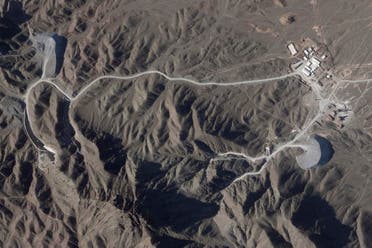
This satellite photo from Planet Labs PBC shows construction on a new underground facility at Iran’s Natanz nuclear site near Natanz, Iran, on April 14, 2023. (AP)
The International Atomic Energy Agency reported no increase in radiation levels at the Natanz nuclear site, citing information from Iranian authorities. However, Iranian media and witnesses reported explosions at the facility, with Iran’s Atomic Energy Organization confirming that Natanz had sustained damage but reporting no casualties.
The strikes came just days after the IAEA’s Board of Governors declared Iran in breach of its non-proliferation obligations for the first time in almost 20 years. Iran responded by stating that Israel’s “cowardly” attack demonstrated why Iran had to insist on enrichment, nuclear technology and missile power.
The strikes had immediate global economic implications, with crude oil prices leaping around 9 percent on fears of wider retaliatory attacks across the major oil-producing region. The global crude oil benchmark Brent blend was up almost 9 percent at $75.37.
Airlines quickly exited airspace over Israel, Iran, Iraq and Jordan, with carriers diverting or canceling flights. Israeli airlines El Al, Israir and Arkia moved their planes out of Israel, and Tel Aviv’s Ben Gurion Airport was shuttered. Dubai-based Emirates canceled flights to and from Iraq, Jordan, Lebanon and Iran as Iran closed its airspace.
The National Iranian Oil Refining and Distribution Company said oil refining and storage facilities had not been damaged and continued to operate.
Regional, international reactions
Supreme Leader Ali Khamenei said in a statement that Israel had “unleashed its wicked and bloody” hand in a crime against Iran and that it would receive “a bitter fate for itself.”
Jordanian Foreign Minister Ayman Safadi joined global calls for de-escalation and accused Israel of violating international law. “At an extremely critical time when the US was negotiating a nuclear deal with Iran that would save the whole region and the world, a new vicious escalation,” he said.
Iranian citizens reacted to the strikes with anger and fear, while some opponents of the ruling clerics expressed hope that Israel’s attack might lead to their downfall. However, one Tehran resident who was not a supporter of clerical rule said Iran must retaliate: “We can’t afford not to respond. Either we surrender and they take our missiles, or we fire them. There’s no other option — and if we don’t, we’ll end up surrendering them anyway.”
Future escalation risks
Al-Muslimi predicted that “post attacking Iran, Israel will switch more directly and targeted against the Houthis. That’s likely the next direct round of war in the Middle East.”
Vakil warned that while “Iran is unlikely to target Gulf infrastructure or assets” for now, “should the situation continue to escalate, it may resort to broader regional measures.”
Savill cautioned that “if Iran believes the US or others were involved, then regional targets include the US Fifth Fleet in Bahrain, and air facilities in Qatar, though both would widen the conflict to drag in others.”
Juneau pointed out that “we are already in a broader war in the region.”
“We’ve been in a broader war since October (7) 2023 if not before, but since October 2023 there’s been nonstop violence in Gaza. There’s been on and off violence in Lebanon between Israel and Hezbollah, even if it’s been in a slower stage (more recently). There has been on and off rounds of violence between Israel and the Houthis, and between Iran the US and the Houthis, there has been limited but some involvement by Iran backed militias in Iraq, and there has been rounds of confrontation between Iran and Israel that are continuing now.”
“So we are in a regional war, and we’re in a particularly hot stage of that regional war now, and there will be de-escalation at some point, and one of the main triggers of that de-escalation will be Iran’s vulnerability.”

People walk near a damaged building in the aftermath of Israeli strikes, in Tehran, Iran, June 13, 2025. (Reuters)
Israel response
In a statement shared with Al Arabiya English, Israeli Ambassador to the UN, Danny Danon, said the attack – codenamed ‘Rising Lion’ – against Iran’s nuclear and missile infrastructure, was aimed at “eliminating an existential and immediate threat to the citizens of Israel and the entire world.”
“The Iranian regime is blatantly violating international agreements, advancing towards nuclear weapons, and operating a regional terror network. When the world is silent – Israel is acting.”
“I call on the UN Secretary-General and the members of the Security Council: *”This is a moment to make moral decisions. Stand by Israel – or you will be partners in a dangerous silence.”
“Unlike in the past – today we have a state, we have an army, and we are not waiting for those who want to destroy us to surprise us.”
@Alarabiya