
By Group Captain Sadeeq Garba Shehu (rtd)

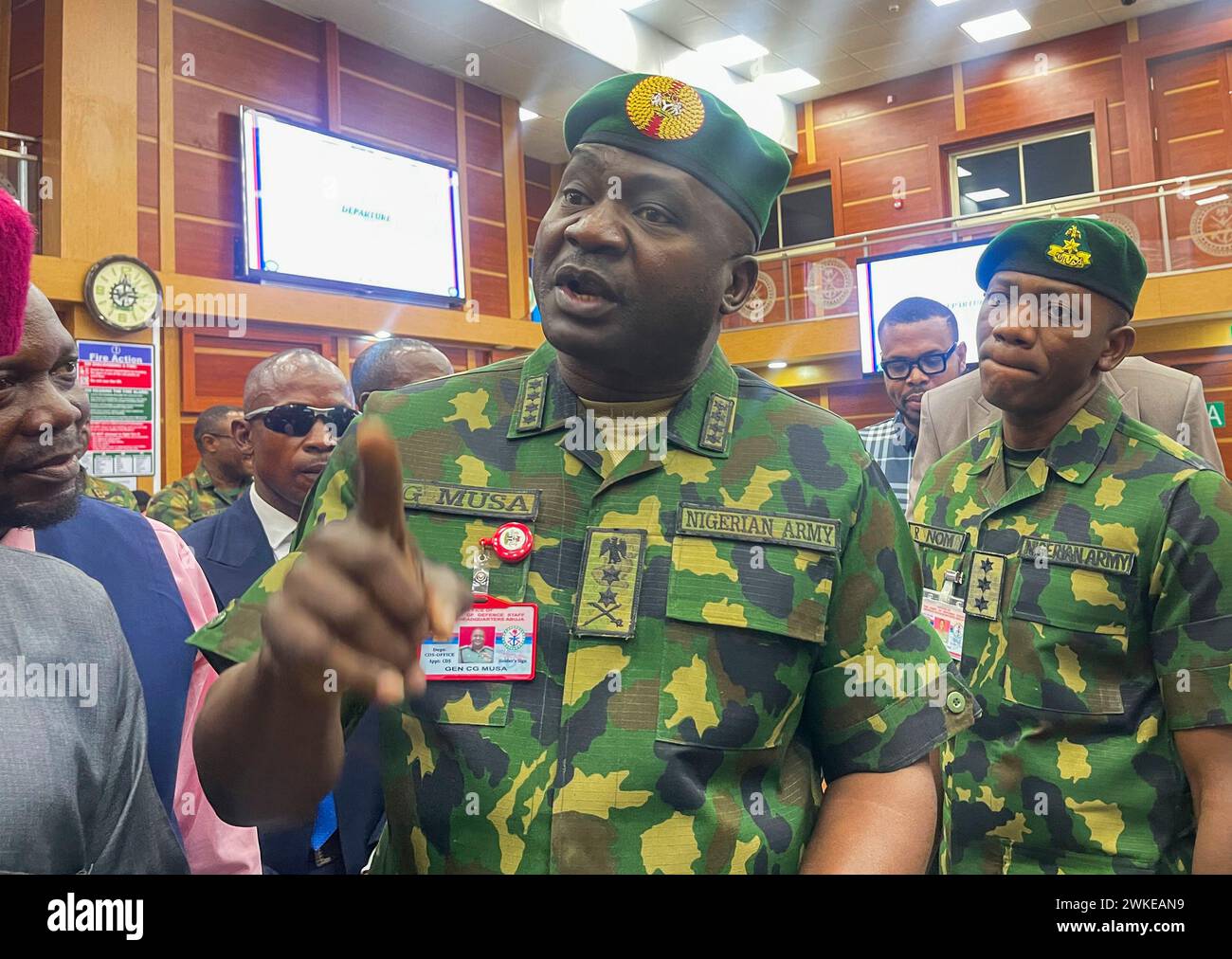
The suggestion by Nigeria’s Chief of Defence Staff (CDS), General Christopher Musa, to fence all national borders is a bold and highly consequential proposition. It has generated a lot of comments and debate in security and general circles. In order to deepen the debate and assist policy options, here is my candid assessment of the idea.
A. NIGERIA’S LAND BORDERS OVERVIEW
Fencing Nigeria’s borders entirely is a massive, complex, and costly undertaking. Let me break it down to provide a rough estimate based on available data and border lengths.
Nigeria shares borders with 4 countries:
Benin ~773 km
Niger ~1,497 km
Chad ~87 km
Cameroon ~1,690 km
Total ~4,047 km
B. Pros and Cons of Border Fencing in Nigeria
Fencing the borders of a country like Nigeria is a complex and controversial issue. Whether it is desirable depends on a mix of security, economic, diplomatic, and humanitarian considerations.
Here is my breakdown of the pros and cons
ARGUMENTS IN FAVOUR OF BORDER FENCING
1. Security Enhancement: Nigeria is grappling with transnational militant activity, especially in the Northeast. A physical barrier could slow or deter cross-border movement of insurgents and smugglers. The threat posed by Boko Haram, ISWAP, and other armed groups operating from the Lake Chad Basin underscores the need for enhanced security infrastructure along Nigeria’s vast borders. Insecurity is real and urgent: Nigeria is battling insurgencies (Boko Haram, ISWAP), banditry in the northwest, and cross-border arms trafficking. Porous borders are a known issue. Armed groups move freely across Nigeria’s borders, particularly from Niger and Cameroon.
2. Curbing Smuggling: Illegal importation of goods such as rice, fuel, and used vehicles undermines local industries and deprives the government of much-needed revenue. Fencing may reduce the number of unapproved routes used for these activities.
3. Improved Border Management: A physical barrier could help channel movement through designated border posts, enhancing surveillance and improving migration and trade documentation.
4. Symbolic Assertion of Sovereignty: Proposing full control of national borders sends a signal of political will and underscores the state’s prioritization of territorial integrity.
5. Comparative Examples: Though not without controversy, international precedents exist. The Pakistan–Afghanistan border fencing and the Saudi–Iraq border security measures demonstrate how physical barriers can play a role in broader security strategies.
MAJOR CONCERNS AND CRITIQUES
1. Geographic and Economic Infeasibility: Nigeria has over 4,000 kilometers of porous, rugged, and sometimes unmapped border terrain. Sheer scale and terrain, Nigeria has complex, varied terrain—forests, rivers, wetlands—not open desert. Border with Cameroon and Niger is mountainous and heavily forested, making a fence costly and hard to maintain. Constructing and maintaining a barrier would demand enormous financial, logistical, and technological resources—likely impractical amid Nigeria’s fiscal constraints. Nigeria is already struggling with a stretched defence budget, power grid crises, and subsidy removal backlash. Fencing thousands of kilometers would require billions of dollars, and constant surveillance infrastructure to be effective.
2. Limited Effectiveness: Physical fences alone are rarely sufficient. Without integrated border surveillance, rapid response units, and strong cross-border intelligence, fences may be bypassed through unmonitored segments, tunnels, or collusion with corrupt officials.
3. Internal Security Gaps Beyond Borders: Many of Nigeria’s most dangerous security threats do not originate at the border. In the North West and North Central regions, notorious ungoverned spaces—such as the Rugu Forest, Kamuku Forest, and Birnin Gwari axis—serve as operational bases for armed bandits, terrorists, kidnappers, and the so-called ‘Lakurawa’ gunmen. These hotspots are located well within the country’s interior and would be unaffected by a border fence. Thus, a focus on fencing neglects the broader governance vacuum and security failure within national territory.
4. Diplomatic Fallout: Border fencing could strain relations with neighboring countries such as Niger, Cameroon, and Chad—nations that are security partners through initiatives like the Multinational Joint Task Force. In addition, border communities often span both sides, and limiting cross-border movement could disrupt livelihoods, commerce, and familial ties, sparking unrest. Nigeria has ECOWAS commitments to free movement of people and goods. Border fencing may conflict with regional integration goals and strain relations with neighbors.
5. Opportunity Cost: The high cost of fencing could potentially be better invested in modernizing the military, strengthening local intelligence networks, funding community-based stabilization programs, and scaling counter-radicalization initiatives.
6. Humanitarian and Cultural Disruption: Many border communities have ethnic, cultural, and economic ties that cross national boundaries. A fence could divide families and communities that rely on cross-border trade and relations.
7. People-to-people trade and culture: Border communities in Borno, Katsina, and Adamawa are ethnically intertwined with those across the borders. Ditto border communities in Lagos/Badagry, Kainji area of Niger State,
8. Lack of infrastructure: Unlike Saudi Arabia, Nigeria doesn’t have the technical surveillance systems or border logistics in place to make such a fence more than symbolic.
Major Challenges
Funding – Nigeria has competing infrastructure and social needs;
Terrain – Swamps, mountains, rivers, and forests complicate construction;
ECOWAS agreements – Free movement treaty could be undermined;
Effectiveness – Without tech and personnel, physical fences may be bypassed.
C. COST IMPLICATION ESTIMATE PER KILOMETRE OF BORDER FENCE
The cost of border fencing depends on:
a. Type of fencing (barbed wire, steel, or wall)
b. Terrain difficulty (forest, desert, swamps)
c. Security features (watchtowers, cameras, sensors)
D. INTERNATIONAL COMPARISON OF TYPES OF BORDER FENCES USED IN OTHER COUNTRIES AND COST/KM (USD)
Research has shown that the cost of different types of fence/km used in other countries for border fencing is as follows:
U.S.–Mexico border uses Steel wall + tech @ a cost of $3M–$20M per KM
India–Pakistan border uses Barbed wire + lights @ a cost of $1M per KM
Saudi–Iraq border uses Smart fence @ $4M–$7M per km
Israel border uses advanced tech @ $2M–$4M per km
E. WHAT WILL IT COST NIGERIA TO COMPLETELY FENCE ITS 4,047 KM LAND BORDERS?
From the above, the most expensive type of border fence is the Steel wall + tech used in the US-Mexico border @ a cost of $3M–$20M per KM while the least expensive is the Barbed wire fence + lights used in the India–Pakistan border @ a cost of $1M per KM. For Nigeria, I used a moderate-cost estimate suitable for mixed terrain and security needs estimated @ $1.5 million per kilometer. This covers:
Steel/concrete fencing, Sensors, patrol roads, basic surveillance, logistics, labor, and terrain adjustments.
To cover Nigeria’s 4,047 km borders would require an estimated $6–7 billion USD. This however does not include Maintenance and staffing, advanced surveillance or aerial drones, political, diplomatic, or humanitarian costs. If you include these add ons, you are looking at a $12 billion project initial cost. There will be replacement costs of broken fences each year.
F. ARE THERE COUNTRIES WITH COMPLETELY FENCED BORDERS?
The answer is Yes, a couple (small) countries have fenced all or nearly all of their land borders, but these cases are rare and highly context-specific. The majority have fenced some parts of their borders, but not all round. Here are notable examples:
THE SAUDI IRAQI BORDER is fully fortified with a multi-layer security fence that spans essentially the entire length of their shared frontier. Initial proposals to erect a barrier date back to 2006 primarily to prevent spillover of sectarian violence from Iraq. Actual construction began in September 2014 during the rapid rise of ISIS to secure against militant infiltrations. A 900 km (~560 mi) stretch was built, complementing an existing 7 meter sand berm and an 8 km patrol “no man’s land” that’s regularly cleared for footprints.
The barrier employs a multi-layered design: Five separate fence lines, Ditches/barriers,78 watchtowers, Night-vision and radar cameras, Eight command centres, 10 mobile surveillance vehicles, 32 rapid-response centres, and three rapid-intervention squads. Airbus (formerly EADS) secured the ~900 km, US $900 million contract. Is it completely fenced? Yes – the entire Saudi-Iraq border is now effectively enclosed by this fortified barrier system, fully replacing earlier neutral/demilitarised zones from the 1970s and 1980s. Saudi Arabia has a continuous, high-tech, multi-layer security fence along its 900 km border with Iraq – backed by surveillance infrastructure, patrols, and clearance zones. It’s one of the most fortified fences globally, comparable with other national-level border defenses.
PAKISTAN -AFGHANISTAN BORDER: Pakistan has largely completed its ambitious border fencing project along the Durand Line with Pakistan, which stretches approximately 2,611 km. By late 2024: ~98% done, along with 92% of accompanying forts. The purpose is to deter infiltration by militants, smugglers, drug traffickers, and undocumented movement. It also includes trenches, watchtowers, fortified posts, and technical surveillance. Work has been slowed in parts by tough terrain, militant attacks, and Afghan objections—particularly as Afghanistan never recognized the Durand Line. Some incidents saw Taliban forces tearing down sections of the fence. The project includes trenches, double chain-link fences, and fortifications to secure a historically porous frontier, reducing militant infiltration.
Afghanistan, particularly under Taliban control, continues to contest the legitimacy of the border, occasionally removing fence segments—leading to temporary closures and skirmishes at crossings like Torkham. So, Yes, Pakistan has now fenced virtually its entire ~2,611 km border with Afghanistan—(far beyond 1,350 km reported).
Only two countries in the world could be said to have COMPLETELY fenced their borders and it is important to factor in the context. The Vatican City is 100% fenced – It is the smallest country in the world (about 44 hectares) and is entirely enclosed by walls. The purpose of the fencing is historical, religious, and symbolic reasons more than security.
Then, there is San Marino. Like Vatican City, San Marino is a microstate entirely surrounded by Italy, with natural and urban boundaries rather than a formal fence. Fencing is not militarized or for border control.
G. CONCLUSION & MY CANDID OPINION
The proposal to fence Nigeria’s borders, while rooted in legitimate national security concerns, must be weighed carefully against financial realities, regional dynamics, and the need for holistic solutions. While the idea shows an understandable urgency and a desire to think big on security, it is largely symbolic and operationally questionable. It is undoubtedly a well-intentioned but impractical and overly simplistic solution to a complex, multidimensional security crisis.
A fence may marginally help in specific high-risk areas, but Nigeria’s border insecurity is rooted in weak governance, corruption, underdevelopment, and poor regional coordination. Without addressing those, a fence becomes a costly gesture with limited real-world impact.
Fencing parts of Nigeria’s borders may offer value in high-risk infiltration zones, but full-scale fencing is an impractical and overly simplistic solution to a complex, multidimensional crisis. While the idea reflects a genuine urgency to secure national borders, it is largely symbolic and operationally questionable.
The geographic and financial demands of securing over 4,000 kilometers of terrain shared with four volatile neighbors make comprehensive fencing highly unrealistic. Without complementary investments in surveillance, regional diplomacy, and socioeconomic development, such a fence risks becoming a costly gesture with minimal impact.
Border insecurity in Nigeria is ultimately rooted in weak governance, poverty, corruption, and fragmented regional and inter-agency coordination. A smarter, more sustainable path forward would integrate selective fencing with technological surveillance, diplomatic engagement, and human-centered development strategies aimed at reducing the root causes of instability.
In summary, candidly, fencing Nigeria’s entire land borders – spanning over 4,000 km across four volatile countries – is highly unrealistic, both logistically and strategically, in the current context. .Nigeria’s border security challenge calls for precision – not perimeter walls.
H. MY HUMBLE RECOMMENDATION: SMARTER ALTERNATIVES TO FULL BORDER FENCING
In light of the limitations of large-scale physical fencing, several integrated and potentially more effective approaches have been proposed. Rather than relying solely on walls or barriers, a multifaceted strategy may yield better long-term results:
1. Technology-Based Surveillance: Deployment of drones, ground sensors, satellite monitoring, and biometric checkpoints can enhance situational awareness along porous stretches of the border.
2. Targeted Fencing: Instead of fencing the entire border, focus on specific infiltration hotspots where smuggling, terrorism, or arms trafficking are most prevalent.
3. Regional Cooperation: Deepening collaboration with neighbors through ECOWAS, the Multinational Joint Task Force (MNJTF), and the African Union (AU) can improve intelligence sharing and joint border patrols.
4. Community-Based Security: Involve local border populations in surveillance and early warning efforts. Their local knowledge is critical in detecting unfamiliar movements and fostering grassroots resilience.
5. Capacity Building: Improve training, equipment, and motivation of border patrol units to reduce corruption and increase professional oversight.
6. Tackling Root Causes: Address structural drivers of insecurity and smuggling—such as poverty, unemployment, and weak governance—through development-focused security programs in border communities.
A blended approach, combining technological innovation, local participation, regional diplomacy, and development policy, represents a smarter, more sustainable pathway for securing Nigeria’s borders.
G. CONCLUSION: BOTTOM LINE MY CANDID OPINION
Fencing parts of Nigeria’s borders might be desirable in high-risk zones for targeted security purposes, but full-scale fencing is not generally practical or cost-effective. Fencing Nigeria’s borders is a well-intentioned but impractical and overly simplistic solution to a complex, multidimensional security crisis. It may sound decisive, but it risks wasting resources, alienating communities, and achieving very little unless backed by regional diplomacy, technology, and long-term development planning.
A smarter approach would combine selective physical barriers with technology, regional diplomacy, and development strategies. Candidly, fencing Nigeria’s entire land borders – spanning over 4,000 km across four volatile countries – is highly unrealistic, both logistically and strategically, in the current context.
Group Captain Sadeeq Garba Shehu (rtd) is a Security Sector Reform Consultant