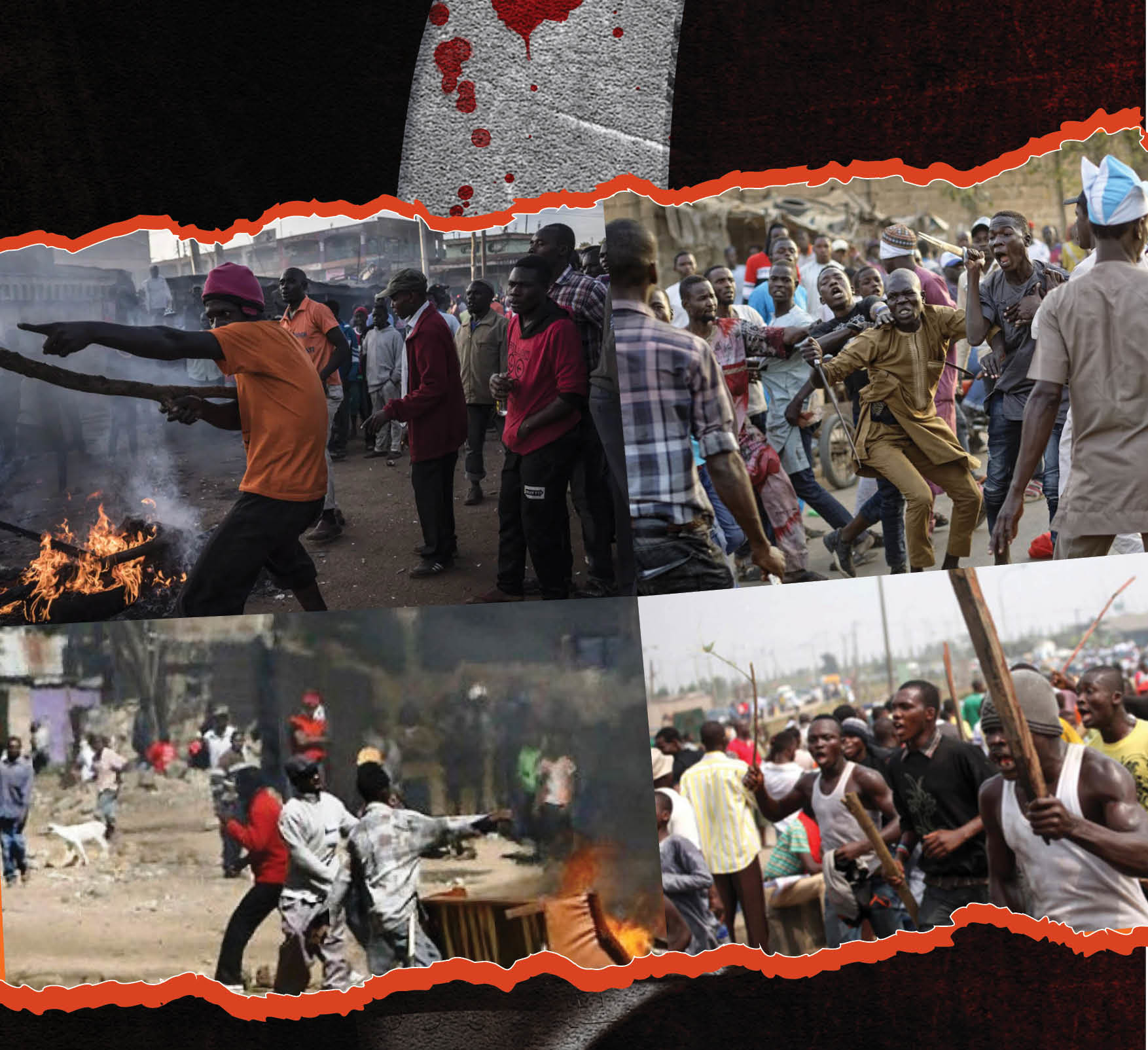

Between January 2020 and March 2025, SBM Intel recorded 1,686 deaths from 909 gang-related incidents—averaging nearly two fatalities per clash. The highest number of fatalities occurred in 2021 (377 deaths from 173 incidents), likely due to post-COVID economic strain and election tensions. While 2024 saw the most incidents (273), lethality per incident dropped, suggesting a shift in violence patterns.

The southern states are the epicentre of gang violence. Rivers State tops the fatality chart with 215 deaths, followed closely by Lagos (197 deaths), Edo (192), Ogun (149), and Delta (146). Lagos leads in incident count (163), though its death toll is slightly lower than Rivers, likely due to differences in weaponry—Rivers gangs often possess more sophisticated arms. These regions suffer from long-standing cult rivalries, militancy, and oil-related criminality.
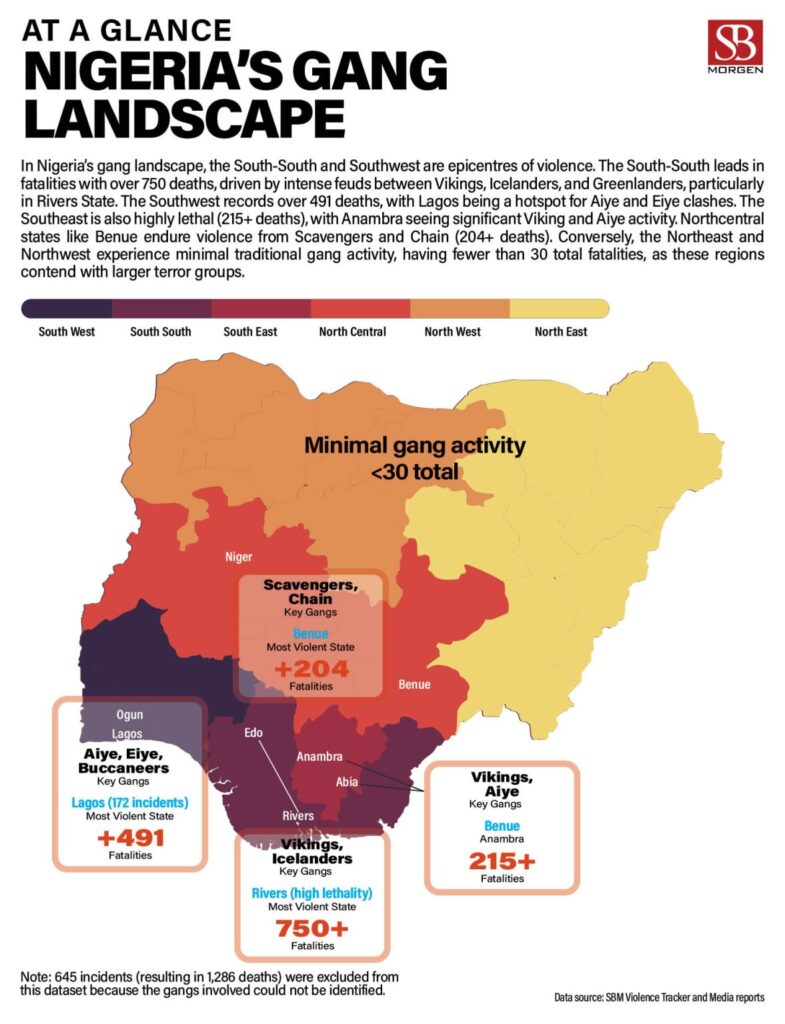
Contrastingly, states such as Borno, Sokoto, and Zamfara report minimal gang activity, primarily because terrorism and banditry overshadow gang-related crime in these northern areas. The South-South region, particularly Rivers, Edo, and Delta, recorded the highest number of deaths per incident, while the Southwest had the most incidents overall. The Northcentral zone represents a transitional space, blending traditional gang violence with ethnic and communal conflict, while the Northeast and Northwest remain dominated by insurgent and bandit groups.
Gang violence in Nigeria is largely urban and semi-urban, challenging assumptions that poverty alone drives such crimes. Instead, rivalries over territory, illegal taxation, and cycles of revenge often trigger violence. Key rivalries include Aiye vs. Eiye (mainly in Lagos and the Southwest), Vikings vs. Aiye (South-South and Southeast), and Icelanders vs. Greenlanders (primarily in Rivers).
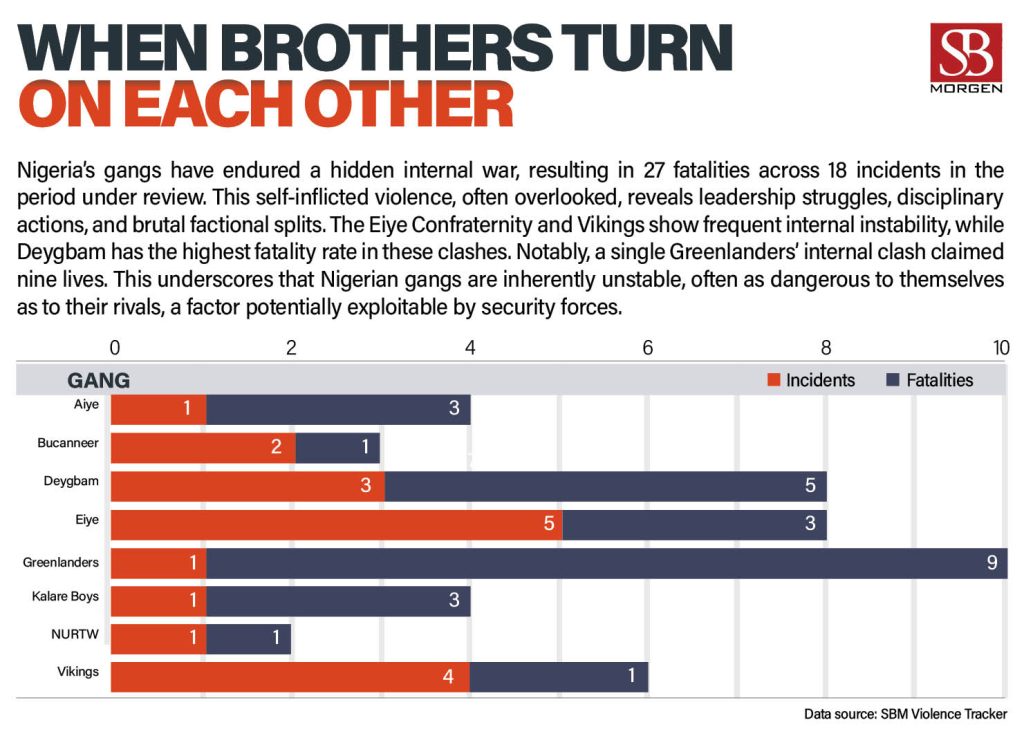
Notably, some gangs kill their own members in internal purges. Police and vigilantes are increasingly caught in the crossfire, and while civilians are not typically direct targets, the “unwritten rule” against targeting non-combatants is not always upheld, leading to tragic exceptions. Furthermore, despite anti-cultism laws and heightened penalties, enforcement remains weak and largely ineffective.
To address this persistent crisis, Nigeria needs a comprehensive strategy tackling unemployment, political exploitation, the flow of arms, and weak law enforcement, while bolstering state-led security and justice mechanisms.
@SBM Intelligence