
By Brigadier General Sani Kukasheka Usman (rtd) mni fnipr fapra fnarc FIOARM fspsp

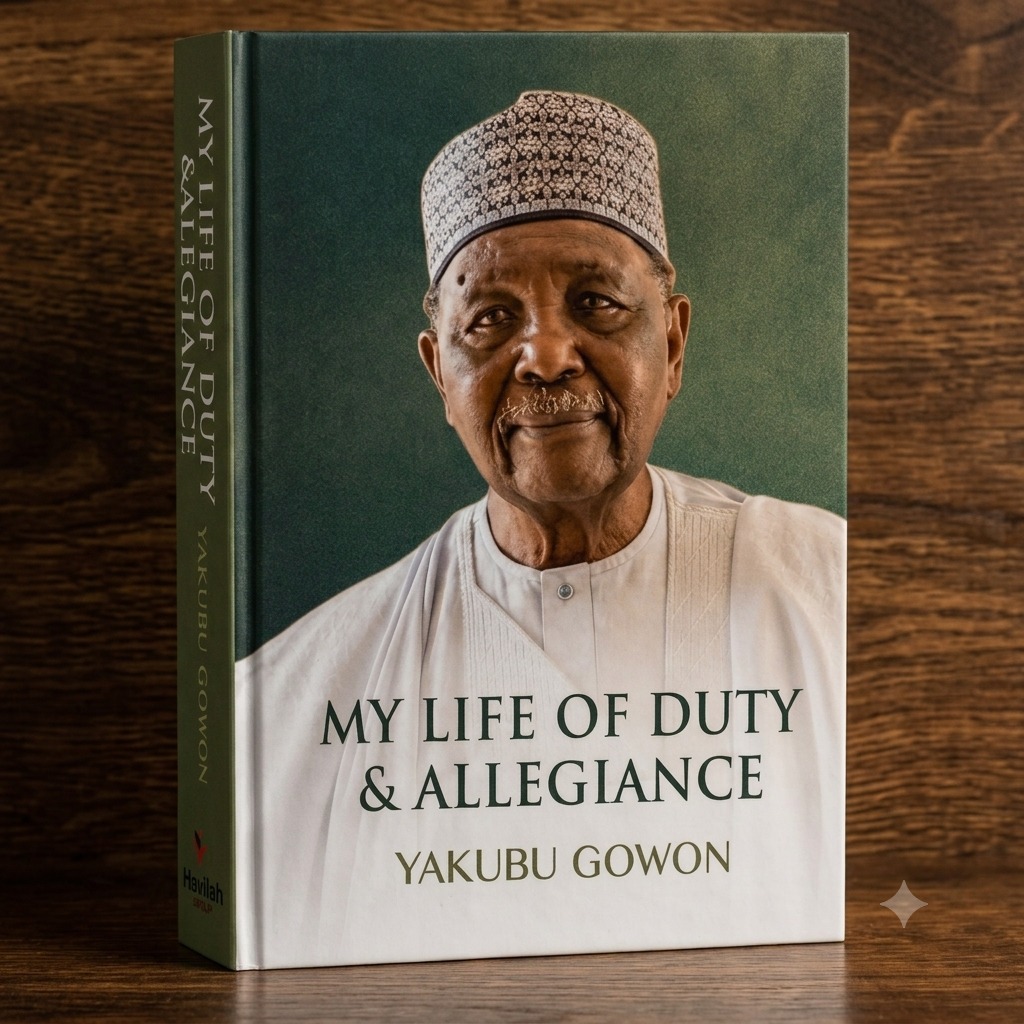
At the public presentation and unveiling of the autobiography of one of Nigeria’s most revered elder statesmen, General Yakubu Gowon, held in Abuja on Tuesday, 19th May 2026, an important message resonated beyond the pages of history, politics and memory. It was a message of peace, tolerance, coexistence and national healing.
Representing President Bola Ahmed Tinubu at the event, the Vice President, Sen. Kashim Shettima, restated the appeal to the people of Plateau State and by extension, Nigerians, to embrace peace, drawing inspiration from General Gowon, a son of Plateau who, despite leading Nigeria through one of its darkest chapters during the civil war, has become a symbol of national reconciliation, forgiveness, peace and unity.
Emphasising the vital role of peace in fostering development and drawing inspiration from the legacies of General Gowon, the Vice President admonished Nigerians not to use indigeneity as a tool for division, noting that, indeed, every group of people was historically known to have migrated from elsewhere.
The Vice President’s intervention was thoughtful and timely, given the current geopolitical tensions across different regions of the country. Undeniably, the Vice President’s recent public outings have been unequivocal in their call for national unity and peaceful coexistence, as he has seized every opportunity to advance these causes.
Therefore, the message deserves an even wider canvas. The Plateau call should be seen as a springboard for a national renaissance. The appeal for tolerance and peaceful coexistence should not be directed at Plateau State alone. Rather, it should speak to every Nigerian and indeed humanity at large. Plateau is merely a microcosm of a larger challenge confronting societies across the world – the tendency to narrowly define identity, weaponise ethno-religious differences and allow suspicion to triumph over shared humanity.
For decades, Plateau State, widely celebrated as the “Home of Peace and Tourism”, has suffered painful episodes of ethno-religious violence, communal clashes and mistrust. Communities that once traded together, celebrated together and protected one another have sometimes found themselves divided along the lines of politics, ethnicity, religion and the contested notion of belonging (kinship and affinity). Yet, if there is one lesson history repeatedly teaches, it is that conflict solves little, while peace builds everything.
As alluded to by the Vice President at the public presentation of General Gowon’s autobiography and, indeed, previous public outings, development thrives only in an atmosphere of peace. Investors seek stable communities; farmers flourish where lands are safe; schools prosper where children learn without fear; tourism blossoms where diversity is celebrated rather than feared; families thrive when neighbours trust one another. No society can genuinely progress amid cycles of vengeance and division. And in the words of Vice President Shettima, “…the Nigerian project becomes stronger when citizens refuse to become weapons in the hands of sectarian entrepreneurs.”
This is why General Gowon’s life and legacy matter profoundly in contemporary Nigeria.
After presiding over a devastating civil war from 1967 to 1970, he did not emerge preaching revenge or triumphalism. Instead, he embraced reconciliation under the enduring philosophy of “No Victor, No Vanquished,” advocating healing, reconstruction and reintegration. For decades thereafter, he devoted himself to causes of peace, interfaith harmony and national cohesion, becoming one of the country’s most enduring moral voices for unity. His life demonstrates that leadership is not merely about wielding power, but about healing wounds and building bridges.
The reality remains that nearly every Nigerian community has at one time or another migrated from somewhere. Human civilisation itself is built on movement, settlement and coexistence. The Hausa trader in Port Harcourt, the Igbo entrepreneur in Kano, the Yoruba professional in Kaduna, the Tiv farmer in Plateau, the Fulani pastoralist, the Nupe artisan, the Idoma teacher, the Kanuri civil servant in Lagos—all contribute to the tapestry of Nigeria’s shared destiny and diversity, which Vice President Shettima has often described as “a kaleidoscope of colours”.
What then should define us?
Not suspicion.
Not labels of “indigene” and “settler.”
Not religious identity.
Not ethnic stereotypes.
Rather, our common humanity, shared citizenship and collective aspirations for peace, dignity and prosperity.
The Vice President’s broader message that what binds us together supersedes whatever separates us is one that Nigeria must urgently embrace. Without tolerance, there can be no peace. Without peace, there can be no development. Without understanding, mistrust festers, and violence becomes cyclical.
The pathway to lasting peace on the Plateau and beyond requires deliberate and committed action.
First, political, traditional, religious and community leaders must consistently preach reconciliation rather than exploit differences for temporary gains and parochial interests. Words matter. Leaders must become ambassadors and advocates of peace.
Second, governments at all levels should invest more intentionally in dialogue, conflict prevention and community-building initiatives that encourage interaction across ethnic and religious divides.
Third, young people, who are most vulnerable and willing tools of manipulation, must be empowered economically and intellectually to reject divisive narratives and become champions of peace. This underscores the imperative of a national renaissance.
Fourth, the media (especially social media users) must exercise restraint and responsibility. Inflammatory rhetoric, fake news, misinformation, disinformation and hate speech have too often poured fuel on fragile tensions. The power of communication should be deployed to calm frayed nerves and heal, not divide.
Above all, Nigerians must learn to see one another as brothers and sisters, not as rivals for territory, privilege or identity, but as partners in nation-building.
Peace is possible.
Unity is possible.
Mutual tolerance is possible.
Plateau can once again reclaim its lost glory as the “Home of Peace and Tourism.” Nigeria can rise above the fault lines of ethnicity and religion. Humanity itself can move closer to understanding if people choose empathy over hatred and dialogue over division.
As the nation reflects on the wisdom and legacy of General Yakubu Gowon, perhaps the greatest tribute Nigerians can pay him is not merely to celebrate his autobiography, but to embody the values he has spent a lifetime defending: peace, forgiveness, tolerance, unity and faith in a common future.
There is no better place to anchor this plea than on Martin Luther King’s profound call for unity and ethnic harmony, where he stated that “We must learn to live together as brothers or perish together as fools.”
For in the end, nations are not destroyed by diversity. They are weakened only when citizens forget that what unites them is far greater than what divides them.
Brigadier General Sani Kukasheka Usman (rtd) mni fnipr fapra fnarc FIOARM, fspsp is a respected Strategic Communication, Public Relations and Security Expert. A former Director of Army Public Relations and Spokesman of the Nigerian Army, he is a consultant, Public Affairs Analyst, author and frequent commentator on national security, leadership, peacebuilding and governance issues