
By Chioma Amaryllis Ahaghotu

One of the biggest strategic errors of IPOB/ESN was believing that vi0lence works the same way everywhere.
They looked at the terr0rism in the North East and parts of the North West and assumed that adopting similar methods, terr0r, intimidation, chaos, would produce leverage.
That assumption was not just lazy thinking; it was catastrophic miscalculation.
Insurgency in the NE/NW did not emerge in a vacuum.
It sits on a mix of geography, population density, porous borders, arms fl0w, ideological conflicts, state neglect stretching decades, and, most importantly, assets the Nigerian state must stabilize because instability there threatens oil routes, national cohesion, and regional security pacts.
Even then, look closely. Despite all that chaos, the North has not “won.”
Millions are displaced, development is fr0zen, and it has morphed into a m0nster that proves harder to contain. .
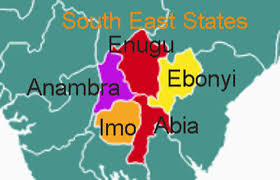
Now compare that to the occupation of IPOB/ESN/BLA and all their factions in the South East.
What exactly was the bargaining chip?
What asset did IPOB/ESN believe they were holding hostage?
Certainly not oil and gas, the lifeblood of Nigeria’s economy sits largely in the South South.
Whatever minimal deposits exist in the South East are not consequential enough to make Abuja blink.
There is no strategic export corridor, no energy chokeh0ld, no mineral monop0ly. Nothing that forces neg0tiation under pressure.
Was it population?
The South East does not command overwhelming numbers at the national level, nor does it deliver high voter turnout as a bloc. Electoral leverage requires either mass or bloc discipline. The Southeast region has neither in decisive form.
Was it capital?
Igbo wealth is mostly private, dispersed, and mobile, located in Nnewi, Onitcha, but also Lagos, Abuja, Port Harcourt, Accra, London, DC, Houston.
You cannot bargain with money that does not physically live where the vi0lence is happening. That wealth was not mobilized; it was evacuated.
So what was left?
Communities.
Markets.
Schools.
Families.
And that is exactly what IPOB/ESN att@cked.
Because they lacked a real external bargaining chip, they turned inward.
They invaded Igbo communities, enforced sit-at-home orders at gu*npoint, burned police stations embedded in residential areas, killed military and terr0rized the same people they claimed to be “liberating.” That is not resistance, it is self marginalization.
Nigeria watched this unfold without urgency.
Why would it rush?
From the state’s perspective, the region was doing the damage itself.
Businesses shut down. Investment fled. Human capital relocated. Internally generated revenue collapsed. Insecurity surged.
Decades of post-war rebuilding were rolled back, not by federal troops, but by non-state actors claiming to speak for Ndi Igbo.
And then, predictably, the state still did what states always do: it caught the leaders, imprisoned them, and moved on.
No concessions. No negotiations. No historic reckoning.
That is the brutal lesson many refused to learn.
The South East has yet to properly understand its leverage, because leverage must be real, not imagined.
It must be articulated as value the system cannot afford to lose.
You don’t manufacture relevance by stating grievances and then kpaing your own people for those grievances; you build it through assets, coordination, and outcomes.
What concerns seaport, igbo presidency, international airport etc with the k*illing of your own people.
The 2019 “sealed, signed and delivered” episode should have been a warning.
While some Southeast political actors were negotiating with IPOB with monetary incentive to lift boycotts and re-enter the process, IPOB doubled down on absolutism and vi0lence.
Instead of recalibrating, they escalated to sit-at-home, punishing ordinary people while many elites fled. That is not strategy; that is stewpidity.
Ask yourself this: list every living Igbo billionaire. Every one of them. Where were they on Mondays? At home. Answering town union calls. Appeasing traditional rulers. Avoiding confrontation.
Meanwhile, armed men who were non-state actors, with weap0ns enforced region-wide paralysis. That is not a bloc anyone fears. That is a pressure group with no hierarchy, no discipline, and no economic spine.
The myth of the strength of Igbo wealth collapsed under scrutiny. Wealth without coordination has no political velocity. It does not move policy. It does not scare states. It simply relocates when things get uncomfortable.
So yes, the bandage has to come off.
The embarrassment brought on Ndi Igbo by IPOB/ESN happened publicly, in full view of Nigeria and the world. The reckoning, therefore, will also be public.
This is not “dirty laundry”; it is an audit.
You did not object when broadcasts demeaned Igbo identity itself.
You were silent when fear ruled your Mondays.
You hid because you were afraid to di*e, and that fear was rational.
What is irrational is finding courage only when someone writes plainly about the damage done.
If you could not speak when your life, livelihood, and children’s education were on the line, then spare us the selective outrage now. We will not move on until the atrocities are listed in full detail.
The South East did not lose decades to Biafra agitation alone. It lost them to poor strategy, delusion, and leaders who mistook noise for leverage.
That truth is uncomfortable. But growth has never come from comfort.
@Chioma Amaryllis Ahaghotu