

Synopsis of Verified Persecution Fatalities Data Survivor-Documented Evidence of Atrocity Undercount in
Nigeria (Supporting the Nigeria Religious Freedom and Accountability Act of 2026 – H.R. 11)

Purpose
This annex provides verified survivor-documented evidence demonstrating that official figures referenced in government and international reports significantly undercount the scale of religious persecution and mass killing in Nigeria. The data supports the urgency and necessity of the Nigeria Religious Freedom and Accountability Act of 2026 (H.R. 11).
Source
We Bore the Brunt of Boko Haram and Other Religious Persecution By Rev. Dr. Rebecca Samuel Dali, Founder, Center for Caring, Empowerment, and Peace Initiative (CCEPI USA)
Methodology (Summary)
- Since 2003, Boko Haram and allied Islamist extremist groups have conducted sustained
attacks across northern Nigeria. - Between 2010 and the present, CCEPI conducted humanitarian relief operations in
affected communities. - During aid distributions, survivors voluntarily documented their experiences, resulting in
6,238 verified firsthand survivor accounts. - These accounts were analyzed for deaths, abductions, religious targeting, gender, age,
and geographic impact.
Key Verified Findings
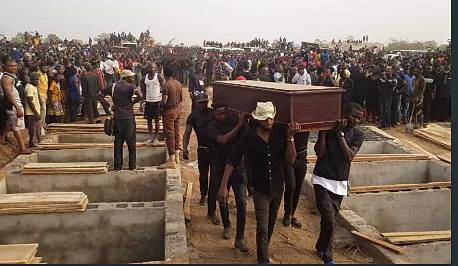
- 7,137 confirmed deaths and 680 abductions documented within survivor testimonies
- Violence concentrated in Borno, Bauchi, Benue, Adamawa, Yobe, Plateau, and Kaduna
States - Consistent patterns of religious and community-based targeting
- 120,000 Nigerian Refugees are presently in North Cameroon, many of whom have been
screened and awaiting relocation to a safe third country particularly the United States.
Memorialized Victim Records (Verified Names Only)
CCEPI has memorialized 160,000 named and verified victims, representing only those whose
identities could be confirmed and therefore not a comprehensive national total.
- 77.17% male (123,475) | 22.83% female (36,525)
- 61.86% Christian (98,971) | 38.14% Muslim (61,029)
These figures demonstrate disproportionate targeting of Christian communities, while also
confirming severe impact on moderate Muslim populations.
Humanitarian Consequences
- 65% of survivors identifying a relationship to the deceased were widows
- Among 1,300 widows with orphan children, the average household supported 6.2
children - Widespread unmet needs include trauma care, education for orphans, food security,
healthcare, and livelihood support
Congressional Relevance
This survivor-documented evidence confirms that:
- Existing casualty estimates substantially underrepresent the true scale of violence
- The atrocities are systematic, identity-based, and prolonged
- Strong enforcement mechanisms—sanctions, conditional aid, terrorist designation
reviews, and targeted humanitarian relief—are urgently required, as provided for in H.R.
11
Evidentiary Conclusion
The data summarized herein provides independent, firsthand confirmation that Nigeria is experiencing sustained mass atrocity violence meeting recognized thresholds for genocide and crimes against humanity, underscoring the necessity of immediate congressional action.
Prepared By:
Stephen Osemwegie,
President and Founder, Save Nigeria Group USA
E-mail: savenigeriagroupusa@gmail.com