
- Directive Urges Media to Drop ‘Bandit’ Label as U.S. Scrutiny Intensifies
As Nigeria battles mounting international scrutiny over jihadist violence and religious killings, a quiet directive from the country’s military suggests the war is no longer only on the battlefield, but in the language used to describe it.

For more than a decade, Nigerian authorities and domestic media have relied on elastic labels, first “unknown gunmen,” and then “bandits” to describe mass casualty attacks across the country’s north and central regions.
But an internal message circulated on a verified Nigerian military-media WhatsApp platform indicates defense officials now want the terminology retired.
“It has to do with nomenclature,” wrote the Director of Defence Media Operations, Markus Kangye, in the guidance shared with journalists. “We want to desist from the use of the word ‘bandits.’ There are legislations and executive orders that have designated them as ‘terrorists.’”
The note, marked as non-public guidance, warned that terminology affects “military operations and the kind of assistance we get from foreign partners.”
The implication: words shape policy.
Narrative Armor
Security analysts say the term “bandit” has functioned as a linguistic shield, softening ideological violence into criminality.
Nina Shea, senior fellow at the Hudson Institute’s Center for Religious Freedom told U.S. lawmakers that the terminology carries diplomatic consequences.
“The use of the term ‘bandits’ allows authorities to avoid the legal and international obligations that come with acknowledging religious persecution,” Shea said in congressional testimony.
She added that many “so-called bandits attacks show ideological alignment with jihadist movements targeting Christian populations.
Motorbikes and Massacres
Field testimony challenges the criminal framing.
Muhammed Abdulkarim, whose community was overrun in central Nigeria, described a coordinated assault.
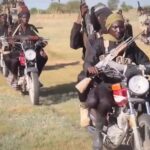
“When I saw motorbikes in large numbers, three men on each bike wearing army uniforms, I thought they were soldiers,” he told TruthNigeria. “Then I saw their headscarves tied just like the terrorists do. I ran.”
He said captives were executed after religious sermons.
“They lined people up and shot them in the head. They preached Islam first,” he said. “We buried 178 bodies in two days.”
No cattle rustling, ransom demands, or theft, just systematic killings.
Analysts say such patterns challenge the “bandit” label.
Two Violence Models
In Nigeria’s northwest, armed groups widely called bandits by the media operate in structured criminal networks.
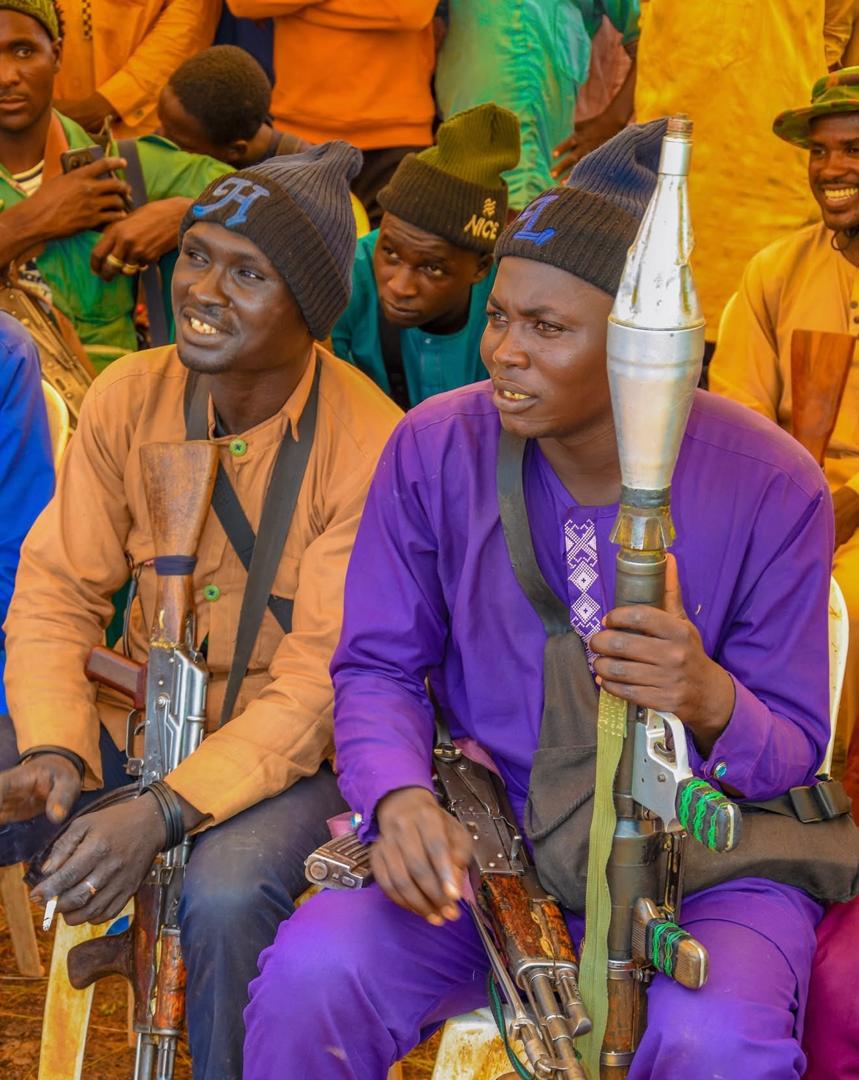
TruthNigeria has documented various Islamist groups, many led by identifiable commanders such as Dogo Gide and Bello Turji.
These armed groups conduct kidnappings, demand ransom, control forest territories and engage in weapons trafficking.
But in Nigeria’s Middle Belt, including Benue, Plateau and Nasarawa, attacks attributed to “bandits” follow a different pattern. Villages are razed, farmers are displaced, Christians are killed and Churches are destroyed.
In the first week of February 2026 alone, over 33 Christians were killed by Fulani terrorists in 72 Hours in Benue, at least 15 Christians were killed in Takum County, Taraba state, while hundreds were forced to flee.
On Friday, February 6, 2026, armed militia laid siege to the Rapyam community in Barkin Ladi County, leaving several casualties and properties razed.
Yet no gang leaders are named, no arrests are announced, and no criminal networks are mapped.
Analysts say the asymmetry raises questions.
Faith as a Risk Factor
Human rights advocates say religious identity remains central in many attacks.
“Faith features significantly in the calculus underpinning this violence,” said Chris Wadibia, a U.S.-based advocate for religious freedom.
“In vulnerable regions, Christian identity often heightens exposure to militant targeting.”
Patricia Streeter, co-founder of the Anglican Persecuted Church Network, said terminology disputes obscure victim profiling.
“The kidnappings of worshippers during church services make it undeniable this is faith-targeted persecution. It’s also not the result of climate change or banditry, as the mainstream media has said over the years,” she said to TruthNigeria.
Government Language vs Military Reality
Public rhetoric from Nigerian political leaders continues to pair terrorism and banditry as parallel threats.
President Bola Tinubu recently vowed to defeat “terrorism and banditry,” reinforcing the dual framing.
But the military’s private directive suggests a more definitive classification internally.
The distinction carries international consequences.
Under U.S. law, terrorism designations influence military assistance, intelligence cooperation, counterterror funding, and sanctions eligibility.
Nigeria remains designated a “Country of Particular Concern” under U.S. religious-freedom policy frameworks, a status that can trigger diplomatic and economic penalties.
Media Pressure and Narrative Control
Journalists say terminology choices are shaped by regulatory pressure.
Aba Anuhe, a retired Nigerian journalist told TruthNigeria, “Broadcast authorities have historically sanctioned outlets over conflict reporting language, encouraging cautious phrasing in domestic coverage.”
“No one wants to be fined over their choice of words, playing ignorant is the safer option,” he said.
But foreign observers warn euphemisms distort threat assessment.
“When language softens ideology into criminality, policy urgency declines,” Shea said.
The War over Words
Nigeria’s security crisis has been fought on two fronts: In rural killing fields and in global narratives for years. Recently, analysts have realized how consequential narrative is.
From “unknown gunmen” to “bandits” and now quietly, to “terrorists,” the evolution of terminology reflects a deeper struggle over accountability and international perception.
But survivors like Abdulkarim say the semantics change little on the ground.
“They came with guns, preached Islam, and killed,” he said. “They were Fulani terrorists.”
The writer, Mary Kiara, reports on terrorism for TruthNigeria
@TruthNigeria