

By Chidi Omeje

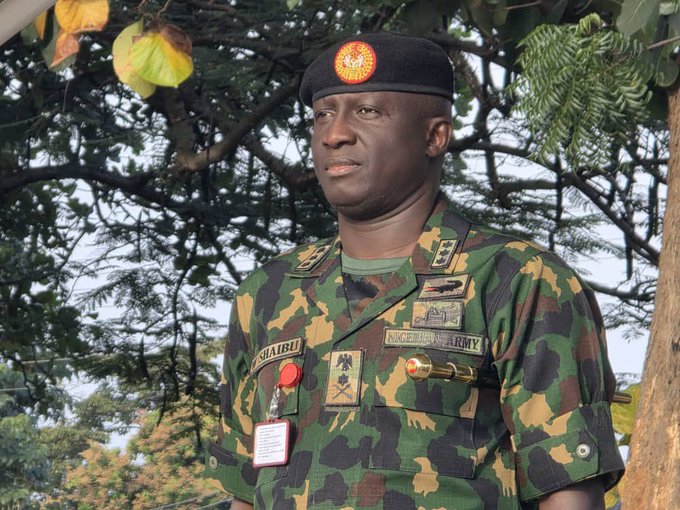
On 25 February 2026, the Chief of Army Staff (COAS), Waidi Shaibu, unveiled a new Command Philosophy titled PROSE while delivering a lecture to participants of Senior Course 48 at the Armed Forces Command and Staff College, Jaji. The doctrine, which is designed to redefine the philosophical foundation of the Nigerian Army, outlines a strategic framework aimed at strengthening professionalism, readiness and institutional effectiveness across the force.
At first glance, the acronym is clever: Professional Excellence, Robust Administration, Operational Readiness, Strategic Cooperation, and Exemplary Leadership. But beyond the tidy semantics and acronyms lies a more consequential question: can PROSE become praxis?
Well, this is an attempt to deconstruct the doctrine: its promise, its ambition, and the structural realities that will ultimately determine its fate.
The truth of the matter is that Nigeria’s security climate remains volatile, asymmetric, and deeply layered. Counterinsurgency in the North-East, counterterrorism and anti-banditry operations in the North-West and North-Central, separatist agitations in the South-East, oil theft and militancy in the Niger Delta, sundry violent crimes in South-West. These are not isolated theatres but interconnected stress points.
In such an environment, tactical victories are insufficient while institutional stamina will most definitely become decisive. Gen Shaibu appears to understand this. His doctrine does not merely promise battlefield success; it speaks of institutional strength, resilience, and long-term transformation. That shift in tone is significant. It suggests recognition that modern warfare is as administrative and psychological as it is kinetic. Lets proceed to breakdown the PROSE.
Professional Excellence in today’s military cannot be confined to parade-ground discipline or command hierarchy. It demands ethical conduct in internal security operations, mastery of modern warfare technologies, intelligence-driven decision-making and respect for human rights and rule of law. The inclusion of professionalism as the first pillar is most definitely deliberate. Public perception of the Army has fluctuated over the years, especially in internal security roles. Rebuilding trust requires not only competence but character. If implemented sincerely, this pillar could recalibrate the Army’s moral authority.
Robust administration is the quiet backbone of successful armies. As a matter of fact, a number of armies often falter not at the frontline but in their paperwork. Logistics, promotions, welfare systems, procurement transparency, medical support, and so on, determine morale as much as combat victories do. By elevating administration to doctrinal status, the COAS signals awareness that inefficiency behind the scenes undermines heroism at the front. The real test, however, will be whether “robust” translates into digitization, accountability, and streamlined processes or remains an aspirational adjective.
Operational Readiness is no doubt a moving target. Readiness is not static. It requires constant retraining, equipment modernization, and adaptability to emerging threats. Gen Shaibu’s emphasis on innovation as the engine of progress is particularly notable. The doctrine appears to acknowledge that the Army must evolve technologically and doctrinally to remain relevant. However, readiness demands resources. Without sustained funding and procurement reforms, this pillar risks structural strain.
Strategic Cooperation translates to winning together. No modern military succeeds alone. Jointness with the Navy and Air Force, synergy with intelligence agencies, and collaboration with civil authorities define contemporary security success. Strategic cooperation also includes civil-military relations, a point the COAS rightly underscored. In an era where public trust shapes operational space, legitimacy becomes a force multiplier.
Exemplary Leadership is the multiplier of all other pillars. A well-crafted doctrine collapses if commanders fail to embody it. By charging Senior Course participants, the Army’s future operational and strategic leaders, to internalize PROSE, the COAS acknowledges that transformation must cascade downward. This is imperative because doctrines are not self-executing; leaders operationalize them. The question remains: will performance evaluation, promotions, and command appointments reflect these values? If yes, PROSE may endure beyond rhetoric.
Perhaps the most compelling aspect of the PROSE doctrine is its declared Soldier-First Culture, which seeks to prioritize welfare, morale, dignity, and empowerment. History shows that armies fight as well as they are treated. Welfare is not charity; it is combat insurance. If the Nigerian soldier feels valued, equipped, and respected, resilience becomes organic rather than enforced. In a force engaged across multiple internal theatres, this cultural shift could redefine morale architecture.
The point really is that every new Chief of Army Staff introduces a command philosophy. What distinguishes enduring doctrines from fleeting slogans is measurable impact. For PROSE to transcend branding, we must see the following: improved operational efficiency, reduced complaints about welfare and administration, stronger inter-agency synergy, enhanced public trust metrics and clear modernization benchmarks.
Gen Shaibu’s PROSE Doctrine is ambitious without being flamboyant. It is structured, coherent, and context-aware. More importantly, it recognizes that today’s military success requires a fusion of ethics, efficiency, innovation, cooperation, and leadership. But transformation in the Nigerian Army will not occur through acronyms alone. It will require discipline in execution, political support, sustained funding, and unwavering internal accountability.
If PROSE becomes more than prose; if it matures into culture, then this 2026 unveiling at Jaji may well be remembered as a strategic inflection point in the history of the Nigerian Army.
Chidi Omeje is the publisher of Security Digest (www.securitydigestng.com)