
By Suleiman A. Suleiman

President Bola Ahmed Tinubu has a serious problem on his hands. It is called the Joash Amupitan problem. More precisely, it is the problem of appointing a new Chairman of the Independent National Electoral Commission (INEC) for conducting the 2027 election that is already well underway. Even more precisely, it is a problem of steadying the ship of Nigerian democracy at one of the most consequential political moments in our recent history.
What happens when the referee in the final match of a World Cup tournament is badly injured in the middle of the game and can no longer continue to officiate the game? Would FIFA select a novice referee who has never officiated a game before to replace the injured official to oversee such a sensitive match, or would they choose one with a track record of doing it before? In a quaint analogy, this is where we are with the 2027 general elections in Nigeria today.
In a sense, President Tinubu’s first decision of removing the injured referee is rather easy. The position of Professor Joash Amupitan, as Chairman of INEC, is simply no longer morally and politically tenable. Amupitan must go. It may be a painful decision for President Tinubu, but there is no other viable choice. This is no one’s doing, but a calamitous consequence of fate. Amupitan is now engulfed in so many scandals that not only make his continuing stay impossible, but are also threatening to take down the 2027 elections with him.
It is irrevocably damaging that the Chairman of INEC is now the subject of various allegations of partisanship, not just on social media, but also within the mainstream political space. Opposition political parties have outrightly called for his resignation, not once but several times.
And as digital footprints of his alleged partisanship resurface, those calls have only grown louder and more justified. The problem is not simply that allegations exist or that Amupitan has denied them; it is that they have acquired a life of their own in the public domain.
In addition to the serious questions over Amupitan’s previous support for the ruling APC, there is also the growing perception that INEC under him has been too eager to implement court decisions that not only favour only the ruling party, but also stifle the electoral space for opposition parties and their supporters. All of these issues have combined into a single and dangerous narrative: that the electoral umpire is no longer standing above the contest. Whether each claim is proven beyond doubt is beside the point. Elections run on trust, not on legal briefs. And right now, that trust is being rapidly and visibly eroded by Amupitan’s continuing leadership of INEC. Amupitan’s position has been badly injured, and he simply must go.
More troubling still are the implications of recent administrative positions associated with INEC under Amupitan’s leadership. Amupitan’s proposed revalidation of the voter register and the unprecedented idea of continuing voter registration until very close to election day have also raised fears of exclusion and disenfranchisement throughout the country. The technical value of these changes matter less than how Nigerians perceive them. When significant sections of the electorate openly and loudly suspect that the leadership of INEC is partisan, the legitimacy of the entire process is placed in doubt even before a single vote is cast.
This is the heart of the matter. An election does not lose legitimacy only when results are manipulated; it loses legitimacy when citizens believe the process is tilted towards only one outcome. Professor Amupitan may well insist on his impartiality. But the office he occupies cannot be sustained on personal assurances. An INEC chairman must not only be neutral, he must be seen to be unquestionably so across all of Nigeria’s political divides. And on that standard, the damage is already done. Amupitan’s leadership is no longer viable.
Continuing with Amupitan will fatally damage the legitimacy of the election even before it starts. It will roll Nigerian elections back 20 years to 2007, and leave President Tinubu with no legacy left to speak of in any serious sense of the term, even if he won squarely.
But if removing an injured referee is easy, however emotionally painful, replacing him in the middle of a final match is a more delicate matter. The 2027 general elections are already in progress. The continuous voter registration has since commenced. The FCT local council elections, which kick off a new election, have been concluded. Party primaries will be holding in a matter of weeks, while campaigns are expected to officially commence in August, just about four months way. The presidential and national assembly elections will hold on January 16, 2027, while the governorship and state assembly elections will hold on February 6.
Each of these processes is littered with minefields, and even the slightest wrong turn could blow up the entire election and throw the country into a constitutional conflagration. In short, the 2027 election is clearly an emergency situation already, and the approach cannot be usual. President Tinubu and Nigerians must accept that this is not a normal situation for appointing a new leadership for INEC. A novice INEC Chairman who would need months to come to grip with the serious challenges of conducting a general election in Nigeria cannot do the job.
First, the logistical demands of preparing for over 90 million voters, more than 170,000 polling units, and a nationwide deployment of personnel and materials across difficult terrain are simply extraordinary. They far exceed the logistics of elections for all the remaining 14 West African countries combined. Yet, given that we are only months away from election day, all of these must now be carried out on the go. This is not the kind of operation one learns on the job. It requires deep institutional memory, familiarity with INEC’s internal systems, and prior experience in navigating the inevitable logistical shocks that would arise.
Secondly, the period we are entering is politically the most volatile phase of Nigerian elections. Party primaries, candidate substitutions, campaigns, voting and declaration of results are all high-stakes processes in Nigeria because they generate disputes that can quickly escalate into constitutional crises. INEC, unfortunately, is often at the centre of these legal and political tussles that Nigerian politicians and parties play endlessly against each other during primaries, candidate selections, campaigns, election day, and its immediate aftermath. Therefore, managing these tensions requires not just competence, but political sensitivity and institutional authority that in the present circumstances, can only come from having done it before.
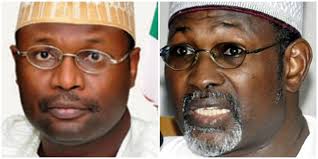
This is why I believe that the two Nigerians best placed to replace Amupitan are either Attahiru Jega or Mahmood Yakubu. Their appointment does not have to be for a full term of five years, because it is not a regular appointment. A term of two or three years, to steady the ship of this election and sail us through until 2028 or 2029 is all that is needed.
In the end, this is not about personalities. It is about preserving the legitimacy of Nigeria’s democracy at a critical moment. As an incumbent, President Bola Ahmed Tinubu can win the 2027 election—but how he wins has direct implications for his legacy, and the future of Nigerian democracy. A victory delivered through a process clouded by doubts against INEC’s leadership even before the election will be destructive for Tinubu’s place in history and for Nigeria. President Tinubu must choose between a Pyrrhic victory and a patriotic duty.
Suleiman A. Suleiman can be reached through Suleimansuleiman@dailytrust.com (07066451983 SMS)