
Weekend Trust Page 3 Comment, May 23, 2026

In recent months, several civilians in Nigeria, mainly in the crisis-ridden North, have paid the ultimate price in the war against terror and banditry. Misidentified targets and bombardments by the Nigerian Air Force have led to the death of innocent farmers, traders, and fishermen. These recurring tragedies expose a devastating reality: hundreds of civilians have become collateral damage in the war against terrorists. Worse still, the authorities have abandoned them to their fate, as if they were not citizens of Nigeria. They do not benefit from rescue operations, emergency medical treatment, or sustained psychosocial support to heal from the trauma of state-inflicted violence. Their communities are left to bury the dead in mass graves.
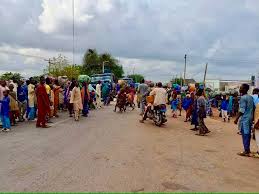
There are many instances of such attacks that have left devastating and almost permanent effects on people and communities. In December 2025, there was a multi-hour aerial bombardment launched by the NAF at Mararaba Transport Junction in Borno State to intercept terrorist logistics in Kukawa Local Government Area. The fighter jet struck the busy motor park junction where local fishermen and commercial drivers had gathered to transport goods. The initial and subsequent overnight strikes destroyed over 50 vehicles and claimed numerous civilian lives. Little is known about the government’s intervention to support the victims.
In January this year, a military helicopter struck the Kurgi community in Niger State during an anti-banditry aerial assault aimed at flushing out criminal hideouts in Mariga Local Government Area. The operation hit the wrong target entirely, killing and wounding several local farmers and their children. Also, in April 2026, a NAF airstrike was deployed near the volatile Jilli market at the Borno-Yobe border to dismantle a suspected Islamic State West Africa Province (ISWAP) logistics hub. The ordinance accidentally hit the village market in Jilli. Community leaders and humanitarian updates confirmed that up to 200 civilians were killed in the massive explosion.
The tragedy was explained away on the grounds that the market was a known terrorist enclave. Furthermore, this month, an air raid was executed by the NAF at Tumfa Market in Zamfara State, targeting heavily armed bandits and criminal syndicates in the North West. The bombardment directly struck a crowded weekly market in the town. Amnesty International reported that at least 100 civilians, including numerous women traders and children, were killed in the blast. Like the case of Jilli, the authorities argued that Tumfa was an enclave of banditry. Several such operations have devastated civilian populations.
Civilians in conflict zones, usually tagged as ungovernable spaces and almost ceded to terrorists and bandits, are extremely unfortunate. They endure a horrifying double tragedy. On one side, brutal bandits lord over their communities, trapping them in a reign of terror.
These criminals impose exorbitant levies, seize ancestral farmlands, subject villagers to cruel punishments, and forcefully take away their wives and daughters. On the other side, when the military attempts to dislodge these gangs, aerial bombardments frequently rain down on the very people they are meant to rescue. They are caught in a lethal crossfire between bandit tyranny and state negligence. Such a situation is unacceptable in a modern society.
The Nigerian military must urgently transition from blunt, indiscriminate air campaigns to advanced intelligence-led precision operations. In this modern era of precision warfare, technological advancements leave no room for crude, expansive bombardments that routinely claim hundreds of innocent lives under the guise of counter-insurgency. By aggressively strengthening ground-level human intelligence (HUMINT), deploying high-altitude surveillance drones, and leveraging real-time electronic tracking, the armed forces can meticulously isolate the exact coordinates of bandit hideouts and terrorist leadership enclaves. Precision-guided munitions and tactically executed special forces operations should be the primary instruments used to neutralise threats, rather than dropping heavy ordnance on bustling rural markets or residential communities.
Ironically, while ordinary citizens bear the horrific brunt of insurgency, the Nigerian government has consistently treated bandits and terrorists as prodigal sons, urging them to repent. Rather than enforcing absolute accountability, the state has actively financed its tormentors through the covert payment of multimillionnaira ransoms for kidnapped persons. Bizarre state policies have repeatedly granted sweeping amnesty and structured peace deals. Even so-called “repentant fighters” are quickly funnelled into comfortable state-sponsored deradicalisation programmes, where they receive feeding, clothing, and psychosocial rehabilitation. Meanwhile, the actual civilian victims of these terrorists are callously abandoned to their fate.
Worse still, the governors of the North West geopolitical zone have failed to establish functional and secure Internally Displaced Persons (IDP) camps for the victims of banditry, who run into tens of thousands. This calculated neglect is completely unacceptable when viewed against the historic windfalls flowing to these state capitals. Following the removal of the fuel subsidy, the governors have routinely collected unprecedentedly massive monthly allocations from the Federation Account Allocation Committee (FAAC). These billions belong to all citizens, especially the most vulnerable who have lost everything to terror. To leave displaced families starving in squalid informal settlements or begging on city streets is a total betrayal of governance.
On the part of the federal government, it remains to be seen how the Federal Ministry of Humanitarian Affairs is supporting victims of conflict in the North West. Beyond bombing bandits and terrorists, the government must provide security for civilians who are not fighters. Every civilian trapped in conflict zones remains a full citizen whose right to life and safety is guaranteed by the nation’s supreme law. They are not disposable collateral damage; they are Nigerians who must be aggressively protected in accordance with the Constitution. Specifically, Section 14(2)(b) of the 1999 Constitution of the Federal Republic of Nigeria explicitly declares that “the security and welfare of the people shall be the primary purpose of government.” The government must stop treating Nigerians in conflict zones as second-class citizens and immediately uphold its constitutional duty to defend them.
We call on the state and federal governments to immediately recalibrate the activities of the Humanitarian Affairs Ministry to ensure that every community affected by military strikes is provided with financial aid, free comprehensive healthcare, and long-term psychosocial support for survivors. The government must formally recognise every instance of collateral damage through public apologies, while setting up dignified Internally Displaced Persons (IDP) camps equipped with robust security, clean water, and educational facilities.
Furthermore, the military must strictly implement rigid “no-strike” zones over public spaces and rely heavily on ground-level human intelligence to eliminate fatal targeting errors during counter-insurgency campaigns. Most importantly, the military must develop a strategy to reclaim what are termed “ungovernable spaces” from terrorists and bandits. No Nigerian enclave should be left under the control of criminals in this 21st century, when technology and human intelligence have brought virtually every space under effective surveillance and control.