
Tribune Editorial Board, Friday May 29, 2026

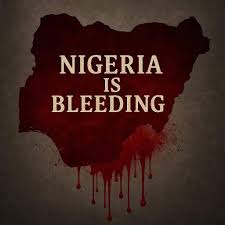
A new arrival from Mars would be right to conclude that the only game in town right now is politics, and that the struggle to dislodge President Biola Tinubu and the ruling All Progressives Congress (APC) from power is the only thing worth paying attention to. The Martian wouldn’t be necessarily wrong, since, from a certain angle, the only thing every member of the political elite cares about right now is indeed the struggle for power. Yet, one does not have to look very far to see what lies beneath the all-consuming political spectacle: an atmosphere suffused with bloodshed and violence, and palpable anxiety among the generality of the people about their physical security.
Here’s a small sample from recent reports in the media: two weeks ago, bandits in military camouflage attacked three schools in Oriire Local Government Area (LGA) and abducted dozens of pupils and teachers. Days after the attack, the bandits posted a video showing the gruesome decapitation one of the kidnapped teachers, Mathematics instructor Michael Oyedokun. Last Sunday, suspected bandits reportedly attacked two farming settlements in Bakori Local Government Area of Katsina State, killing at least 11 people, including a local security man and an unidentified pregnant woman. The attackers targeted Gidan Wawu and Gidan Sarkin Noma, neighbouring agrarian communities in the Guga Ward, where residents say armed assailants stormed the villages at about 4 p.m. as locals returned from the weekly Guga market.
About the same time, the Nigeria Police Force (NPF) announced the death of 17 police officers following a terror attack on the Nigerian Army Special Forces School in Buni Yadi, Gujba Local Government Area (LGA) of Yobe State. The police statement followed another one by the Nigerian Army, which claimed that a nearby military formation was also attacked. According to Sani Uba, the spokesperson for Operation Hadin Kai, a joint task force in the North-east, about 50 terrorists were killed in the attack that also claimed the lives of two soldiers.
Although no group has claimed responsibility, the modalities of the attacks seem to be consistent with the operations of the Islamic State West Africa Province (ISWAP), one of the many terror groups which have been giving the authorities a run for their money across the north-central and north-east regions in recent times. Just how deadly these groups are can be seen in figures recently released by the Community of Practice Against Mass Atrocities indicating that more than 40,000 Nigerians have been killed and another 23,000 abducted since 2019.
To the credit of the Tinubu administration, it has taken some proactive steps to tackle growing insecurity in the country, including a potentially politically risky military collaboration with the United States government. This collaboration has had some modest successes, including the killing last week of ISIS second-in-command Abu-Bilal al-Minuki. Yet, it goes without saying that more needs to be done, and that the government can in no way claim that it has met the high bar set by President Tinubu himself when he was sworn in three years ago.
Nigerians have every right to demand of the government that it take their welfare and security seriously. If the current spate of killings is not arrested, it may very well end up being the undoing of this administration.