
By Kio Amachree

I. A Ghost Rises From The West
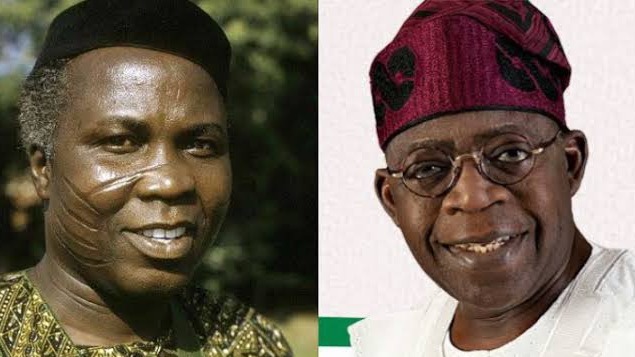
History does not merely repeat itself in Nigeria. It haunts. And today, from Abuja’s Aso Rock corridors to the hollowed streets of a gutted Rivers State democracy, the ghost of Samuel Ladoke Akintola walks again — dressed in Agbada, flanked by lawyers, wrapped in the language of constitutionalism. His name this time is Bola Ahmed Tinubu.
The parallels are not metaphorical. They are operational. They are structural. They are, for those with eyes trained on Nigerian history, terrifyingly precise.
II. Who Was Akintola — And What Did He Do?
Samuel Ladoke Akintola served as Premier of Western Nigeria from October 1, 1960, until the day soldiers put a bullet in him on January 15, 1966 — the morning of Nigeria’s first military coup.  He was brilliant, lethal, and ultimately self-destructive. His fall did not merely end his life. It ended the First Republic.
In May 1962, when the Western House of Assembly moved to remove Akintola after his party passed a vote of no confidence in him, crisis erupted on the floor of the House. The Action Group party broke into two factions, triggering a political emergency so severe that the federal government declared emergency rule in the region. 
Sound familiar?
What followed was a sustained, systematic dismantling of democratic opposition. Akintola’s regional government banned all public protest demonstrations. He then banned opposition candidates from contesting in some areas. The opposition candidate who was supposed to run against Akintola in the 1965 election inexplicably withdrew a week before election day, leaving the Premier without a challenger. 
In the 1965 general election, Akintola won his place as Premier not as a member of his original party but as leader of a newly established party, the NNDP, a faction in alliance with the ruling Northern People’s Congress.  He had essentially jumped ship from the platform that made him, constructed a captive coalition with the dominant northern power, and used that alliance to crush everyone who stood in his way.
Then came the elections themselves. Reports of rigging, intimidation, and violence spread like wildfire. Ballot boxes disappeared, and thugs chased away voters. When the results were announced, Akintola’s NNDP was declared the winner, and the people lost their patience. 
The result was Operation Wetie — a campaign of intense political violence, derived from the Yoruba phrase meaning “wet him” or “soak it,” describing the practice of dousing political opponents, their homes and vehicles with petrol before setting them ablaze. 
The outcome was a breakdown of law and order, killing and burning of properties of political opponents. The 1965 election represented the ultimate debasement of the democratic process through chicanery and thuggery. 
By the end of 1965, the Western Region was effectively ungovernable. Armed thugs patrolled the streets, and the rule of law vanished. The military, watching from the barracks, concluded that the politicians had failed.  Three months later, they struck. Akintola was dead. The Republic was over.
III. Tinubu’s Mirror Image
Now read this carefully.
On March 18, 2025, President Bola Ahmed Tinubu, in a nationwide broadcast, declared a state of emergency in Rivers State. In a move that generated widespread debate, he suspended the elected State Governor, his deputy, and the entire State House of Assembly for six months, appointing an administrator to oversee affairs of the State. 
This is not governance. This is Akintola in a presidential jet.
The founding National Secretary of the Alliance for Democracy, Prof. Udenta Udenta, accused the Tinubu presidency of dismantling democratic values and weaponising the judiciary and the Constitution against Nigerians. 
More than 40 court cases were filed challenging the legality of the proclamation. Human rights advocates warned that suspending elected officials undermined democratic norms, even if done under constitutional provisions. 
On the opposition itself, the pattern is even more chilling. Opposition leaders accused the Tinubu administration of using anti-graft and security institutions to intimidate political rivals and force opposition governors into the ruling APC, warning that state power was being deployed not for the prevention of economic crimes but for the systematic persecution of perceived political adversaries ahead of the 2027 general election. 
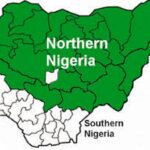
Political analysts noted that the growing unpopularity of the President in Northern Nigeria made the ruling party more desperate to win more opposition states and politicians, especially in Southern Nigeria, to enhance his electoral prospects — fueling speculation that joining the ruling party offers political insulation from prosecution. 
The scale of defections raised concerns among civil society groups, opposition parties, and political analysts, who warned that Nigeria risked sliding towards a one-party state — a development they said could weaken democratic accountability and concentrate excessive power in the hands of the ruling party. 
Akintola used the NPC alliance from the North to consolidate power in the West while imprisoning Awolowo. Tinubu uses the APC machinery, Wike as his instrument of chaos in Rivers, and the EFCC as his political enforcement arm — while locking up journalists, activists, and bloggers under cybercrime statutes.
In August 2025, authorities orchestrated the removal of 59 million pieces of content and the shutdown of 13.5 million accounts across TikTok, Facebook, Instagram, X, Google, and Microsoft. A National Youth Service Corps member, Ushie Uguamaye, had her certificate withheld and service extended after refusing to delete a TikTok criticising Tinubu’s economic policies. 
This is not democracy defending itself. This is authoritarianism learning to type.
IV. But This Is Not 1965. This Is 2026.
Here is where Tinubu’s historical plagiarism becomes not just dangerous, but delusional.
Akintola operated in a world of slow news, controlled radio broadcasts, and a population with no mechanism for instantaneous collective fury. When the Western Region burned, the rest of Nigeria found out days, sometimes weeks, later. The international community received carefully curated diplomatic cables. There was no smartphone in a Port Harcourt mechanic’s pocket recording the moment democracy died. There was no X. There was no diaspora with 200,000 followers pressing “post” before the ink dried on an emergency proclamation.
That world is gone.
Nigeria’s social media space in 2025 became a powerful mirror of the nation’s realities, amplifying joy, outrage, controversy, and collective pride — with digital platforms shaping national conversations and influencing public opinion across every major political decision. 
Tinubu himself, before assuming the presidency, admitted the terror of this new reality. He stated publicly that he no longer monitored social media because Nigerians abused him to the point of high blood pressure, saying: “They abused the hell out of me. If I read it, I will have high blood pressure and I get angry so I don’t read it.” 
A man who cannot withstand the legitimate fury of his own citizens has no business seeking dominion over them. And yet he presses on — trying to silence what he cannot bear to hear.
Tinubu’s own Chief of Staff, Femi Gbajabiamila, called social media “a societal menace,” triggering widespread condemnation from Nigerians who accused the administration of seeking to strip citizens of their freedom to hold bad politicians accountable. 
The panic is visible. The blueprint is Akintola’s. But the battlefield is not 1965 Ibadan. It is global, instant, and permanent.
V. A Dangerous Game With a Known Ending
Akintola’s gambit lasted a few years. It ended with soldiers at his gate and bullets in his body. The Republic he helped destroy took decades to partially rebuild — through military dictatorships, civil war, and structural corruption that metastasised into the Nigeria Tinubu now presides over with such cynical familiarity.
The brutality of that era shocked the nation and drew international attention.  And that was before the age of satellite television, before AI-generated evidence packages, before diaspora remittance communities with political muscle, before FOIA litigation in federal courts in Washington D.C.
What we are witnessing today — brazen rigging of elections, using state institutions to intimidate and coerce the opposition, gagging dissent, using the courts to weaken and destroy opposition parties — is precisely what destroyed the First Republic. 
Nigeria did not survive Operation Wetie whole. It survived it scarred, fractured, and militarised for two decades. The question is whether Tinubu understands what he is gambling with — or whether, like Akintola before him, he believes that power consolidated is power permanent.
It is not.
The Nigerians who flooded the streets in the #EndBadGovernance protests of 2024, who document every affront in real time, who carry the evidence of stolen mandates and stolen billions to international courts and legislative bodies across four continents — these are not the passive citizens of 1965 who could be burned into silence.
They are connected, enraged, and, unlike Akintola’s victims, they have memory that does not fade and reach that does not stop at any border.
Bola Ahmed Tinubu is playing a very dangerous game with a very old script. But Nigeria has read that script. Nigeria knows how it ends.
And the man who authored the original paid with his life, his legacy, and his Republic.
#NigeriaHistory #TinubuMustGo #OperationWetie #DemocracyUnderSiege #TheKioSolution #NigeriaDecides2027 #EndAutocracy
Kio Amachree is President of Worldview International and author of The Kio Solution framework on Nigerian governance and accountability