
By Weekend Trust Page 3 Comment, July 25, 2026

The establishment of the Northern Nigeria Security Trust Fund marks a significant milestone in the region’s search for lasting solutions to the insecurity that has, for years, undermined lives, livelihoods and development. It is a long-awaited initiative whose success could reshape the fight against banditry, terrorism, kidnapping and other violent crimes that continue to plague much of the North.
The decision by the Northern Nigeria Governors’ Forum and the Northern Traditional Rulers’ Council to jointly champion the initiative reflects a growing consensus that the region’s security challenges can no longer be tackled through isolated state efforts. Rather, they require coordinated action backed by sustainable funding and strong institutions.
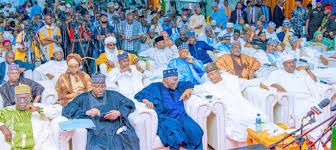
This realisation was evident at the recent joint meeting of northern governors and traditional rulers in Kaduna, where security took centre stage. The meeting reaffirmed support for ongoing federal efforts to restore peace while stressing the need for greater intelligence sharing, stronger community resilience and enhanced regional collaboration. It also acknowledged progress towards the establishment of state police, describing it as a necessary complement to existing security structures once the constitutional process is completed.
These resolutions align with the call by the Sultan of Sokoto, Alhaji Muhammad Sa’ad Abubakar III, for northern leaders and communities to unite against the growing threats of terrorism and banditry. Although the Sultan, who is also the President-General of the Northern Traditional Rulers’ Council, made the call at the meeting, his appeal underscored an undeniable truth that has been on the lips of Nigerians for some time: insecurity has reached a level at which political, ethnic and religious differences must give way to collective action. The establishment of the Northern Nigeria Security Trust Fund is, therefore, not meant to be merely another bureaucratic creation but a genuine attempt to institutionalise that collective resolve.
The decision reached by the member states late last year to contribute N1 billion monthly to the trust fund is particularly commendable. Even more encouraging is the agreement that the contributions will be deducted at source, a mechanism that should reduce delays and minimise the temptation to default. Too often, laudable initiatives have failed because financial commitments made with enthusiasm were not sustained after the initial fanfare.
It is, therefore, against this backdrop that we at Daily Trust reiterate that the success of this fund will depend not only on the willingness of the governors to make these pledges but also on their consistency in honouring them.
Governments must, therefore, ensure that disbursements are made promptly and consistently. None of the participating states should be allowed to retreat from the commitment they have collectively endorsed.
We also believe that the newly inaugurated Board of Trustees carries enormous responsibility. Its membership comprises eminent Nigerians whose experience, integrity and patriotism inspired confidence among those who conceived the initiative, as well as the wider Nigerian public. However, distinguished credentials alone will not guarantee success. The board must ensure that every naira entrusted to it is deployed strictly for the purpose for which the fund was established. Prudence, transparency, accountability and measurable results should define its operations from the outset.
We also believe that effective coordination is equally important. The security challenges confronting Northern Nigeria transcend state boundaries. Criminal networks move freely across forests, rural communities and international borders, making collaboration among governments, security agencies, traditional institutions and local communities indispensable. The trust fund should therefore serve as a platform that strengthens coordination, supports intelligence gathering, complements existing security operations and promotes a unified regional response rather than fragmented interventions.
The communiqué issued after the Kaduna meeting rightly recognised that insecurity cannot be separated from the socio-economic conditions that sustain it. Poverty, unemployment, illiteracy and the alarming number of out-of-school children continue to provide fertile ground for criminal recruitment and violent extremism. Efforts to improve security must, therefore, go beyond financing military and law enforcement operations to include investments in education, agriculture, youth empowerment, skills acquisition and sustainable livelihoods. Security and development must proceed hand in hand if peace is to endure.
The governors also deserve commendation for extending their collaborative approach beyond security to education, agriculture and healthcare. The region’s development challenges are interconnected, and greater cooperation in these sectors can complement efforts to restore peace and improve living conditions. Likewise, renewed attention to protecting farmers during the rainy season and preventing communal conflicts between farmers and herders demonstrates an appreciation of the complex nature of the security crisis.
As expectations rise, so too does the burden of responsibility on the trustees. They must conduct the affairs of the trust fund above board, in a manner that leaves no room for allegations of favouritism, waste or abuse. Nothing short of diligence, propriety and complete transparency will suffice. Through their actions, they must convince sceptics, including those who have expressed reservations about the initiative, that the trust fund exists solely to advance the collective security interests of Northern Nigeria.
Ultimately, the Northern Nigeria Security Trust Fund must not become another well-intentioned institution that fades into irrelevance after an impressive launch. Its credibility will be measured by the confidence it inspires, the transparency with which it manages public resources and, above all, its contribution to making communities safer.
The people of Northern Nigeria have waited too long for a coordinated regional response to insecurity, and their expectations are entirely justified. The governors have demonstrated leadership by establishing the framework. The trustees must now translate that promise into performance.
@Weekend Trust, excluding the headline