
- Tabitha Slams Soludo Over “Religious Interference”
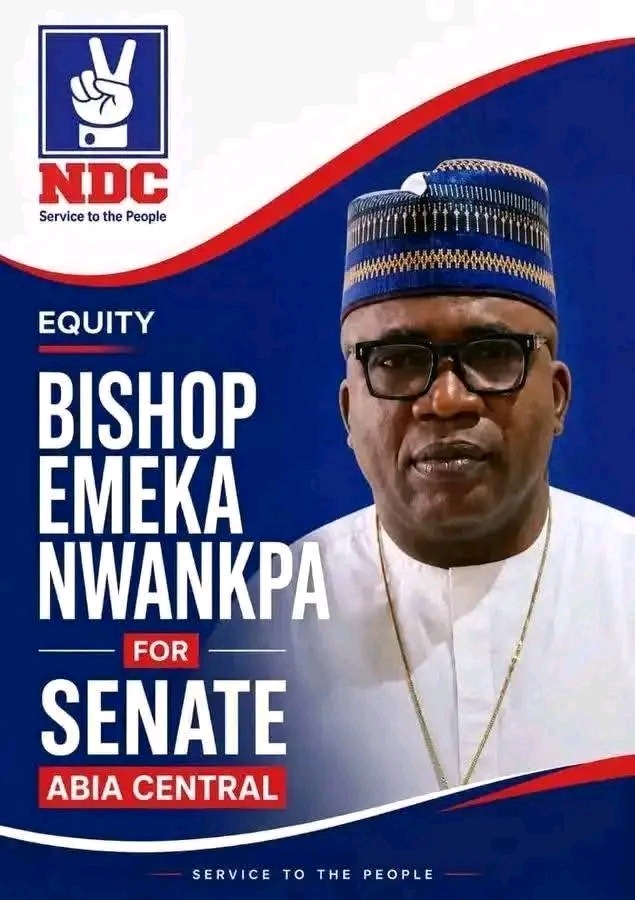
The Senatorial aspirant for Abia Central District for the Nigeria Democratic Congress, NDC, Bishop Emeka Nwankpa, is among the pastors arrested and arraigned by the Anambra State government for allegedly engaging in fake prophesies and miracles.

Nwankpa, an indigene of Abia State and a Founder/Bishop of an Onitsha-based Pentecostal Church – Chapel of Faith Bible Assembly International Ministries, (aka Solution Center), was arraigned at the Anambra High Court, Awka, alongside seven other Christian clerics accused of allegedly performing fake miracles.
The clerics were accused of breaking the Anambra State Homeland Security Law 2025.
Reacting to the arrests, the media aide to Bishop Nwankpa, Stanley Nduagu, condemned the actions of the Anambra State government insisting that Nwankpa has never been involved in fake activities in over 25 years of his ministry.
He said the allegations against Nwankpa lacked evidence.
Also, some kinsmen of Nwankpa from Isiala Ngwa in Abia State have also raised concern over his arrest, calling for his immediate release.
One native of Isiala Ngwa, Ngozi Ahunanya, accused the Anambra State government of waging war against Christians and traditional religion.
In the same vein, the House of Assembly candidate of the African Democratic Congress (ADC) for Arochukwu constituency, Francess Olisa Ogbonnaya, has also condemned the arrest of Bishop Nwankpa, describing it as unnecessary harassment of Christian clerics and worshipers.
Ogbonnaya, popularly known as Tabitha, in a statement on June 5, 2026 described the development as unacceptable, arguing that Governor Chukwuma Charles Soludo should prioritize governance and development issues rather than what she called interference in religious affairs.
She specifically called for an immediate end to what she described as the harassment of religious leaders and worshippers, insisting that state authorities should focus more on addressing economic hardship, insecurity, and other pressing challenges facing residents.
The case has continued to generate mixed reactions online, with supporters of the government insisting that ongoing enforcement actions are part of efforts to regulate fraudulent spiritual activities, while critics argue that such moves risk escalating tensions between the state and religious institutions.
The development has added a new layer of debate around the balance between regulation, religion, and governance in Anambra State.