By Colonel Timothy Antigha (rtd)

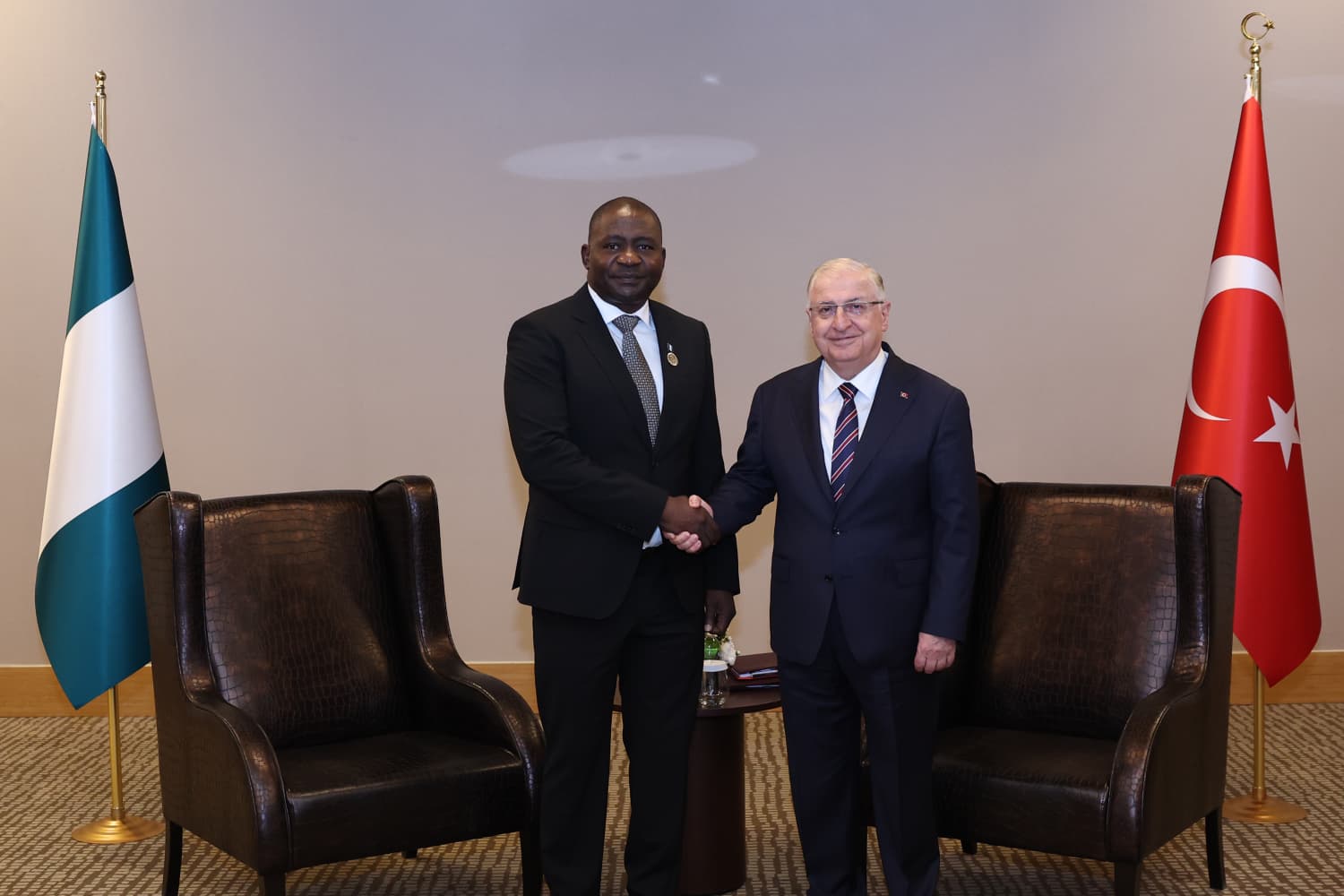
The attention of the Honourable Minister of Defence, General Christopher Gwabin Musa CFR (Rtd) has been drawn to an article which appeared in the social media yesterday and sensationally claimed that Nigeria has signed a “Counterterrorism Cooperation” deal with Turkey, which will ultimately “methodically institutionalize Jihad across every institution of Nigerian life.”
This attempt to discredit a legitimate and commendable effort by the government to build capacity in counterterrorism is not just disturbing, but also raises fundamental questions about the motive behind the article and other subterranean activities to frustrate the efforts of the government to end terrorism in Nigeria.
For context, Nigeria has faced Boko Haram terrorism since 2009. Within the intervening period, successive administrations have initiated regional efforts and signed agreements with various partners to leverage their know how in counterterrorism.
Some of these efforts include the following:
Presidents Umaru Musa Yar’Adua/Goodluck Jonathan: 2009 – 2015
During this period, the Multinational Joint Task Force (MNJTF) was revived. Originally set up in 1998 for border crimes, the MNJTF was re-activated by Nigeria, Chad, Niger, Cameroon, and Benin. After Chibok, the Africa Union authorized a 8,700-strong MNJTF HQ in N’Djamena. Chad and Niger troops helped retake Damasak, Baga in early 2015.
Bilateral Agreements: The government of that period also had the following bilateral agreements:
Nigeria-Cameroon 2014: Agreement allowing limited “hot pursuit” across borders and joint border patrols after Boko Haram attacked Fotokol, Cameroon.
Nigeria-Niger-Chad 2014-2015: Series of defense pacts for intel sharing and MNJTF troop deployments. Chad’s army was critical in pushing Boko Haram out of towns like Gamboru-Ngala.
US/UK/France Support: The US sent surveillance drones, intel advisors. UK and France ran training for Nigerian troops and set up intel fusion cells. France hosted mini-summits in Paris 2014 and Abuja 2016 to coordinate Lake Chad region strategy.
Muhammadu Buhari: 2015 – 2023
Under this administration, MNJTF was strengthened:
AU/UN/EU funding increased. Operations like AMNI FAKAT 2018 and LAKE SANITY 2022 targeted ISWAP islands. Over 50,000 insurgents/families surrendered 2021-2023.
Bilateral agreements
Nigeria-Niger Security MOU 2016: Expanded joint patrols, intelligence sharing, and rights for troops to operate 15km into each other’s territory.
Nigeria-Cameroon 2018: Updated defense agreement covering refugee returns and military coordination against cross-border attacks.
Nigeria-US 2021: A-29 Super Tucano aircraft deal, $497m. Used for precision strikes with conditions on civilian harm.
Nigeria-Turkey 2021: Defense industry cooperation MoU. Turkey supplied Bayraktar TB2 drones used in Northeast ops.
Regional Stabilization Facility: With UNDP, EU, Germany, Nigeria funded police posts, courts, schools in liberated LGAs to replace Boko Haram governance.
Bola Ahmed Tinubu: 2023 till date
Under the current administration, the Nigeria-US security dialogue was held in 2024. It re-affirmed counterterrorism aid and focus on Improvised Explosive Devices as well as maritime security in Gulf of Guinea.
Also, during Tinubu’s state visit, new agreements on defence equipment and training as well as intelligence sharing on Sahel jihadist groups were signed.
From the foregoing, it is clear that agreements with partners towards the defeat of terrorism is not new. As a matter of fact, Nigeria earlier signed a defence related agreement with Turkey in 2021. So, how does the recent agreement with Turkey suggest the importation of Jihad into Nigeria?
Turkey is a member of the North Atlantic Treaty Organization (NATO) with a Defence budget of 40 billion US Dollars.
Turkey also has a massive domestic industry that exports defence equipment to over 30 countries. Turkey is a mid-tier global military power with expeditionary reach.
Furthermore, Turkey’s experience in counterterrorism is well established. Turkey has been fighting terrorism continuously since the 1970s. Its experiences rank among the strongest in NATO.
Therefore, the choice of Turkey as a partner in Nigeria’s fight against terrorism is well informed and grounded. It is not based on religious sentiments or frivolous considerations.
However, if there are indeed any concerns in the future regarding current efforts to fight terrorism, the Nigerian government is well positioned to take steps that would be in the best interest of Nigerians.
It should also be stated that there is no thinking or plan by anyone to offer any part of Nigeria’s territory as a military base to any foreign country.
Nigerians are therefore urged to discountenance and disregard unsubstantiated claims and other efforts to cause disunity, acrimony and fear within the citizenry, but rather continue to support the government in it’s determination to eliminate all threats to national security.
Colonel Timothy Antigha (rtd) is SA Media to Honourable Minister of Defence (HMOD)