


- Daily self-care strategies may help with sleeping the night through
A 50-year-old man began waking up five to six times each night to urinate after a stroke two years earlier. Seeking relief, he turned to traditional Chinese medicine (TCM).

After his first acupuncture session targeting acupoints on the sacrum—a shield-shaped triangular bone at the base of the spine that connects the spine to the pelvis—his nighttime urination (nocturia) dropped to twice that night. After three treatments, it stabilized to one to two times per night. His sleep quality improved, and both his mental and physical energy increased.
In TCM, nocturia is considered a signal of imbalance in the entire system, rather than a problem with a single organ. By restoring balance through approaches such as acupuncture, meaningful improvement is often possible.
How Acupuncture May Help Nocturia
Acupuncture is commonly used in TCM to regulate organ function, improve circulation, and support the nervous system. For people with nocturia—especially when related to aging, weakness, or post-stroke dysfunction—certain acupoints are used to help restore bladder control and improve urinary regulation.
Among the most commonly used are the Eight Crevices (Ba Liao) and Meeting of Yang (Hui Yang) acupoints.
The Eight Crevices are located over the sacral foramina—small openings in the sacrum where nerves pass through. Because these points lie near nerves involved in bladder and pelvic floor control, they are often used for urinary disorders, pelvic dysfunction, and lower back issues.
Meeting of Yang is located near the tailbone and is traditionally used to support pelvic function and regulate elimination.
Research suggests these points may have measurable effects. Studies have shown that electroacupuncture using the Eight Crevices together with Meeting of Yang may help regulate bladder overactivity after stroke, reducing both daily urination frequency and urinary incontinence episodes.
This makes them especially relevant in cases like the patient above, whose nocturia began after neurological injury.
Nocturia Often Reflects an Underlying Imbalance
In TCM, nocturia is most often linked to what is known as kidney deficiency—a pattern that refers not to kidney disease itself, but to a decline in the body’s ability to regulate fluid metabolism, warmth, vitality, and bladder control.
The kidneys help the body manage water and maintain the ability to “hold” urine. When this function weakens, nighttime urination can become more frequent.
Because this regulatory function tends to decline with age, nocturia is especially common in middle-aged and older adults.
Different TCM Patterns May Contribute to Nocturia
TCM recognizes several different patterns of kidney deficiency, each of which may contribute to nocturia differently:
Kidney Yang Deficiency: Often associated with cold intolerance, cold hands and feet, low back soreness, and reduced warming energy. In TCM, this pattern may contribute to nocturia because the body lacks the warmth and strength needed to properly control fluids overnight.
Kidney Yin Deficiency: Often associated with dryness, night sweats, hair loss, irritability, or menopausal symptoms. This pattern may contribute to nocturia when the body lacks the nourishing, cooling fluids needed to maintain internal balance.
Kidney Qi Deficiency: Often associated with fatigue, a weak voice, frequent urination, or difficulty fully controlling urination. This is the pattern most directly linked to weak bladder control.
Besides kidney deficiency, other contributing patterns include:
- Poor digestion and fluid transformation
- Inflammatory or “damp heat” patterns
- Chronic stress and tension affecting body regulation
For this reason, TCM treatment focuses on restoring overall balance and tailoring care to each person’s constitution, rather than treating frequent urination alone.
Daily Self-Care Strategies to Improve Nocturia
In addition to professional acupuncture treatment by a TCM practitioner, several self-care approaches may help support bladder function and reduce nighttime urination.
1. Massage
Massage the following acupoints once or twice daily for three to five minutes each time:
- Kidney Transport (Shen Shu): Located below the second lumbar vertebra, two finger-widths lateral to the spine
- Bladder Transport (Pang Guang Shu): Located in the sacral region, two finger-widths lateral to the spine
- Three Yin Meeting (San Yin Jiao): Located four finger-widths above the inner ankle, behind the tibia
These points are commonly used to help support kidney qi and stabilize bladder function.
2. Moxibustion
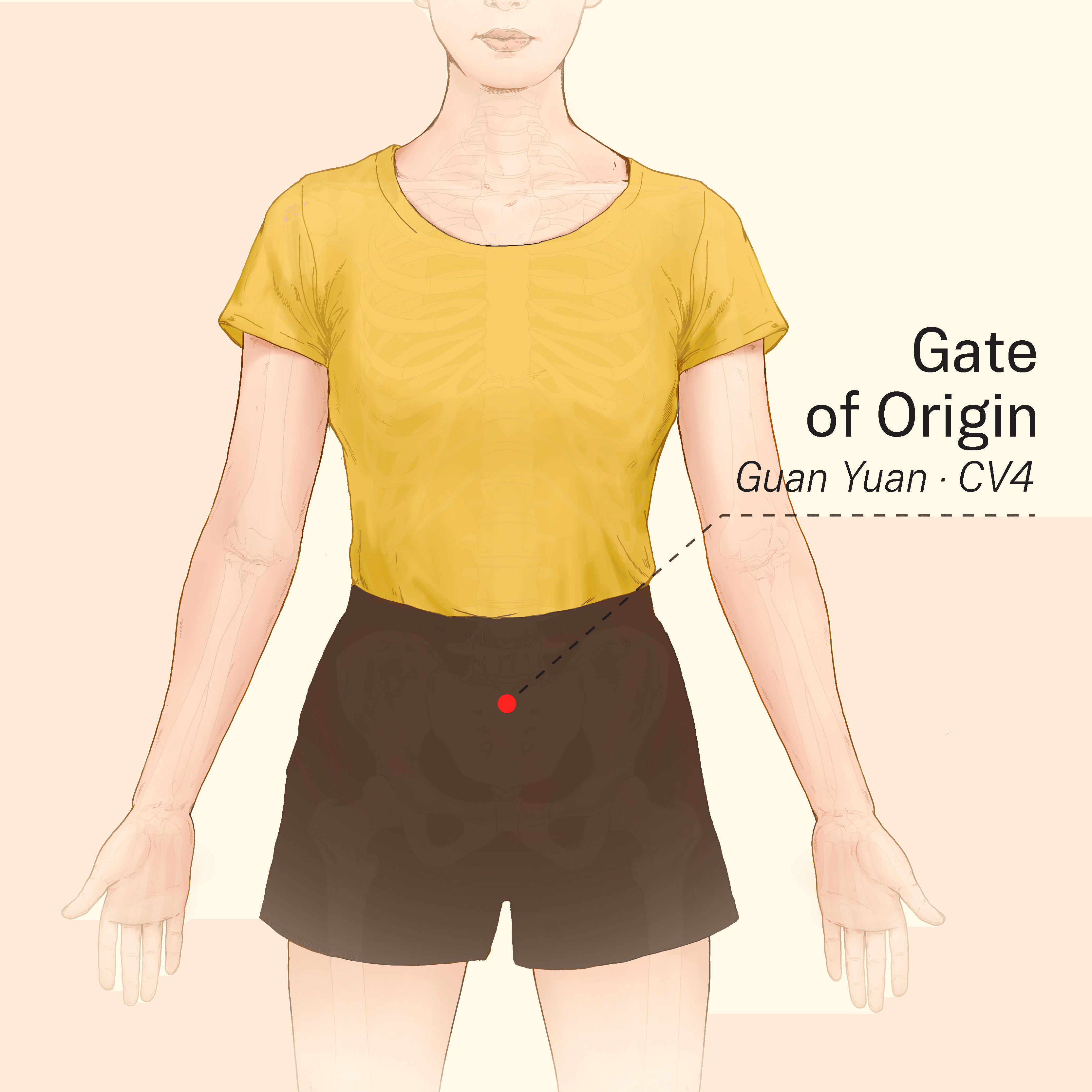
Moxibustion involves burning dry moxa wool to warm acupoints and promote circulation. Applying moxibustion to Kidney Transport (BL23) and Gate of Origin (Guanyuan, CV4) for 15 to 20 minutes may help warm the lower abdomen and support urinary function.
- Kidney Transport (Shen Shu): Located on the lower back, about two finger-widths lateral to the spine
- Gate of Origin (Guan Yuan): Located about four finger-widths below the navel on the midline of the lower abdomen
These points are often used in TCM to support kidney yang, warm the lower body, and improve urinary function.
Animal studies have shown that moxibustion at these two acupoints can improve physiological responses related to kidney yang deficiency and influence hormonal regulation.
A systematic review published in Evidence-Based Complementary and Alternative Medicine suggests that moxibustion can also be used as a complementary therapy for chronic kidney disease.

3. Lower Abdominal Heat Application
In addition to moxibustion, applying a warm compress to the lower abdomen for 10 to 15 minutes before bedtime may help improve fluid regulation and reduce nighttime urination.
4. Breathing Exercise
Before bed, sit upright and rub your hands together to warm them. Then, place them on your lower back and take 10 slow, deep breaths, focusing on the lower abdomen. This practice helps calm the nerves and strengthen kidney energy.
5. Reduce Water Intake Before Bedtime
Limiting water intake three hours before bedtime and avoiding coffee, tea, alcohol, and cold fruits such as melons and pears may help reduce nighttime urination.
6. Herbal Remedies
Commonly used TCM formulas for nocturia include:
- Golden Cabinet Kidney Qi Pills (Jin Gui Shen Qi Wan): Traditionally used to support kidney yang, fluid metabolism, and urinary function
- Restore the Right Kidney Pills (You Gui Wan): Traditionally used to warm and strengthen kidney yang in people with coldness and weakness
- Six-Ingredient Rehmannia Pills (Liu Wei Di Huang Wan): Traditionally used to nourish kidney and liver yin, especially in people with dryness or heat-related symptoms
These formulas are often sold over the counter in Chinese medicine pharmacies and health product stores. However, they should not be self-prescribed casually, as the wrong formula may worsen symptoms if it does not match the person’s body pattern. A proper evaluation by a qualified TCM practitioner is recommended before use.
When to Seek Medical Care
While many cases of nocturia are manageable, some symptoms may signal a more serious condition.
Seek prompt medical evaluation if symptoms are accompanied by:
- Blood in the urine
- Painful urination
- Fever
- Unexplained weight loss
These signs may indicate conditions affecting the kidneys or bladder that require conventional medical care.
As the stroke patient’s case illustrates, nocturia is more than a nuisance—it can interfere with sleep, energy, and daily functioning.
Whether it stems from aging, neurological injury, stress, or broader internal imbalance, nighttime urination is often a sign that the body needs attention.
With the right combination of medical evaluation, lifestyle changes, and supportive therapies such as acupuncture or TCM-based care, many people may find meaningful relief.
@The Epoch Times, Epoch Health