By Group Captain Sadeeq Garba Shehu (rtd)

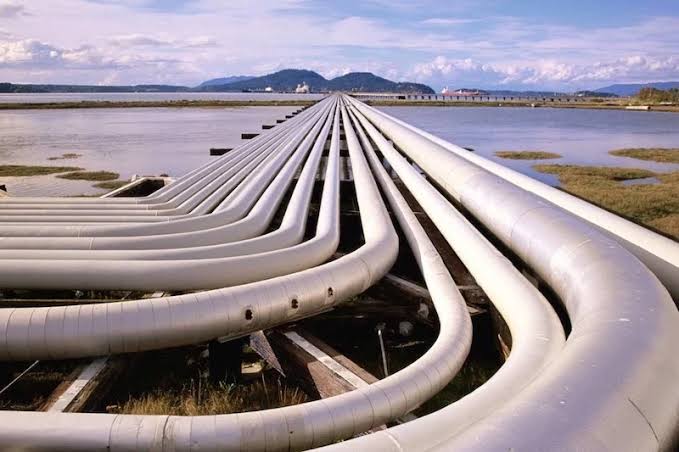
I don’t know whether I am the only one who noticed it. Many people read yesterday’s news without digesting the geopolitical and economic import: That ECOWAS Heads of State meeting in Freetown, Sierra Leone approved the landmark Intergovernmental Agreement for the Nigeria–Morocco African Atlantic Gas Pipeline – a project that will transport Nigerian gas through 13 West African countries to Morocco before connecting to Europe. Initially, the project was called Nigeria–Morocco Gas Pipeline Project (NMGP), then changed to West African Gas Pipeline Extension Project (WAGPEP) and finally at its November 2024 meeting, ECOWAS Ministers of Energy formally adopted “African Atlantic Gas Pipeline/Gazoduc Africain Atlantique (AAGP).”
The Summit also approved the establishment of the African-Atlantic Gas Pipeline Company to be headquartered in Casablanca, Morocco. Nigeria, on the other hand, is expected to host the headquarters of the project’s multinational governing authority in Abuja, responsible for interstate coordination, oversight and governance.
Most readers understandably focused on the pipeline. But my mind immediately went back nearly a decade.
Many forget , or do not know, that in February 2017, Morocco formally applied to join ECOWAS. ECOWAS leaders granted Morocco approval in principle but commissioned further studies into the legal, political and economic implications of admitting a North African country into a predominantly West African regional bloc. The application was never finally approved. Neither was it formally rejected. It simply gathered dust. Nigeria was reportedly among those with significant reservations. The concerns were understandable: geography, trade competition, Morocco’s extensive free trade agreements with Europe and the United States, and fears that Moroccan companies might dominate sectors of the West African economy.
Looking back today, I cannot help but wonder whether Morocco’s leaders as far back as 2017 when they applied to join ECOWAS , were seeing a strategic future that many of us—including Nigeria and ECOWAS—did not fully appreciate. Perhaps Morocco was never merely seeking another seat at the ECOWAS table. Perhaps it was pursuing something much bigger.
Fast forward to today.
The very ECOWAS that hesitated over Morocco’s membership has now endorsed one of Africa’s most ambitious infrastructure projects – a nearly 7,000-kilometre pipeline linking Nigeria to Morocco through thirteen West African countries before connecting to Europe. The next institutional steps include establishing the commercial project company in Casablanca while the multinational governing authority will be headquartered in Abuja.
Well, one might say Nigeria has not lost everything institutionally. Indeed, hosting the governing authority is a significant responsibility. Even so, one contrast is difficult to ignore:
The gas originates largely from Nigeria.
The pipeline begins in Nigeria.
Yet the project’s commercial vehicle—the company that will develop and operate one of Africa’s most strategic energy corridors – will be based in Morocco, the country whose leaders consistently pursued the wider strategic vision. (To draw an analogy, liken it to the situation where the Nigerian Ports Authority Headquarters is in Abuja but the sea and sea ports are in Lagos).
Then came another development that, in hindsight, makes Morocco’s strategy even more interesting.
Mali, Burkina Faso and Niger withdrew from ECOWAS and formed the Alliance of Sahel States (AES). Being landlocked, they urgently needed reliable access to global markets. Morocco, thinking fast, already had an answer. King Mohammed VI proposed giving the Sahel states access to the Atlantic Ocean through Moroccan ports, transport corridors and logistics infrastructure. The three countries subsequently embraced the initiative.
To be clear, I am not suggesting that Morocco foresaw the military coups or predicted that Mali, Burkina Faso and Niger would eventually leave ECOWAS. That would be an unfair conclusion.
But Moroccan leaders clearly understood something fundamental: Regional influence in the twenty-first century would increasingly be built not merely on speeches, summits and diplomacy, but on infrastructure, logistics, energy corridors, ports, finance and trade.
While many were debating whether Morocco geographically belonged to West Africa, Morocco was positioning itself to become economically indispensable to West Africa and the Sahel. That is strategic foresight.
The lesson is therefore not necessarily that ECOWAS led by Nigeria should have admitted Morocco in 2017 without conditions. The lesson is that Morocco had a long-term regional strategy – and pursued it patiently. Today, many pieces of that strategy are falling into place.
For Nigeria, this should not be a cause for resentment. It should be a wake-up call.
Nigeria still remains Africa’s largest economy by population, possesses one of the continent’s largest gas reserves, and will host the governing authority for this historic project.
But leadership in the 21st Century cannot rest forever on geography, population, natural resources or historical influence.
It must be renewed continuously through visionary leadership, connectivity, infrastructure, investment, institutions and the ability to anticipate tomorrow’s geopolitical realities before everyone else sees them.
One could argue that, if not diplomatically, then certainly economically and institutionally, Morocco has effectively found its way into the heart of ECOWAS. It is almost as if Morocco has achieved economically and structurally what it could not achieve diplomatically
Sometimes, the greatest strategic victories are won years before the rest of the world realizes a game was even being played.
Group Captain Sadeeq Garba Shehu (rtd) is a Security & Defence Analyst/Conflict Security & Development Consult Ltd